


A boring technical update is the key to making AI agents actually work

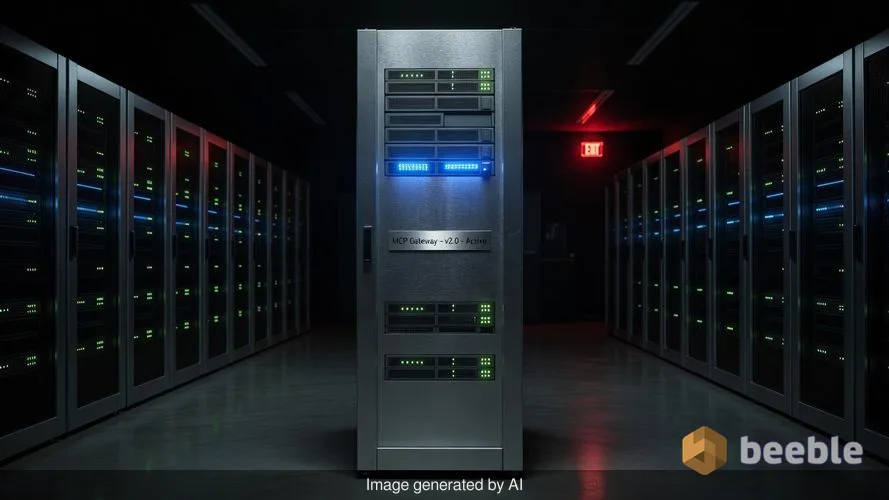
While the world watches for the next massive jump in artificial intelligence reasoning, the real bottleneck for technology is the plumbing. Most users think AI agents fail because the models are not smart enough. The reality is often more mundane. AI models struggle because they lack a reliable way to connect with the tools we use every day. To fix this, a foundational standard called the Model Context Protocol is getting a major overhaul next week. This update changes how AI systems handle scale and reliability.
The problem with smart brains and broken hands
Most discussions about artificial intelligence focus on the brain. We talk about how many trillions of parameters a model has or how well it performs on a bar exam. This is a narrow view of how technology actually integrates into a business. If you hire a tireless intern who is a genius but cannot pick up a telephone or open a spreadsheet, that intern is useless.
In the AI world, the Model Context Protocol acts as the nervous system. It is the standardized way a brain like Claude or GPT-4o reaches out to a database, a Slack channel, or a Google Calendar. Without this protocol, engineers have to build a custom pipe for every single connection. This is slow, expensive, and prone to breaking. MCP was designed to be the universal plug, but the first version had a serious flaw that made it difficult for large companies to use.
Why load balancers hate the current system
To understand the update, you have to look at how computers talk to each other. Currently, when an AI model connects to a server, they perform a handshake. The model introduces itself, and the server gives it a session ID. This ID is a digital name tag. For the rest of the conversation, the model shows that name tag so the server remembers what they were talking about.
This works perfectly on a single computer. However, big companies do not run their services on one computer. They use thousands of servers hidden behind a load balancer. A load balancer is like a traffic cop at a massive hotel with fifty different reception desks. You might talk to Receptionist A in the morning, but when you return in the afternoon, the traffic cop sends you to Receptionist B.
Under the old MCP rules, Receptionist B has no idea who you are because your name tag was issued by Receptionist A. For the system to work, all fifty receptionists have to constantly talk to each other to share your information. This creates massive lag and technical overhead. Nate Barbettini, an engineer at the startup Arcade, explains that this setup fights the way modern internet infrastructure is built. It forces servers to do extra work just to keep track of a single conversation.
Moving to a stateless world
The update arriving next week shifts MCP to a stateless approach. This is the same logic that allows the modern web to function. Instead of the server having to remember you, the necessary information stays with the request itself.
Imagine you go to a coffee shop. In a stateful system, you have to hope the same barista is working so they remember you want an extra shot of espresso. In a stateless system, you have a receipt that says exactly what you want. You can hand that receipt to any barista at any location, and they can make your drink without needing to know your life story.
This change makes MCP servers much cheaper and easier to run. Developers no longer have to build complex synchronization systems to keep their servers in harmony. They can simply deploy the code and let the load balancers do their job. This shift is a practical step toward making AI agents a standard part of corporate software rather than a fragile experiment.
Why this matters for your digital life
For the average person, this update is invisible. You will not see a new button in your chatbot interface. However, the effects are tangible. When protocols become easier to use, more companies adopt them.
Currently, if you want an AI to manage your work emails or book travel, you usually have to grant it broad, risky permissions. This is because the underlying connections are custom-built and often lack fine-grained security. Because MCP is a standardized, secure protocol, its expansion means you can eventually use AI agents that are both more capable and more secure.
When a protocol is robust and scalable, developers spend less time fixing broken pipes and more time building useful features. We have seen this cycle before with technologies like Bluetooth or Wi-Fi. The early versions were clunky and frequently disconnected. Once the industry settled on a reliable standard, the technology became an invisible part of the background. MCP is currently in that clunky phase, and this update moves it toward the background.
The business of AI infrastructure
There is a significant amount of money moving into this boring side of the industry. Arcade raised $60 million recently because they recognized that the infrastructure for AI agents was not ready for prime time. They are betting that companies are tired of AI demos that look impressive but fail when a thousand people try to use them at once.
This capital injection and the subsequent protocol update indicate a maturing market. We are moving away from the era of magical thinking, where we expected a smart model to solve every problem by itself. We are entering an era of industrialization. In this phase, success depends on things like session IDs, latency, and server architecture. These are the same boring metrics that built the trillion-dollar cloud computing industry.
What this means for you
| Feature | Old MCP System | New MCP System |
|---|---|---|
| Scalability | Difficult; requires servers to share memory | Easy; works with standard load balancers |
| Cost | Higher due to complex infrastructure | Lower; uses standard web architecture |
| Reliability | Prone to "forgetting" sessions if a server resets | High; sessions are independent of specific servers |
| Adoption | Limited to small-scale or custom builds | Suitable for millions of simultaneous users |
Looking at the big picture, this update proves that AI development is a two-speed race. While the researchers at OpenAI or Anthropic are sprinting to build more powerful brains, the rest of the industry is slowly building the roads and bridges those brains need to travel on. This technical log-rolling is slow, but it is the only way to move from a chatbot that talks to a tool that acts.
Practically speaking, you should expect to see a surge in AI agent features in the coming months. As it becomes cheaper for companies like Salesforce, Slack, and Microsoft to support these connections, the number of tools your AI can use will grow. You should observe your digital habits and look for places where you are still manually moving data between apps. Those are the specific gaps that the new, more scalable MCP is designed to close.
Ultimately, the goal of a protocol like this is to disappear. You should not have to care about how Claude talks to your database. You should only care that it works every time you ask it a question. This update is a foundational step toward that reality. It is a reminder that the most disruptive changes in technology are often the ones that happen in the plumbing where no one is looking.



See you on the other side.
Our end-to-end encrypted email and cloud storage solution provides the most powerful means of secure data exchange, ensuring the safety and privacy of your data.
/ Create a free account
