


A New Vision for Xbox: Can Asha Sharma Save Game Pass from Its Own Price Tag?

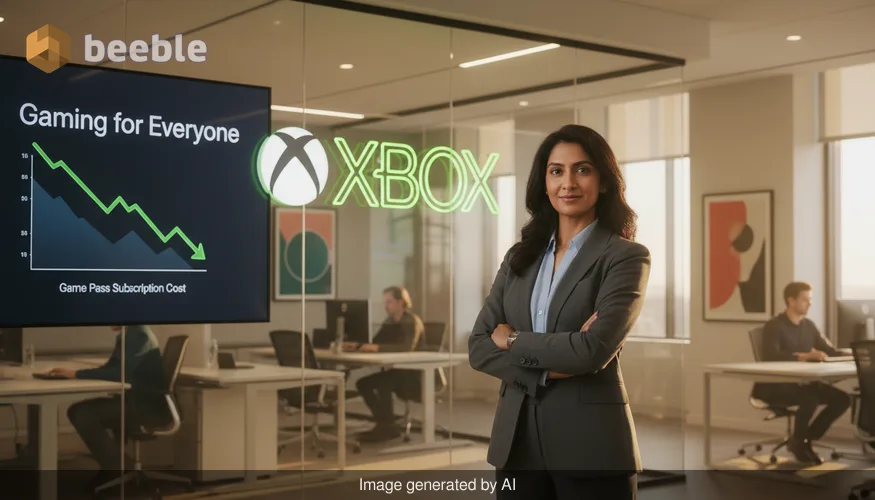
Is the era of the 'all-you-can-eat' gaming buffet finally hitting a paywall that even the most dedicated fans can’t climb? For years, Xbox Game Pass was hailed as the best deal in gaming—a genre-defining service that felt almost too good to be true. But after a series of aggressive price hikes and a leadership shakeup that saw Asha Sharma take the reins from the legendary Phil Spencer, the conversation has shifted. The question on everyone’s mind isn't just what games are coming next, but whether we can actually afford to keep playing them.
The Sharma Era: From Groceries to Game Pass
Interestingly enough, the appointment of Asha Sharma as the new CEO of Microsoft Gaming signals a pivot in how the tech giant views its gaming ecosystem. Sharma, known for her high-level roles at Meta and Instacart, brings a different kind of expertise to the table than Spencer’s 'gamer-first' persona. While Spencer was the face of the 'stepping out of the vault' moment for Xbox, Sharma is tasked with the more labyrinthine challenge of scaling a service that has become increasingly expensive to maintain.
Reports from The Information suggest that Sharma’s primary ambition is to make future consoles and products like Game Pass more enticing to a broader range of customers. Simply put, the 'walled garden' of Xbox needs more gates, and some of those gates need to be cheaper to enter. For those of us who have felt the 'Backlog Burden'—that overwhelming feeling of having 400 games and nothing to play—the prospect of a more flexible pricing model is a welcome breath of fresh air.
The $30 Hurdle: Subscription Fatigue is Real
On paper, Game Pass Ultimate is a power fantasy for any gamer. You get day-one releases, cloud gaming, and a massive library. But in reality, the October 2025 price hike was a visceral shock to the community. With Ultimate jumping to $30 a month, the service transitioned from a 'no-brainer' to a significant line item in a household budget.
Unsurprisingly, this has led to a bit of 'Open-World Exhaustion' within the subscription model itself. When you’re paying $360 a year, you start to audit your playtime. If you aren't sinking 40 hours a week into a sprawling RPG or a punishing Soulslike, that monthly fee starts to feel like a treadmill you can’t keep up with. On the flip side, the Essential tier at $10 and PC Game Pass at $16.50 feel more manageable, but they lack the 'prestige' features that once made the service feel groundbreaking.
The Ad-Supported Pivot: The Netflix-ification of Gaming
So, how does Sharma plan to lower the barrier to entry? The most polarizing rumor involves an ad-supported tier. We’ve seen this play out in the streaming world; Netflix’s ad-supported plan at $8 a month has been a massive success for their growth metrics, even if it feels a bit clunky to those used to uninterrupted binging.
Imagine this: you want to play the latest highly-anticipated Halo or Gears of War, but you don't want to drop $30 this month. You might be able to watch a few minutes of ads in exchange for an hour of gameplay. To some, this sounds like a 'boss fight' against corporate greed. To others, particularly those in emerging markets or younger players with more time than money, it’s a game-changing opportunity. It turns the service into a living, breathing entity that adapts to the player's financial reality rather than demanding a flat, heavy tax.
Balancing the Ecosystem
That being said, implementing ads into a visceral, immersive gaming experience is a delicate operation. If I’m in the middle of a breathtaking, quiet moment in an indie darling like Sable or Cocoon, a loud advertisement for a soft drink would be more than just an interruption—it would be a total immersion-breaker. The catch is how Microsoft integrates these ads. Will they be relegated to the dashboard, or will they function like 'energy' in a mobile game?
Ultimately, Sharma’s challenge is to ensure the core loop of Game Pass remains rewarding. If the lower-priced tiers feel too 'shaky' or 'held together by duct tape,' users will simply churn. The community acts like a hivemind; if the consensus becomes that Game Pass is 'nickel-and-diming' its players, the brand equity Spencer built over a decade could evaporate overnight.
Looking Ahead: A More Inclusive Future?
Looking ahead, the shift toward lower-priced tiers suggests that Microsoft is moving away from the 'prestige' model and toward a 'utility' model. They want Xbox to be everywhere—on your TV, your phone, and your handheld—regardless of whether you own a console. This is the 'Theme Park' strategy: get people through the gates for cheap, and they’ll likely spend more time (and eventually money) within the ecosystem.
As someone who remembers the 'Death of Couch Co-op' and the 'Shift to Live-Service,' I’ve seen many trends come and go. Some are subtle, others are like a wrecking ball. Sharma’s move toward affordability feels like a necessary evolution. The current pricing is unbalanced for the average consumer, and if ads are the price we pay for a more inclusive digital playground, it might be a trade-off worth making.
Sources
- The Information: Report on Asha Sharma’s Xbox Strategy
- Microsoft Gaming Official Pricing Update (October 2025)
- Industry Analysis: The Rise of Ad-Supported Tiers in Digital Media
- Historical Data: Xbox Game Pass Subscription Growth Metrics



See you on the other side.
Our end-to-end encrypted email and cloud storage solution provides the most powerful means of secure data exchange, ensuring the safety and privacy of your data.
/ Create a free account
