


Anthropic Is Putting an Invisible ID Tag on Every Sentence It Writes
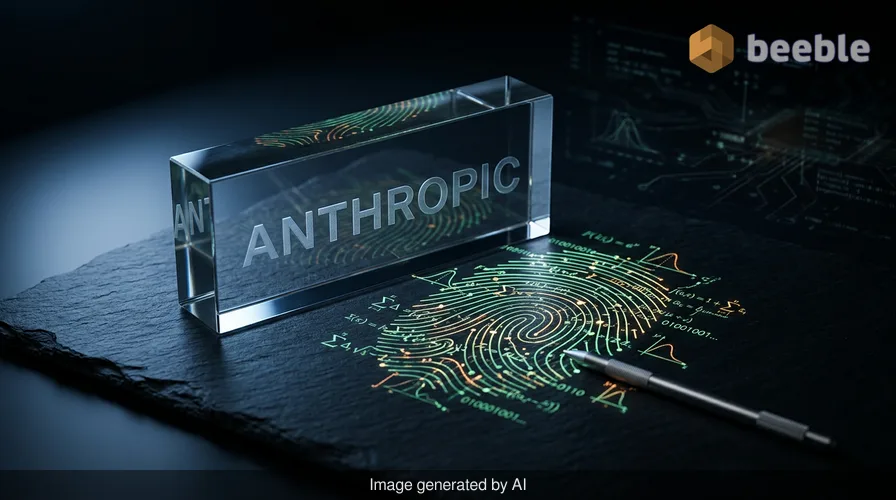
While many people assume AI watermarking is a visible sticker meant to help humans spot a fake, the reality is a hidden layer of math designed to let machines talk to each other. Anthropic now confirms that every piece of text generated by its Claude models will carry a digital signature. This move follows the recent activation of the European Union AI Act, which demands that companies mark machine-made content so that other software can identify it. For the average user, this means the tireless digital intern helping you write emails is now leaving a trail of breadcrumbs that you cannot see, but a computer certainly can.
Anthropic updated its support documentation to reflect a systemic shift in how its models operate. Starting with all releases after August 2, the company is baking watermarking technology directly into the model level. This is not a simple metadata tag that you can delete by renaming a file. Instead, the company modified the way Claude chooses words. By slightly altering the statistical patterns of its output, the model creates a signature that persists even when you copy and paste the text into a new document. While you see a standard paragraph, a detector sees a specific mathematical fingerprint.
The regulatory engine driving invisible ink
Behind the jargon of transparency codes and model alignment is a very simple reality. The EU AI Act is now the global benchmark for tech safety. Its Transparency Code became active on August 2, and it forces any company operating in Europe to ensure their AI content is detectable. Anthropic is not acting alone in this regard. The company joins a list of industry heavyweights including Google, Meta, Microsoft, and OpenAI, all of whom committed to these standards.
Historically, tech companies resisted these measures because they feared it would degrade the quality of the writing. If a model has to pick the second-best word to maintain a watermark, the prose might feel less natural. Anthropic claims the watermark is robust enough to survive some editing, though the company remains opaque about exactly how much a user must rewrite to break the link. Practically speaking, this creates a new friction for anyone using AI to ghostwrite content. The digital crude oil that fuels our current tech boom—data—is now being branded at the source.
How the watermark travels through your documents
For the average consumer, the most disruptive part of this announcement is the persistence of the tag. When you use Claude to draft a report or a blog post, the watermark is part of the text structure. Anthropic confirmed that the watermark travels with the text when it is copied and pasted elsewhere. This applies across the entire ecosystem, including the Claude platform API, Claude Code, and even new tools like Claude Cowork.
Looking at the big picture, this changes the relationship between a user and their generated content. If you are a student using AI to structure an essay, the watermark is there. If you are a marketer generating product descriptions, the watermark is there. The following table explains how this impacts different types of digital work:
| User Type | Primary Impact | Practical Consequence |
|---|---|---|
| Content Creators | Platform flagging | Search engines or social sites may deprioritize the content. |
| Students | Academic integrity | Plagiarism tools will likely integrate Claude's detection patterns. |
| Developers | Code provenance | Claude Code will mark generated snippets as AI-originated. |
| Business Professionals | Brand risk | Internal documents might trigger corporate AI-usage flags. |
For file attachments and images, Anthropic is adopting the C2PA open standard. This is a technical framework that acts like a digital passport for a file. It records who created it, when they created it, and what tools they used. If you download a chart or a generated document from Claude, that file carries a history that stays attached to it as it moves across the web.
The industry-wide rush to tag everything
Anthropic is reacting to a broader shift in the market. Last week, the AI music platform Suno announced it would mark tracks created on its platform following various legal challenges from the music industry. Similarly, the newsletter platform Substack recently partnered with Pangram to help readers identify AI-generated articles. The CEO of Substack even coined the term Claudefishing to describe people who use AI to generate content while pretending it is human-made.
Essentially, the era of the wild west for AI content is ending. We are moving toward a decentralized system of accountability. In this new environment, every major player wants to avoid regulatory scrutiny. By watermarking content now, Anthropic protects itself from future lawsuits and ensures it stays in the good graces of European regulators. On the market side, this also helps protect the integrity of human-made data. If AI models start training on other AI-generated text, they can become confused and lose quality. Watermarks act as a signal to other AI systems to ignore that specific data.
The cat and mouse game of detection
From a consumer standpoint, the big question is whether these watermarks actually work. If you change a few adjectives or swap the order of two sentences, does the watermark disappear? Anthropic has not provided a clear answer to this, though they have been asked for clarification. In everyday life, this creates a volatile situation for people who rely on AI for professional work. If a detection tool falsely flags a human-written piece because it shares a few statistical similarities with Claude's watermark, the consequences for the writer are tangible.
Under the hood, watermarking is a game of probability. The model might decide that every time it uses the word "substantial," it will follow it with an adjective starting with a specific letter. These patterns are invisible to a human reader but highly predictable for a computer. However, these patterns are also fragile. A simple grammar checker or a heavy round of manual editing can break the statistical chain. As a result, we are likely to see a cyclical battle between companies trying to harden their watermarks and users trying to find ways to scrub them.
What this means for your digital habits
Ultimately, this news is a reminder that the tools we use are not private islands. Every prompt you enter and every paragraph Claude returns is part of a larger industrial cycle. Anthropic's decision to implement these markers across its entire product line shows that transparency is no longer optional for tech giants. The invisible backbone of the internet is being reconfigured to ensure that humans—and more importantly, other computers—know exactly where a piece of text originated.
For you, this means it is time to shift your perspective on how you use AI. Do not treat the output as your own original work that is indistinguishable from your own writing. Instead, view Claude as a collaborator that leaves a signature on everything it touches. If you are in a field where originality is a requirement, you should assume that the tools to prove you used AI are already in the hands of your employers, your teachers, and the platforms where you post your work. The digital ink is dry, and it is permanent.
Sources: Anthropic Support Documentation, European Commission AI Act Guidelines, Substack Corporate Blog, C2PA Standard Specifications.



See you on the other side.
Our end-to-end encrypted email and cloud storage solution provides the most powerful means of secure data exchange, ensuring the safety and privacy of your data.
/ Create a free account
