


Apple is losing its home field advantage in the data privacy wars

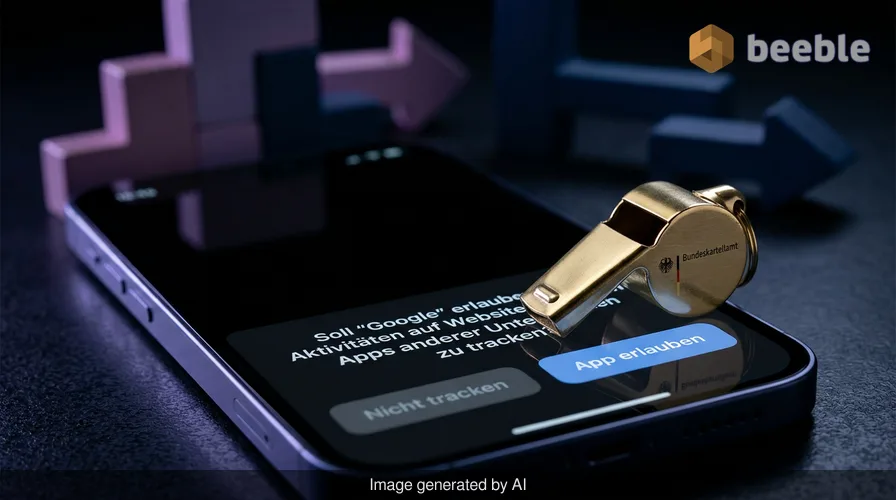
A hidden mechanism exists inside every modern smartphone that dictates how you interact with your digital world. This mechanism is called choice architecture. It is the subtle way a button is colored or the specific tone of a message that nudges you toward one decision over another. You might think you are making a free choice when a pop-up asks to track your data, but regulators in Germany recently revealed that the deck was stacked. The Bundeskartellamt, Germany’s national competition authority, found that Apple designed these prompts to favor its own services while making third-party apps look like a security risk.
This finding strikes at the heart of how big tech companies use privacy as a shield to protect their market dominance. While Apple marketed its App Tracking Transparency (ATT) framework as a win for consumer rights, the German investigation suggests it functioned as a systemic barrier for competitors. The law acts as a referee in these situations, and the referee just blew the whistle on Apple for unfair play.
The architecture of a biased choice
When Apple introduced ATT in April 2021, it changed the mobile economy overnight. Every app that wanted to track user behavior across other websites and apps had to ask for permission through a standardized pop-up. For the average user, this felt like a massive step forward for privacy. You finally had a simple way to tell advertisers to stay away from your personal habits. However, the Bundeskartellamt noticed a sharp contrast in how Apple presented these choices.
Apple's own apps and services often used wording that felt helpful or benign. In contrast, the prompts for third-party apps like Spotify, Meta, or small independent games were often framed in ways that discouraged consent. The German authority found that the visual layout and the specific symbols used in these prompts were not neutral. One set of rules applied to the home team, while a different, more difficult set of rules applied to everyone else. This practice created a precarious environment for developers who rely on data to serve relevant ads or improve their products.
In the eyes of the law, this is a classic case of self-preferencing. This term describes a situation where a company that controls a platform gives its own products an unfair leg up over rivals who also use that platform. Because Apple controls the hardware and the software of the iPhone, it has a statutory responsibility in many jurisdictions to ensure a level playing field. Germany has determined that Apple failed this responsibility.
Translating the regulatory jargon
To understand why this matters, we must break down a few terms that usually hide in thick legal documents. The most important concept here is an anticompetitive practice. This refers to any action a company takes to prevent or reduce competition in a market. In this case, Apple was not just protecting privacy. It was arguably using privacy as a justification to make life harder for other app developers. When one company can dictate the success or failure of its rivals through UI design, the market is no longer free.
Another key term in this ruling is a monitoring trustee. As part of the settlement, Apple must allow an independent third party to watch its progress. This trustee acts as a legal auditor who ensures the company actually follows through on its promises. This is a binding commitment, meaning Apple does not have the option to ignore the findings without facing severe litigation and fines. The legal precedent here is clear: even a company that owns the ecosystem must play by neutral rules when it acts as the gatekeeper for other businesses.
The four month countdown for change
Apple now has a strict timeline to fix these issues. The Bundeskartellamt requires Apple to remove all discouraging symbols and biased wording from its tracking requests. By December 2026, the prompts you see on your iPhone must be neutral in terms of content, wording, and layout. This means an Apple app and a third-party app must look identical when they ask for your data. Apple has four months to implement these revisions and must test the new designs with the very developers they previously disadvantaged.
These commitments are not a temporary fix. The agreement lasts for seven years. During this time, the monitoring trustee will check to see if Apple tries to slide back into old habits. This long-term oversight is necessary because tech companies often find nuanced ways to bypass simple rules. A small change in font size or a slight shift in the shade of a "Deny" button can drastically alter how millions of people respond to a prompt.
This ruling is a significant victory for the principle of platform neutrality. It establishes that privacy features cannot be used as a Trojan horse for market control. For the everyday user, this means the choices you make on your phone will soon be based on facts rather than psychological nudges. You will still have the power to say no to tracking, but that choice will no longer be influenced by a deck that Apple stacked in its own favor.
How this affects your daily digital life
As a consumer, you might wonder if this change makes your phone less private. The answer is no. The level of privacy remains the same, but the honesty of the conversation improves. When a third-party app asks for data, it will no longer look like a warning from your operating system that something is wrong. Instead, it will look like a standard request for information. This allows you to judge the app based on its own merits and your relationship with that developer.
I often tell my clients that the small print is where the real power lies. In the digital age, that small print has moved from the bottom of a contract to the center of your screen in the form of a pop-up. If the law does not protect the neutrality of those pop-ups, then consumer choice is an illusion. The German regulator is effectively acting as a shield for both developers and consumers, ensuring that the rules of the game are the same for everyone on the field.
Protecting your rights as a mobile user
While we wait for Apple to roll out these changes globally, there are steps you can take to manage your data today. You do not have to wait for a regulatory authority to give you a neutral prompt to take control of your privacy settings. The law gives you the right to access and control your data, but the responsibility to exercise that right is yours.
First, go to your settings and look for the privacy and security section. Here, you can see a list of every app that has requested tracking permission. You can toggle these on or off at any time, regardless of what the initial prompt said. Second, be skeptical of any app—including those made by Apple—that claims it needs your data for "improvements" without explaining what that means. A robust understanding of your own settings is the best defense against systemic bias in app design.
Ultimately, this case is about more than just a few buttons on a screen. It is about whether the giant corporations that build our digital world are allowed to write their own rules. The German Bundeskartellamt has said they are not. This decision will likely ripple across the globe, as other regulators in the US and the EU look for ways to curb the power of big tech gatekeepers. The road to a fair digital market is a marathon, and this ruling is a significant mile marker along that path.
Summary for the everyday user
- Apple was found to be using biased language and design in its App Tracking Transparency prompts.
- The prompts made it easy to say yes to Apple's own apps but discouraged saying yes to other developers.
- German regulators have ordered Apple to make all prompts neutral in wording, symbols, and layout.
- Apple has four months to implement the changes and must submit to seven years of independent monitoring.
- Your privacy settings will remain under your control, but the prompts you see will be more honest and less manipulative.
Sources
- German Federal Cartel Office (Bundeskartellamt) official press release on Apple Proceeding (2026).
- European Union Digital Markets Act (DMA) guidelines on self-preferencing and platform neutrality.
- Apple's official documentation on App Tracking Transparency (ATT) framework revisions.
Disclaimer: This article is for informational and educational purposes only and does not constitute formal legal advice. If you have specific concerns regarding data privacy or competition law in your jurisdiction, you should consult with a qualified attorney.



See you on the other side.
Our end-to-end encrypted email and cloud storage solution provides the most powerful means of secure data exchange, ensuring the safety and privacy of your data.
/ Create a free account
