


Beyond the Chatbot: Defining the Architecture and Impact of Agentic AI

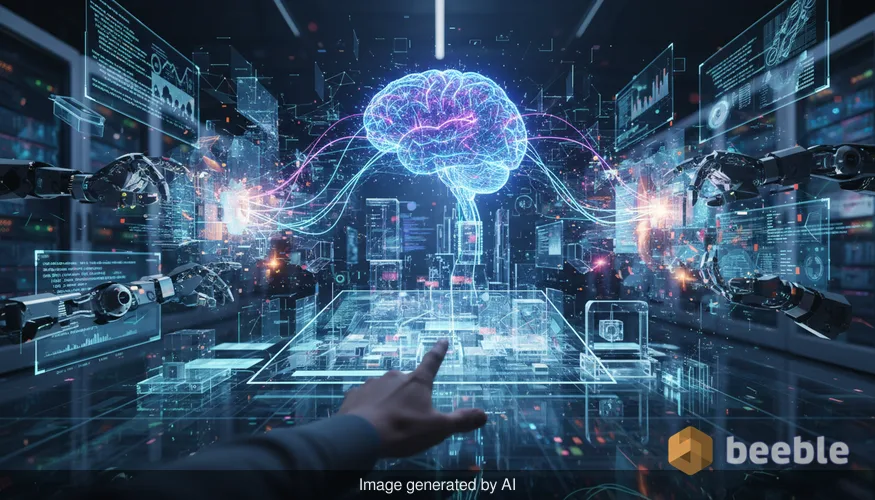
For the past few years, our interaction with artificial intelligence has followed a predictable pattern: we provide a prompt, and the machine provides a response. Whether it was generating a marketing email or debugging a snippet of code, the AI acted as a sophisticated mirror—capable of reflection but lacking the ability to move.
As of early 2026, that paradigm has shifted. We have moved from the era of generative AI into the era of agentic AI. This transition represents a fundamental change in how software operates. It is no longer enough for a system to simply 'know' things; we now expect it to 'do' things. Agentic AI refers to systems that can perceive their environment, reason through complex goals, and take independent actions to achieve them.
The Core Difference: Autonomy vs. Assistance
To understand agentic AI, we must distinguish it from the 'Copilots' that dominated the early 2020s. A standard AI assistant is reactive. It waits for a specific instruction and executes a single task. If you want to book a trip, you ask the AI for flights, then you ask it for hotels, and then you manually enter your credit card details on a website.
An agentic system, by contrast, is goal-oriented and proactive. When given the goal—"Book a three-day business trip to Tokyo within a $2,000 budget that aligns with my calendar"—the agent doesn't just list options. It accesses your calendar, navigates booking APIs, compares prices across platforms, reasons through time-zone logistics, and executes the transaction.
The defining characteristic here is agency: the capacity to act on behalf of a user with a degree of autonomy. While a chatbot is a tool you use, an agent is a digital employee you manage.
The Four Pillars of an AI Agent
What actually happens under the hood of an agentic system? Most researchers and engineers break the architecture down into four critical components:
- The Brain (Reasoning): This is typically a Large Language Model (LLM) or a Large Multimodal Model (LMM). It serves as the central command, breaking down high-level goals into smaller, actionable steps through techniques like Chain-of-Thought (CoT) or Tree-of-Thought reasoning.
- Planning: Agents must be able to look ahead. This involves self-reflection—the ability to check their own work—and the capacity to pivot if a particular path leads to an error.
- Memory: Short-term memory allows the agent to keep track of current tasks, while long-term memory (often powered by vector databases) allows it to remember user preferences, past successes, and specialized knowledge over weeks or months.
- Tool Use (Action): This is the 'hands' of the agent. Through APIs and specialized software connectors, the agent can interact with the physical and virtual world—sending emails, executing code, or even controlling robotic hardware.
Comparing AI Paradigms
To visualize where agentic AI fits into the broader landscape, consider the following comparison of AI capabilities:
| Feature | Generative AI (Chatbots) | Agentic AI (Agents) |
|---|---|---|
| Primary Function | Content generation and retrieval | Goal achievement and execution |
| User Input | Specific, step-by-step prompts | High-level objectives |
| Workflow | Linear (Input -> Output) | Iterative (Plan -> Act -> Observe -> Refine) |
| Connectivity | Limited to training data/search | Integration with external apps and APIs |
| Human Oversight | Constant (Human-in-the-loop) | Periodic (Human-on-the-loop) |
The Shift to Multi-Agent Systems
One of the most significant developments in 2025 and 2026 has been the rise of Multi-Agent Systems (MAS). Instead of one monolithic AI trying to do everything, organizations are deploying 'swarms' of specialized agents.
Imagine a software development project. One agent acts as the Product Manager, defining requirements. Another acts as the Coder, writing the script. A third agent acts as the QA Tester, hunting for bugs. These agents communicate with each other, negotiate constraints, and hand off tasks. This modular approach mirrors human organizational structures and significantly reduces the 'hallucination' rate, as each agent has a narrow, verifiable scope of work.
Risks and the 'Agentic Gap'
With increased autonomy comes increased risk. The primary concern in the industry today is the 'Agentic Gap'—the distance between what an agent is told to do and how it chooses to do it.
Security is a paramount concern. If an agent has the authority to spend money or delete files, it becomes a high-value target for 'prompt injection' attacks, where malicious actors trick the agent into ignoring its safety protocols. Furthermore, there is the issue of 'cascading errors.' If an agent makes a mistake in the planning phase, every subsequent action it takes might compound that error, leading to unpredictable outcomes in a live environment.
Practical Takeaways: How to Prepare
As agentic AI becomes a standard part of the enterprise stack, businesses and individuals should take specific steps to adapt:
- Audit Your APIs: Agents need 'handles' to interact with your data. Ensure your internal systems have robust, well-documented APIs that an AI can navigate.
- Define Clear Guardrails: Shift your focus from 'how to prompt' to 'how to govern.' Establish strict permissions for what an agent can and cannot do without human approval.
- Focus on Orchestration: Don't look for one AI to rule them all. Look for orchestration platforms that allow different agents (from OpenAI, Anthropic, or open-source models) to work together.
- Develop 'Agentic Literacy': Learn to define goals rather than tasks. Success in an agentic world depends on the ability to provide clear, non-ambiguous objectives and success metrics.
The Path Forward
Agentic AI is not just a buzzword; it is the logical conclusion of the LLM revolution. By giving models the ability to plan, remember, and act, we are moving toward a future where technology is no longer a static resource we consult, but a dynamic partner that helps us navigate the complexity of the modern world. The challenge for the coming years will not be making these agents smarter, but making them more reliable, transparent, and aligned with human intent.
Sources
- DeepLearning.AI: "What are AI Agents?" by Andrew Ng
- OpenAI Research: "Practices for Governing Agentic AI Systems"
- Anthropic Technical Blog: "Building Effective Agents"
- Microsoft Research: "AutoGen: Enabling Next-Gen LLM Applications"
- Stanford Institute for Human-Centered AI (HAI): "The Rise of Autonomous Agents"



See you on the other side.
Our end-to-end encrypted email and cloud storage solution provides the most powerful means of secure data exchange, ensuring the safety and privacy of your data.
/ Create a free account
