


Beyond the Chatbot: Understanding the Rise of Agentic AI

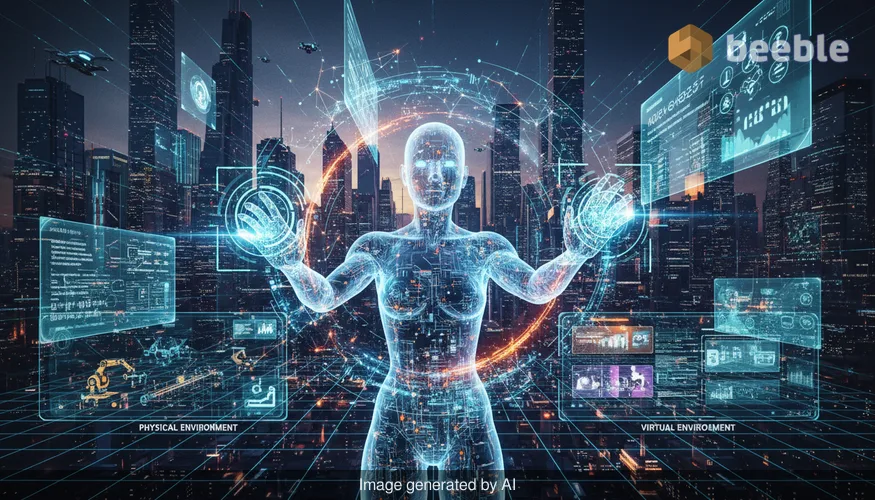
For the past few years, our interaction with artificial intelligence has followed a predictable pattern: we provide a prompt, and the machine provides a response. Whether it is generating a marketing email, debugging a snippet of code, or summarizing a long report, the AI has remained largely reactive. However, as we move into 2026, the industry is shifting toward a more proactive paradigm known as agentic AI.
Agentic AI represents a fundamental evolution from generative models that simply 'know' things to autonomous systems that can 'do' things. These systems, often referred to as AI agents, are no longer confined to a chat box. They are becoming digital coworkers capable of planning complex workflows, using external tools, and making independent decisions to achieve a specific goal. To understand this shift, we must look at how these agents function and why they are poised to redefine productivity across every sector.
Defining the Agentic Shift
At its core, agentic AI is characterized by agency—the capacity to act independently in an environment to achieve an objective. While a standard Large Language Model (LLM) is like a brilliant scholar locked in a room with a library, an AI agent is like a project manager with a smartphone, a credit card, and a list of contacts.
The distinction lies in the transition from passive output to active execution. If you ask a standard AI to 'plan a business trip,' it will provide a list of suggested flights and hotels. If you ask an agentic AI to 'plan and book a business trip,' it will check your calendar, compare prices across multiple platforms, navigate through booking sites, handle the payment, and send the itinerary to your email. It doesn't just describe the solution; it implements it.
The Anatomy of an AI Agent
To function autonomously, agentic AI systems rely on a sophisticated architecture that goes beyond simple pattern matching. Most modern agents are built on four primary pillars:
- The Brain (Reasoning): This is the core LLM that processes information and makes decisions. In an agentic context, the model uses techniques like 'Chain-of-Thought' to break down a large goal into smaller, manageable steps.
- Memory: Agents require both short-term memory (the immediate context of the task) and long-term memory (often powered by vector databases or RAG) to remember past interactions, user preferences, and historical data.
- Planning: This is the ability to look ahead. Agents can self-correct; if a specific action fails, the agent can analyze the error and try a different approach without waiting for a new human prompt.
- Tool Use (Action): This is the defining feature of agentic AI. Through APIs and browser-based interfaces, agents can interact with the physical and virtual world—sending emails, executing code, searching the live web, or even controlling robotic hardware.
From Single Agents to Multi-Agent Systems
One of the most significant breakthroughs in 2025 and early 2026 has been the move toward multi-agent systems. Instead of one giant AI trying to do everything, organizations are deploying 'swarms' of specialized agents that collaborate.
Imagine a software development pipeline. One agent is specialized in writing code, another in security auditing, and a third in documentation. These agents communicate with each other, passing tasks back and forth and reviewing each other's work. This modular approach increases reliability and mimics the way human teams operate, where specialized expertise leads to higher-quality outcomes.
Real-World Applications and Impact
The implications of agentic AI are already being felt in several key industries:
- Customer Support: Beyond simple FAQs, agents can now access back-end systems to process refunds, troubleshoot technical issues, and follow up with customers days later to ensure satisfaction.
- Research and Development: In pharmaceuticals, agents can autonomously search through thousands of academic papers, hypothesize chemical structures, and simulate interactions, significantly shortening the discovery phase.
- Supply Chain Management: Agents can monitor global shipping data in real-time. If a port is delayed, the agent can automatically re-route shipments and notify all stakeholders without human intervention.
The Challenges: Security and the Agentic Gap
With increased autonomy comes increased risk. The primary concern with agentic AI is 'prompt injection' or 'goal hijacking,' where a malicious actor could trick an agent into performing unauthorized actions, such as transferring funds or leaking sensitive data.
Furthermore, there is the 'Agentic Gap'—the discrepancy between what an agent is commanded to do and what it actually executes. Because these systems are probabilistic, they can sometimes take 'creative' paths to a goal that might violate company policy or ethical standards. This is why 'Human-in-the-Loop' (HITL) systems remain critical, where an agent can operate autonomously up to a certain level of risk before requiring human approval.
Practical Takeaways: How to Prepare
As agentic AI becomes the standard, businesses and individuals should consider the following steps to stay ahead:
| Action Item | Description |
|---|---|
| Identify Workflows | Look for repetitive, multi-step digital processes that currently require manual 'copy-pasting' between apps. |
| Audit Data Access | Ensure your data is organized and accessible via APIs, as agents are only as effective as the tools they can reach. |
| Establish Guardrails | Define clear boundaries for what an agent can and cannot do, especially regarding financial transactions and data privacy. |
| Focus on Orchestration | Start thinking about how to manage multiple agents rather than just one-off AI tools. |
The Path Forward
Agentic AI is not just a buzzword; it is the natural conclusion of the progress made in machine learning over the last decade. We are moving toward a world where AI is an active participant in our digital lives. By understanding that these systems are built for action rather than just conversation, we can better prepare for a future where the gap between 'thinking' and 'doing' is bridged by intelligent, autonomous agents.
Sources:
- OpenAI: Introduction to AI Agents and Function Calling
- DeepLearning.AI: The Evolution of Agentic Workflows
- Microsoft Research: AutoGen and the Future of Multi-Agent Systems
- Stanford University: The Ethics of Autonomous AI Systems



See you on the other side.
Our end-to-end encrypted email and cloud storage solution provides the most powerful means of secure data exchange, ensuring the safety and privacy of your data.
/ Create a free account
