


Beyond the Fold: How Lenovo is Redefining Computing with Rollable Screens and AI Super-Agents

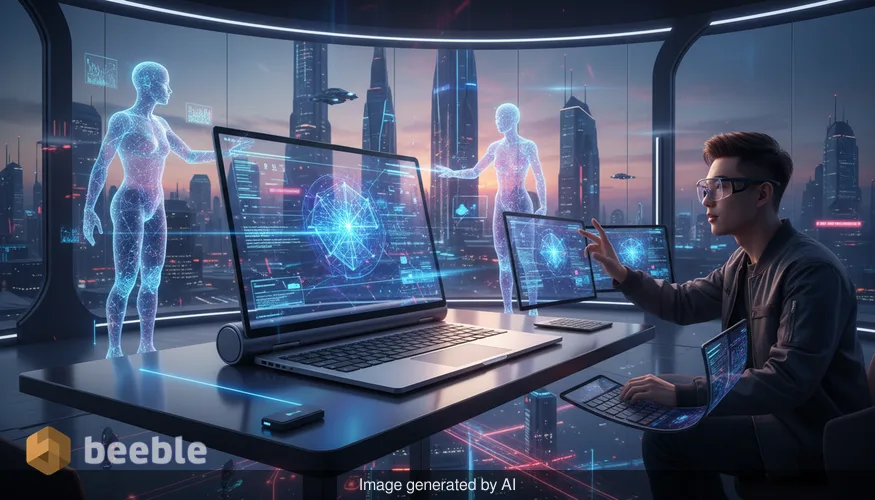
The landscape of personal computing is undergoing its most significant transformation since the introduction of the smartphone. For decades, the laptop was a rigid tool—a clamshell of plastic and silicon that demanded we adapt to its form. Today, that relationship is reversing. Lenovo, the world’s largest PC manufacturer, is spearheading a shift toward devices that are not just portable, but fluid and hyper-intelligent.
By merging experimental hardware like rollable displays with deeply integrated AI super-agents, Lenovo is moving away from being a hardware vendor toward becoming an architect of unified AI ecosystems. This evolution marks the end of the 'one-size-fits-all' era and the beginning of the 'adaptive' era.
The Rollable Revolution: Form Following Function
While foldable screens have dominated the premium market for several years, they have always faced a physical hurdle: the crease. Lenovo’s exploration into rollable technology offers a more elegant solution to the screen-to-body ratio challenge. Unlike a foldable device that snaps between two set states, a rollable laptop uses a motorized mechanism to expand the display vertically or horizontally on demand.
Imagine working on a standard 13-inch laptop while answering emails. With a single gesture, the screen glides upward, expanding into a 15.3-inch 9:16 vertical display. This provides a massive canvas for long-form coding, social media feeds, or document editing without increasing the device's physical footprint on your desk. It is a mechanical solution to a digital problem: the need for more space without the weight of a larger chassis.
AI Super-Agents: From Chatbots to Proactive Partners
Hardware is only half of the story. The real 'brain' of the 2026 tech ecosystem is the AI super-agent. Lenovo has transitioned from basic generative AI integrations to a system-wide intelligence often referred to as 'AI Now.'
Unlike standard cloud-based chatbots, these super-agents operate primarily on-device, utilizing the Neural Processing Units (NPUs) found in modern silicon. This 'Personal AI' learns your habits, your filing systems, and your communication style. It doesn't just wait for a prompt; it anticipates needs. For example, if you have a meeting scheduled for 10:00 AM, the agent can automatically gather relevant documents, summarize previous email threads, and prepare a draft agenda before you even open your lid.
The Hybrid AI Strategy: Privacy Meets Power
One of the biggest hurdles for AI adoption has been data privacy. Lenovo’s 'AI for All' vision addresses this through a hybrid-led strategy. By processing sensitive data locally on the PC or edge server and only reaching out to the cloud for massive computing tasks, Lenovo ensures that a user’s personal 'knowledge base' remains private.
This hybrid approach creates a seamless experience across devices. Your Motorola smartphone, your Lenovo tablet, and your rollable ThinkPad share a unified intelligence. If you start a task on your phone, the AI super-agent understands the context and has the necessary files ready when you sit down at your desk. This isn't just synchronization; it is a fluid transition of intent.
Why This Matters for the Modern Professional
The marriage of rollable hardware and AI agents solves the 'fragmentation' problem. We currently spend a significant portion of our workday 'managing' our tools—moving files, resizing windows, and searching for information. Lenovo’s new ecosystem aims to automate the management so users can focus on the creation.
| Feature | Traditional Laptop | Lenovo’s Future Vision |
|---|---|---|
| Display | Fixed size and aspect ratio | Dynamic rollable screen (variable size) |
| Intelligence | Reactive (waits for input) | Proactive (anticipates needs) |
| Data Processing | Cloud-heavy (privacy risks) | Hybrid/On-device (privacy-first) |
| Ecosystem | App-based silos | Unified AI Super-agent |
Practical Takeaways: Preparing for the Adaptive Era
As these technologies move from trade show concepts to retail realities, here is how you can prepare for the shift:
- Audit Your Workflow: Identify tasks that are repetitive or involve high 'context switching.' These are the first areas where AI super-agents will provide the most value.
- Prioritize NPU Specs: When upgrading hardware, look for the latest NPU (Neural Processing Unit) benchmarks rather than just CPU speed. Local AI performance will be the defining metric of the next five years.
- Adopt a Hybrid Mindset: Start using personal knowledge management tools that allow for local indexing. This will make it easier to 'train' your future personal AI agent without compromising your data.
- Watch the Form Factor: Don't buy more screen than you need for travel. The rise of rollables means you can have a compact device that expands only when the work requires it.
The Path Ahead
Lenovo’s transformation reflects a broader trend in the tech industry: the move toward 'invisible' computing. The goal is a world where the device disappears, leaving only the user and their objectives. Whether it is a screen that grows to fit your spreadsheet or an AI that drafts your reports, the future of tech is no longer about what the machine can do, but how the machine can adapt to you.
Sources:
- Lenovo Official Newsroom
- MWC 2024 Innovation Highlights
- Lenovo 'AI for All' Keynote Archives
- TechCrunch: Lenovo’s Rollable Concept Analysis
- The Verge: The Evolution of the AI PC



See you on the other side.
Our end-to-end encrypted email and cloud storage solution provides the most powerful means of secure data exchange, ensuring the safety and privacy of your data.
/ Create a free account
