


ByteDance is finally putting guardrails on its AI movie maker

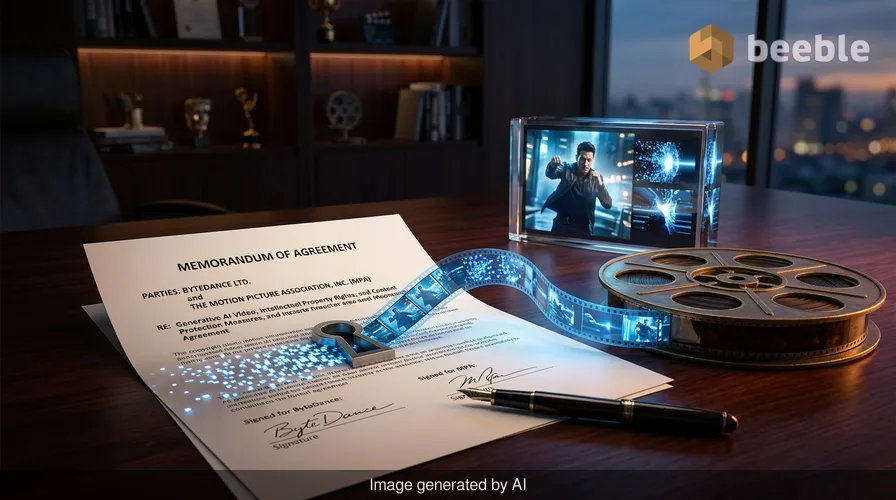
While many creators view artificial intelligence as a free-for-all for digital creativity, the legal walls are finally closing in. ByteDance and the Motion Picture Association just ended a long-running standoff over who owns the pixels in your AI-generated videos. On Monday, the parent company of TikTok signed a formal agreement to strengthen copyright safeguards on its newest generative models. This deal marks a significant shift in how tech giants and Hollywood studios interact in an era where software can conjure a convincing digital double of a movie star in seconds.
The truce between TikTok and Hollywood
The conflict began in early 2026 when the Motion Picture Association, or MPA, sent a cease-and-desist letter to ByteDance. The trade group represents heavyweights like Disney, Netflix, and Warner Bros. Discovery. These studios noticed that ByteDance tools were capable of recreating copyrighted characters with startling accuracy. A user could essentially ask the AI to generate a scene featuring a famous superhero or a specific actress, and the software would comply without checking for a license. The new pact aims to stop this practice by building digital fences around protected intellectual property.
This agreement covers two specific engines under the ByteDance hood. The first is Seedance, a model designed for video generation. The second is Seedream, which focuses on static images. These models are not just research projects. They are the foundational tech behind popular apps like TikTok, CapCut, and the creative suite Dreamina. Practically speaking, when you use a "magic" video filter or an AI image prompt on these platforms, you are interacting with the very systems the MPA challenged.
How ByteDance models build images
To understand why Hollywood is worried, you have to look at how these models learn. Think of an AI model as a tireless intern who spends every waking hour looking at pictures and videos on the internet. This intern takes notes on everything it sees. It learns what a sunset looks like, how water ripples, and what makes a human face look realistic. However, if that intern spends a large portion of their time watching Disney movies, they will naturally start to draw characters that look exactly like Mickey Mouse or Elsa when someone asks for a cartoon.
Under the hood, these models use billions of parameters to map out the relationships between words and visuals. If the training data includes copyrighted films without a filter, the model absorbs those specific aesthetics as universal truths. When a user types a prompt, the AI does not copy and paste an existing image. Instead, it reconstructs a new image based on those internal notes. For a studio that spends hundreds of millions of dollars developing a brand, this feels like a systemic leak of their most valuable assets. The new agreement forces ByteDance to install a screening process that prevents the intern from using those specific studio notes during the creative process.
The problem with digital double takes
One of the biggest friction points in the February dispute involved celebrity likenesses. AI technology has become so scalable that creating a deepfake no longer requires a specialized lab. A teenager with a smartphone can now generate a video of a famous actor saying things they never said. This creates a volatile environment for both the actors and the studios that hold their contracts. The MPA argued that Seedance could generate content featuring copyrighted film and television characters without authorization, which threatens the commercial value of those franchises.
ByteDance says that newer versions of its models include stronger protections for intellectual property. These protections act as an automated gatekeeper. When a user submits a prompt that includes a protected name or a visual description that is too close to a copyrighted character, the system is designed to either block the request or modify the output to be legally distinct. This is a tangible solution to a problem that was previously handled through slow, expensive manual moderation.
Why this matters for your next viral video
For the average user, this agreement changes the way creative tools function on a daily basis. You might find that certain prompts no longer work as they once did. If you try to create a video in CapCut that looks suspiciously like a scene from a recent blockbuster, the AI may return a generic version instead. This is not just about stopping piracy. It is about creating a transparent system where creators know what they can and cannot do with the software.
On the market side, this deal sets a precedent for other AI developers. If ByteDance, a company often criticized for its opaque data practices, can reach a deal with Hollywood, it suggests that the industry is moving toward a more resilient legal framework. Historically, tech companies have asked for forgiveness rather than permission. This pact shows that the cost of legal battles is becoming higher than the cost of building safeguards from the start.
The shifting balance of power in tech
Looking at the big picture, the relationship between big tech and big media is becoming more interconnected. The studios realize they cannot stop AI, and the tech companies realize they cannot ignore copyright law forever. By collaborating on safeguards, both sides are trying to build a predictable ecosystem. ByteDance needs the high-quality content produced by Hollywood to keep its users engaged, while Hollywood needs the distribution power of TikTok to reach younger audiences.
This partnership is not a one-time event. Both sides stated they will continue to work together as AI technology evolves. As models become more intuitive and capable of generating longer, more complex scenes, the safeguards will need to be updated. The goal is to create a streamlined process where innovation does not come at the expense of ownership. For a consumer, this means the tools you use will become more decentralized from the studios' raw assets, forcing you to rely on your own creativity rather than the popularity of existing characters.
A new standard for the creative industry
The bottom line is that the digital wild west is being tamed by fine print. The agreement between ByteDance and the MPA is a foundational step in defining the boundaries of generative AI. It moves the conversation away from vague ethical concerns and toward practical, systemic rules that companies can actually follow. While it might feel like a restriction on creativity, it is actually a stabilization of the market.
Ultimately, this deal ensures that the apps you use every day stay on the right side of the law. It protects the business interests of the people who make your favorite movies while allowing ByteDance to keep shipping new features. As a creator, you should observe how your digital habits change over the coming months. You may notice that the AI feels less like a copy machine and more like a tool for original thought. Appreciate the invisible industrial mechanics that keep your favorite apps running without a constant threat of legal shutdown. The era of free-reign AI character generation is ending, and a more professional, regulated phase of digital creation is beginning.
Sources: ByteDance Corporate Communications, Motion Picture Association Press Office, TikTok Developer Blog, CapCut Technical Documentation.



See you on the other side.
Our end-to-end encrypted email and cloud storage solution provides the most powerful means of secure data exchange, ensuring the safety and privacy of your data.
/ Create a free account
