


ByteDance Strengthens Seedance 2.0 Safeguards Following Hollywood Legal Pressure

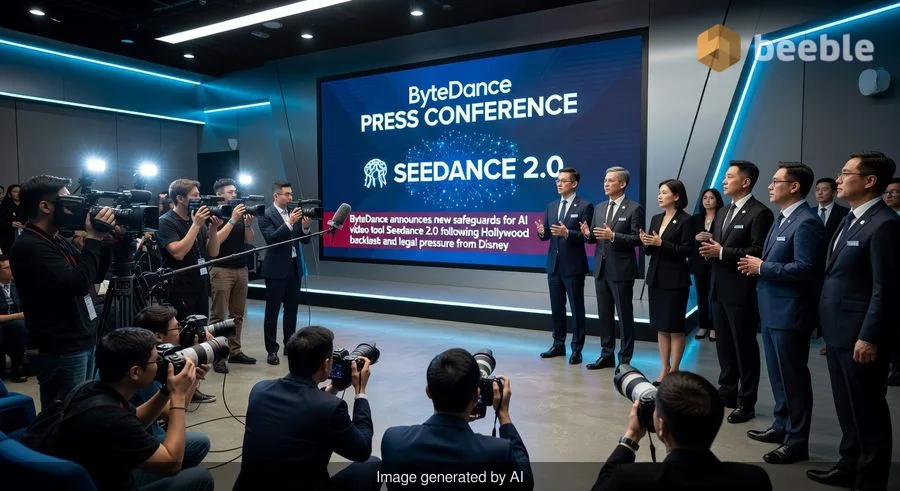
The intersection of generative AI and the entertainment industry has reached a new flashpoint. ByteDance, the parent company of TikTok, recently announced a comprehensive overhaul of the safety and copyright protocols for its flagship AI video generation tool, Seedance 2.0. The move comes as a direct response to mounting friction with major Hollywood studios, most notably The Walt Disney Company, which had reportedly prepared a series of legal challenges regarding intellectual property (IP) infringement.
Seedance 2.0, which debuted earlier this year to critical acclaim for its hyper-realistic motion and temporal consistency, has found itself at the center of a debate over digital provenance. While the tool offers creators unprecedented power to generate cinematic sequences from simple text prompts, it also inadvertently allowed for the creation of content that mimicked copyrighted characters and protected artistic styles with alarming accuracy.
The Catalyst: Hollywood’s Line in the Sand
The tension escalated when several high-profile "fan edits" generated by Seedance 2.0 began circulating on social media. These clips featured characters strikingly similar to those in the Marvel Cinematic Universe and Star Wars, performing actions never filmed by the original actors. For Disney and other members of the Alliance of Motion Picture and Television Producers (AMPTP), this wasn't just a technical curiosity; it was a direct threat to their brand equity and the likeness rights of their performers.
Legal experts suggest that the threat of a massive class-action lawsuit prompted ByteDance to pivot. Rather than engaging in a protracted legal battle that could stifle the global rollout of its AI suite, the company opted for a collaborative approach, promising to integrate "industry-leading" guardrails that prevent the unauthorized use of protected IP.
Implementing the New Guardrails
ByteDance’s updated strategy for Seedance 2.0 focuses on three primary pillars: proactive prompt filtering, digital fingerprinting, and a revamped "IP-Aware" training architecture.
First, the tool’s natural language processing (NLP) layer has been updated with a more sophisticated exclusion list. If a user attempts to prompt the system with names of copyrighted characters or specific trademarked aesthetics, the system will now decline the request or suggest generic alternatives. This is a significant step up from the basic keyword filters used in earlier iterations.
Second, ByteDance is doubling down on the C2PA (Coalition for Content Provenance and Authenticity) standards. Every video generated by Seedance 2.0 will now carry immutable metadata and an invisible digital watermark. This ensures that any content produced by the AI can be instantly identified as such, preventing it from being passed off as official studio footage.
Technical Comparison: Seedance 2.0 vs. The Field
To understand why Hollywood is so concerned, one must look at how Seedance 2.0 compares to other leading models in the space. Its ability to maintain character consistency across multiple shots has set a new benchmark for the industry.
| Feature | Seedance 2.0 (Post-Update) | OpenAI Sora | Runway Gen-3 Alpha |
|---|---|---|---|
| Max Resolution | 4K at 60fps | 1080p at 30fps | 4K at 30fps |
| IP Protection | Real-time IP Blocking | Keyword Filtering | Style Exclusion |
| Watermarking | C2PA + Invisible | C2PA | Proprietary Watermark |
| Motion Physics | High Fidelity | High Fidelity | Moderate |
| Availability | Enterprise & Pro | Limited Preview | Public Access |
The "IP-Aware" Training Model
Perhaps the most innovative change is the shift in how the model is trained. ByteDance has announced it will begin "scrubbing" its training datasets to remove high-density clusters of copyrighted material that could lead to "overfitting." Overfitting occurs when an AI learns a specific image—like a superhero costume—so well that it reproduces it even when not explicitly asked to do so.
By diversifying the training data and introducing "noise" into the recognition of specific trademarks, ByteDance hopes to create a tool that understands the concept of a hero without replicating the identity of a specific one. This is akin to teaching an artist how to paint in the style of Impressionism without letting them see a single original Monet.
Practical Takeaways for Creators
For independent filmmakers and content creators, these changes mean the era of the "Wild West" in AI video is rapidly closing. While the tool remains incredibly powerful, users must now navigate a more regulated environment. Here is how to adapt:
- Focus on Original Concepts: Avoid using prompts that reference specific franchises. Instead, describe the lighting, mood, and physical attributes in detail to achieve a unique look.
- Verify Provenance: If you are using AI video for commercial work, ensure you keep the original metadata intact. This protects you from accusations of copyright theft by proving the video was generated legally through a licensed tool.
- Monitor the Terms of Service: ByteDance has indicated that the ToS for Seedance 2.0 will be updated frequently as they reach new agreements with individual studios.
Looking Ahead: A Truce or a Transformation?
The move by ByteDance is seen by many industry analysts as a tactical retreat that may lead to a long-term partnership. There are already rumors that ByteDance is in talks with studios to create "Licensed Model Tiers." In this scenario, a studio could provide its own assets to the AI, allowing authorized creators to generate official content within a controlled, monetized ecosystem.
While the immediate backlash from Hollywood has been mitigated, the broader question of how AI treats the concept of "style" remains unresolved. For now, Seedance 2.0 stands as a testament to the fact that even the most disruptive technology must eventually find a way to coexist with the giants of the traditional creative world.
Sources
- ByteDance Official Newsroom: Updates on Seedance 2.0 Safety Protocols
- The Hollywood Reporter: Disney and AMPTP Address Generative AI Concerns
- C2PA.org: Implementation of Content Provenance Standards in Video Models
- TechCrunch: The Evolution of AI Video Guardrails in 2026



See you on the other side.
Our end-to-end encrypted email and cloud storage solution provides the most powerful means of secure data exchange, ensuring the safety and privacy of your data.
/ Create a free account
