


Can an AI Chatbot Be Held Criminally Responsible for a Shooting?

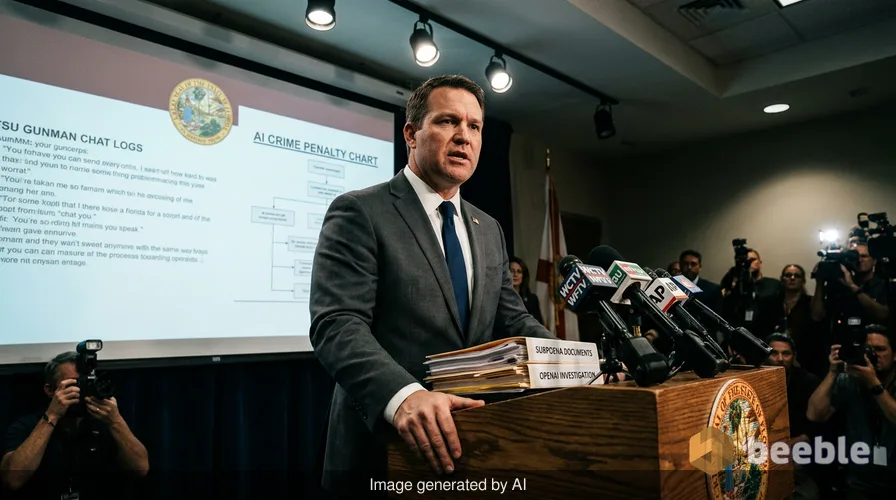
Imagine opening your laptop and engaging in a conversation that feels remarkably human. For most of us, ChatGPT is a tool for drafting emails, debugging code, or planning a weekend itinerary. But in a recent and chilling turn of events in Florida, a chatbot has moved from the digital workspace to the center of a criminal investigation.
Florida Attorney General James Uthmeier recently sent shockwaves through the tech world by launching a criminal probe into OpenAI. The catalyst? A series of chat logs between ChatGPT and a gunman involved in a tragic shooting at Florida State University. This isn’t just a headline about a high-profile lawsuit; it represents a fundamental shift in how the law views the relationship between a creator and their creation. As your Legal Navigator, I want to pull back the curtain on how a company’s code can land them in the crosshairs of the state’s highest law enforcement office.
The Florida Subpoena: Peeking into the Black Box
When a government official issues a subpoena, they aren't just asking nicely for information. A subpoena is a legal order that demands the production of evidence or testimony. In this case, Attorney General Uthmeier is looking for more than just the gunman’s chat logs. He has demanded OpenAI’s internal policies, training materials, organizational charts, and even public statements related to the incident.
Why does an organizational chart matter in a criminal investigation? In the eyes of the law, the state is trying to determine who was in the room when the decisions were made. They want to know who designed the safety filters, who was responsible for monitoring threats, and whether there was a systemic failure to act on red flags. Think of the law as a mirror—it reflects our societal expectation that if you build a powerful tool, you are responsible for making sure it doesn’t become a weapon.
From Customer Support to Crime Scene Evidence
The core of this investigation rests on a precarious question: did OpenAI’s software facilitate a crime? We have long accepted that a telephone company isn't responsible if a criminal uses a phone to plan a heist. However, AI is different. Unlike a passive telephone wire, AI is generative; it interacts, suggests, and provides information based on user input.
If the gunman used ChatGPT to research tactical maneuvers or bypass security at FSU, and the AI provided that information without triggering internal alarms, the state may argue that the company was negligent. In a regulatory context, negligence occurs when a party fails to take reasonable care to avoid causing injury or loss to another person. While negligence is usually a civil matter, in extreme cases—especially those involving public safety—it can cross the line into criminal territory.
The Statutory High Ground: Why Florida is Leading the Charge
Florida has been positioning itself as a digital sheriff for several years. This isn’t the state’s first rodeo with AI-related crime. The legislature recently passed robust laws with stringent penalties for AI-generated child sexual abuse material (CSAM). By launching this investigation, the Attorney General is signaling that the state’s jurisdiction—the power of a specific official to make legal decisions over a territory—extends deep into the Silicon Valley server rooms.
Florida’s approach suggests that they view AI safety not as a voluntary corporate "best practice," but as a statutory requirement. A statute is simply a written law passed by a legislative body. If Florida can prove that OpenAI’s current safeguards were a "boilerplate" (a term for standard, unoriginal language often found in contracts) effort rather than a genuine safety net, they could face unprecedented legal consequences.
Can Code Be "Negligent"?
To understand this investigation, we have to look at the concept of liability. Usually, we think of individuals being liable—or legally responsible—for their actions. But companies have a "corporate personality" in the legal system. This means they can be sued or even prosecuted as an entity.
If the state’s investigation reveals that OpenAI’s training data included material that could help a person commit a violent act, and the company lacked a multifaceted system to block those prompts, the prosecution might argue the company was reckless. They will look for a "precedent," which is a previously decided case that serves as a guide for future ones. Since AI is so new, there isn't a direct precedent for a chatbot being used in a shooting, which makes this investigation a high-stakes marathon for both the state and the tech industry.
Privacy in the Age of Government Oversight
For the average person, this investigation raises a nuanced concern: what happens to your privacy? Most of us treat our chat history like a private diary. However, this case reminds us that there is no such thing as a digital secret when a criminal subpoena is involved.
OpenAI, like most tech companies, has terms of service that essentially state they can hand over your data to law enforcement if required by law. While this investigation is focused on a specific crime, it sets the stage for how future civil disputes might play out. If you are ever involved in litigation, whether it’s a divorce or a contract dispute, your AI chat logs could be considered "discoverable" evidence, just like emails or text messages.
The Algorithmic Black Box and the Duty to Warn
The investigation into "training materials" is perhaps the most invasive part of the subpoena. The state wants to know what the AI was "fed." If the AI was trained on extremist manifestos or manuals on how to cause harm, the Attorney General might argue that the product was defective from the start.
In many jurisdictions, there is a "duty to warn." This legal obligation requires a party to take reasonable steps to warn others of any foreseeable danger. If OpenAI knew that their AI could be manipulated into helping a person carry out a mass shooting, did they have a duty to warn the authorities? This is the central question that could turn a tech company into a criminal defendant.
Key Takeaways for the Everyday User
While we watch this legal drama unfold, there are practical steps you can take to protect your own digital footprint and understand your rights:
- Assume No Privacy: Never type anything into an AI chatbot that you wouldn't want read aloud in a courtroom. In the eyes of the law, these are not private conversations; they are data stored on a corporate server.
- Review Terms of Service: I know they are long and boring, but look for the section on "Data Disclosure." It will tell you exactly under what circumstances the company will hand your logs over to the government.
- Understand "Liability Waivers": When you sign up for ChatGPT, you likely agreed to a waiver that limits OpenAI's liability for how you use the tool. However, as this Florida case shows, a private contract cannot protect a company from a criminal investigation by the state.
- Support Digital Literacy: As AI becomes more integrated into our lives, understanding the legal framework surrounding it is just as important as knowing how to use the software.
Final Thoughts
The Florida investigation into OpenAI is a landmark moment. It’s the first time we are seeing the state treat an AI developer as a potential participant in a violent crime rather than just a neutral platform provider. Whether this leads to criminal charges or a settlement, the message is clear: the "wild west" of AI development is coming to an end, and the sheriff has arrived with a stack of subpoenas.
Sources:
- Florida Statutes Chapter 775 (Public Safety and Penalties)
- The Florida Attorney General’s Office Official Press Release (April 2026)
- Digital Millennium Copyright Act (DMCA) Safe Harbor Provisions
- Restatement (Third) of Torts: Liability for Physical and Emotional Harm
Disclaimer: This article is provided for informational and educational purposes only and does not constitute formal legal advice. The law surrounding artificial intelligence is rapidly evolving and varies significantly by jurisdiction. If you have specific legal questions or are involved in a dispute, please consult with a qualified attorney in your area.



See you on the other side.
Our end-to-end encrypted email and cloud storage solution provides the most powerful means of secure data exchange, ensuring the safety and privacy of your data.
/ Create a free account
