


Can an AI Living in Your WhatsApp Actually Run Your Life?

Have you ever looked at your unread messages and wished they would just answer themselves? Or perhaps you’ve stared at a mounting pile of digital chores—rescheduling a flight, tracking a refund, or organizing a team lunch—and wondered why your ‘smart’ phone isn’t doing the heavy lifting for you? For years, the promise of AI has been a bit like a high-end kitchen appliance that looks great on the counter but requires a 200-page manual to make toast. We have the tools, but we still have to do the work.
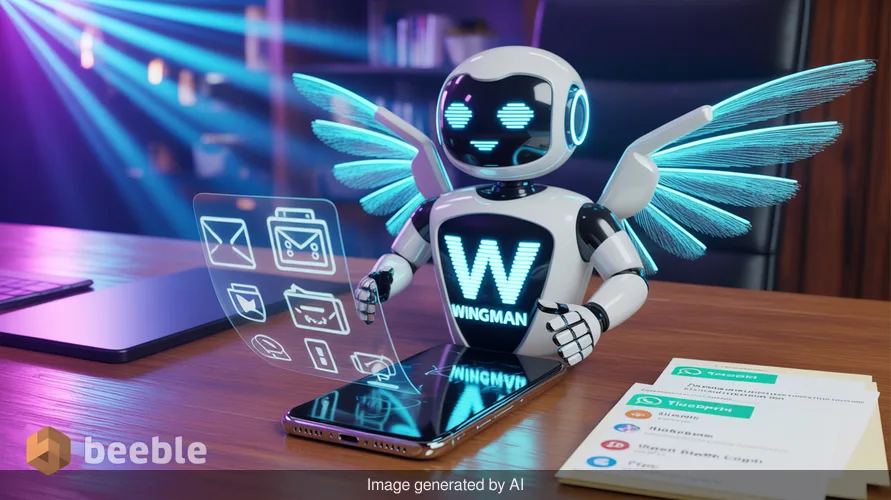
Enter Emergent, a Bengaluru-based startup that is betting on a future where you don’t just use software; you delegate to it. After making waves with a platform that allows anyone to build apps using nothing but natural language—a trend known as vibe-coding—the company is now pivoting toward execution. Their new tool, Wingman, is an autonomous AI agent designed to live inside the messaging apps you already use, like WhatsApp and Telegram. It marks a significant shift from the era of ‘chatting with AI’ to ‘working with AI.’
From Building to Doing: The Evolution of Vibe-Coding
To understand where Emergent is going, we have to look at where they started. In the tech world of 2025, vibe-coding became the ultimate democratizer. It allowed people without a single line of Python or Java in their vocabulary to describe an app idea and watch it come to life. Emergent’s platform became a playground for over 8 million builders, proving that the barrier to entry for software creation had finally collapsed.
However, building an app is only half the battle. Once you have the software, you still have to operate it. Looking at the big picture, the industry realized that we were creating a surplus of tools but a deficit of time. This is why Emergent’s move into the agent space is so disruptive. They aren’t just giving you the hammer anymore; they’re providing the tireless intern who knows how to use it while you’re busy doing something else.
What this means is a transition from software that supports a business to software that actively helps run it. If vibe-coding was about the ‘vibe’ of creation, Wingman is about the ‘vibe’ of completion.
Under the Hood: How Wingman Operates
Unlike traditional chatbots that wait for you to ask a question, Wingman is designed to be an agent. In technical terms, an agent is a piece of software that can perceive its environment, take actions, and achieve goals autonomously. In everyday life, think of it as a digital concierge with access to your email, calendar, and workplace tools.
Behind the jargon, Wingman works by connecting fragmented workflows. If you receive a message on WhatsApp about a meeting conflict, you don’t have to jump between your calendar, your email, and your project management tool. You simply tell Wingman to ‘fix it.’ The agent then navigates those different interfaces in the background, much like a human would, to find a solution.
| Feature | Vibe-Coding (The Foundation) | Wingman (The Agent) |
|---|---|---|
| Primary Goal | Creating new software/apps | Executing tasks within existing software |
| User Interface | Natural language prompts in a dev environment | Messaging apps (WhatsApp, Telegram, iMessage) |
| Autonomy | Low (Requires user to design the logic) | High (Operates in the background) |
| Core Strength | Democratizing development | Streamlining routine workflows |
| Human Role | The Architect | The Supervisor |
The Messaging-First Strategy
One of the most curious aspects of Emergent’s approach is their refusal to build a new, shiny app for Wingman. Instead, they are embedding it into the platforms where real work already happens. For the average user, this is a breath of fresh air. We are all suffering from ‘app fatigue’—the exhaustion of having to download, learn, and manage yet another icon on our home screens.
By choosing WhatsApp and Telegram, Emergent is meeting users in their natural habitat. Practically speaking, assigning a task to an AI agent should feel as easy as texting a colleague. This strategy also bypasses the steep learning curve that often kills new tech products. If you can send a text, you can use Wingman. From a consumer standpoint, this is the ultimate form of user-friendly design: making the technology invisible.
The Trust Boundary: Solving the Rogue AI Problem
One of the biggest hurdles for autonomous agents is the ‘black box’ problem. We’ve all seen the headlines about AI hallucinations or systems that take a simple instruction and turn it into a digital catastrophe. To counter this, Emergent has introduced what they call trust boundaries.
Essentially, these are digital guardrails. You can set Wingman to handle routine, low-stakes tasks—like filing an expense report or scheduling a routine sync—without asking for permission. However, for more consequential actions, such as sending a high-value invoice or deleting a database, the agent is hard-wired to stop and ask for a ‘thumbs up’ in the chat.
This approach addresses a systemic anxiety about AI. We want the efficiency of automation, but we aren’t quite ready to hand over the keys to the kingdom. By keeping the human in the loop for critical decisions, Emergent is attempting to build a resilient system that balances speed with safety.
The Competitive Landscape: OpenClaw and Beyond
Emergent isn’t alone in this race. The field of autonomous agents is becoming a crowded theater. We’ve seen the rise of OpenClaw (formerly known as Clawdbot), which has gained a cult following among power users for its ability to ‘scrape’ and act on web data. Meanwhile, giants like Anthropic and Microsoft are integrating agentic features directly into their operating systems.
On the market side, Emergent’s $300 million valuation and $70 million funding round suggest that investors see a massive opportunity in the ‘agentization’ of the workforce. With backing from SoftBank and Khosla Ventures, the startup has the robust financial runway needed to compete with Silicon Valley heavyweights.
However, the challenge remains: can a startup from Bengaluru out-maneuver the incumbents? Historically, the winners in tech aren’t always the ones with the most advanced algorithms, but the ones who create the most seamless experience. Emergent’s focus on messaging might just be the edge they need.
The Reality Check: Where Agents Still Stumble
Despite the unprecedented progress, we shouldn’t expect Wingman to be a perfect digital twin just yet. Even CEO Mukund Jha admits that the system struggles with ambiguity. AI, for all its processing power, is notoriously bad at reading between the lines.
If you give an agent a messy edge case—like ‘reschedule the meeting but only if the weather is nice and Sarah is in a good mood’—it will likely freeze. Human judgment is still the foundational element of complex work. To put it another way, Wingman is great at the ‘how,’ but it still needs you for the ‘why.’
Ultimately, the success of these agents will depend on how well they handle the friction of the real world. The digital world is clean; the real world is opaque and volatile. Bridging that gap is the next great frontier for AI development.
What This Means for You
For the everyday professional, the arrival of tools like Wingman suggests a shifting landscape in how we manage our time. We are moving away from being ‘operators’ of software and toward being ‘curators’ of outcomes.
In the short term, expect to see a limited free trial as Emergent rolls this out. It’s worth testing the waters to see which of your routine headaches can be offloaded. However, keep an eye on the privacy implications. Giving an agent access to your messaging and workplace tools is a significant step. While Emergent emphasizes security, the decentralized nature of these agents means you should always be mindful of what data you are sharing.
Looking at the big picture, we are witnessing the birth of the personal infrastructure layer. Just as the internet became the invisible backbone of modern life, autonomous agents are poised to become the invisible assistants that keep our digital lives from collapsing under their own weight.
As you go about your week, start noticing the tasks you do on autopilot. Those are the prime candidates for the next wave of AI. The goal isn't to replace the human element, but to strip away the digital busywork so that the human element actually has room to breathe.
Sources:
- Emergent Official Press Release (April 2026)
- TechCrunch: The Rise of Agentic AI in Emerging Markets
- Market Analysis: The $300M Valuation of Emergent
- Industry Report: The Shift from Vibe-Coding to Autonomous Execution



See you on the other side.
Our end-to-end encrypted email and cloud storage solution provides the most powerful means of secure data exchange, ensuring the safety and privacy of your data.
/ Create a free account
