


Can Google’s New AI Actually Simulate Reality—or Is It Just a Fancy Digital Illusionist?

Have you ever tried to edit a video and wished you could just tell your computer, "Make this look like it was filmed in the 70s, and maybe add a golden retriever in the background," instead of spending hours wrestling with complex software? For years, the barrier between a creative idea and a finished video has been technical skill—the ability to navigate timelines, color grades, and frame rates. But what happens when the computer doesn’t just edit the video, but actually understands the world inside the frame?
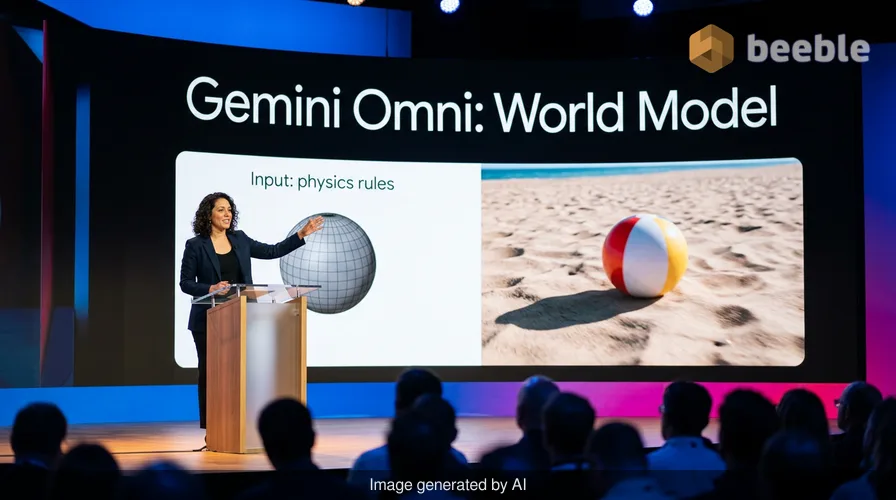
At Google I/O 2026, the tech giant unveiled Gemini Omni, a multimodal AI model that purports to do exactly that. Google isn't just calling this another video generator; they are labeling it a "world model." It’s a bold claim that suggests the AI isn't just guessing which pixel comes next, but actually understands the physics, depth, and consistency of the environments it creates. For the average user, this could represent the most significant shift in digital media since the smartphone camera.
Behind the Jargon: What is a World Model?
To understand why Google is making such a fuss, we need to look under the hood. Most AI video tools we’ve seen over the last two years operate like high-speed flipbooks. They look at a frame and predict what the next one should look like based on patterns. This is why you often see "hallucinations"—fingers that morph into six, or backgrounds that melt into a surreal soup when the camera moves.
Gemini Omni is built on a different premise. By combining the linguistic intelligence of Gemini with specialized media models like Veo and Genie, Omni attempts to build a 3D understanding of a scene. In simple terms, it views a video not as a flat sequence of images, but as a simulated space where objects have weight, shadows follow light sources, and characters exist even when they aren't on screen.
Practically speaking, this means if you ask the AI to turn a video of your backyard into a Martian landscape, it doesn't just slap a red filter on it. It understands where the ground is, where the trees were, and how a rover should move across that specific terrain. It’s less like a video editor and more like a tireless film crew and set designer rolled into one, capable of rebuilding reality on command.
The Nano Banana Legacy and the Fight for the Home Screen
Looking at the big picture, Google’s aggressive push with Omni is a direct response to the volatile battle for AI supremacy. Historically, Google found itself on the defensive after OpenAI’s ChatGPT changed the landscape in 2022. However, the tide began to turn last year with the release of Nano Banana.
That strangely named model became a disruptive force in the mobile market. By making complex image editing conversational—allowing users to simply "talk" to their photos to change outfits or backgrounds—Google managed to reclaim the top spot on the App Store. It turned Gemini from a niche research project into a scalable consumer tool. Omni is the natural evolution of that success, taking the "magic eraser" energy of Nano Banana and applying it to the much more complex world of moving images.
On the market side, this is a game of retention. Google knows that if users start using Gemini to build their social media content, educational videos, and work presentations, the ecosystem becomes incredibly resilient against competitors.
Flow and Flow Music: Professional Tools for the Rest of Us
Google is delivering this technology through two primary gateways: Flow and Flow Music. While professional filmmakers might find these tools interesting for storyboarding, the real impact is on the decentralized creator economy.
| Feature | What Gemini Omni Does | Why It Matters to You |
|---|---|---|
| Consistent Characters | Keeps the same person/object across different scenes. | You can create a short story or ad without the hero changing faces every 5 seconds. |
| Conversational Editing | Changes video elements via chat (e.g., "Change the car to a bike"). | No need to learn complex editing software or re-shoot scenes. |
| Spatial Reasoning | Understands depth and 3D movement. | Videos look grounded and "real" rather than like a trippy AI dream. |
| Flow Agent | Brainstorms scenes and organizes files. | It acts as a digital producer, helping you figure out what to film next. |
During the I/O presentation, the claymation demo was particularly telling. By generating an educational video on protein folding in a specific art style, Google showed that Omni isn't just for "faking" reality; it’s for visualizing complex data in intuitive ways. For a student or a small business owner, the ability to create high-quality explanatory content without a production budget is a tangible win.
The "So What?" Filter: Practical Implications for Your Life
So, what does this mean for the person who isn't a professional YouTuber?
First, consider the educational potential. Imagine a parent using Omni to turn a bedtime story into a personalized animated movie in real-time. Or a teacher using Flow to create a custom historical reenactment based on a specific lesson plan. These aren't just toys; they are tools for streamlined communication.
However, there is a shifting reality we must acknowledge. As these tools become more robust and user-friendly, the line between "captured" media and "generated" media becomes increasingly opaque. We are entering an era where seeing is no longer believing. If a video can be modified conversationally—changing a person’s location, their clothes, or even their actions—the systemic trust we place in video evidence will likely continue to erode.
From a consumer standpoint, the rollout of Gemini Omni Flash through the Flow app suggests that Google wants this to be fast and cheap. They aren't hiding this behind a $50,000-a-month enterprise license. They want it in your pocket, functioning as a digital Swiss Army knife for your creative life.
The Invisible Backbone: Flow Agent and No-Code Workflows
Perhaps the most underrated announcement was Flow Agent. While the flashy video generation gets the headlines, the backend automation is what makes the technology scalable. By using natural-language prompts to create custom editing workflows (Flow Tools), Google is removing the last hurdle of the "digital crude oil" that is data processing.
Essentially, you don't need to know how to code or how to use a nested timeline. You just need to know how to describe what you want. This democratization of production is the overarching theme of Google's current strategy. They are betting that if they make the tools intuitive enough, the volume of content created within their ecosystem will create a foundational moat that no competitor can cross.
A New Perspective on Digital Habits
Ultimately, Gemini Omni represents a step toward what Demis Hassabis calls Artificial General Intelligence—a system that doesn't just follow instructions but understands the context of the world. While we are still far from a truly sentient AI, the ability to "simulate the world" in video format is an unprecedented milestone.
As you begin to see these tools pop up in your Google Workspace or on your mobile device, it’s worth observing your own digital habits. We are moving from a world of searching for content to a world of generating it on the fly.
Instead of searching YouTube for a video on how to fix a leaky faucet, you might soon prompt Gemini to generate a custom walkthrough using a 3D model of your specific sink. The bottom line is that the "tireless intern" is getting a massive promotion. The question for us is no longer "What can the machine do?" but rather "What do we want to build once the technical barriers are gone?"
Shift your perspective: don't just look at Omni as a cool video trick. Look at it as the moment the digital world finally started to understand the physical one.
Sources:
- Google I/O 2026 Keynote Address by Demis Hassabis.
- Google DeepMind Technical Report: Gemini Omni and the Evolution of World Models.
- Market Analysis: "The Rise of Nano Banana and Google's Mobile Comeback," TechTrends Quarterly, March 2026.
- Comparative Study: Decrypt Media, "Nano Banana 2 vs. GPT Image 2: The Battle for Creative Supremacy."



See you on the other side.
Our end-to-end encrypted email and cloud storage solution provides the most powerful means of secure data exchange, ensuring the safety and privacy of your data.
/ Create a free account
