


Can Nvidia Finally Break the Intel Stranglehold on Your Windows PC?

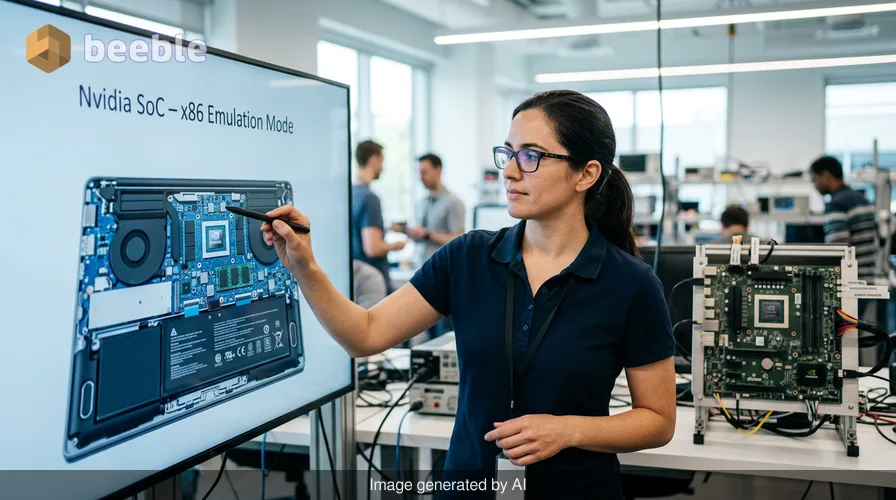
Have you ever wondered why your laptop seems to age in dog years, slowing to a crawl the moment you ask it to do more than browse a few Chrome tabs? For decades, the recipe for a Windows computer has remained remarkably stagnant: a brain made by Intel or AMD, and if you were a gamer or a creator, a heart made by Nvidia to handle the heavy lifting of graphics. But what happens when the heart decides it is powerful enough to become the brain too?
This week, the tech landscape shifted on its axis as reports surfaced that Microsoft and Nvidia are preparing to debut the first Windows-based computers powered primarily by Nvidia chips. This isn't just another minor hardware refresh; it is a fundamental redesign of how a personal computer functions. By moving Nvidia’s silicon from the guest room to the master suite, Microsoft is signaling a definitive end to the x86 era that has defined computing since the 1980s.
Moving Beyond the Graphics Card
To understand why this is a disruptive move, we have to look under the hood at how computers are built. Traditionally, your PC has been a collection of specialized parts. The Central Processing Unit (CPU) was the logic center, handling general tasks, while the Graphics Processing Unit (GPU) was the artist, rendering frames for games or video. Historically, these two components lived in separate neighborhoods on the motherboard, communicating through narrow pathways.
In everyday life, this is like having a gourmet chef (the GPU) and a meticulous accountant (the CPU) working in separate buildings. They can get the job done, but the back-and-forth communication creates a bottleneck. Nvidia’s new approach utilizes a System-on-a-Chip (SoC) architecture, similar to what you find in an iPhone or a high-end MacBook. By integrating the brain and the brawn onto a single piece of silicon, data doesn't have to travel across the motherboard.
Practically speaking, this means the "digital crude oil" of our modern age—data—is processed with unprecedented efficiency. For the average user, this translates to a machine that wakes up instantly, runs cool enough to stay on your lap without causing a sweat, and, most importantly, possesses the raw power to run advanced AI models locally rather than relying on a distant, expensive cloud server.
The ARM Wrestle for Dominance
Looking at the big picture, this move is part of a broader, systemic shift toward the ARM architecture. While Intel and AMD use a language called x86, ARM—the architecture Nvidia is using for these new processors—is more streamlined and energy-efficient.
Microsoft has tried this before. You might remember the ill-fated Surface RT or the more recent, but still niche, ARM-based Surface Pro models. Those previous attempts often felt like trying to run a marathon in flip-flops; the hardware was efficient, but the software didn't fit. Curiously, the landscape in 2026 is vastly different. Microsoft has spent the last two years refining its emulation layers, ensuring that the apps you use today will run smoothly on the chips of tomorrow.
On the market side, this is a clear shot across the bow for Intel. For years, Intel’s dominance was an interconnected web of manufacturing prowess and software compatibility. As that web unravels, Nvidia is stepping into the void. They aren't just selling a chip; they are selling a vision where the PC is a robust AI workstation.
Why AI Changes the Hardware Equation
Behind the jargon of "Neural Processing Units" and "Teraflops" lies a simple reality: the way we use computers is changing. We are moving from a world where we give computers commands to a world where we give them intentions. Whether it’s asking an AI to summarize a meeting, generate a high-resolution image, or live-translate a video call, these tasks require a specific kind of mathematical horsepower that traditional CPUs simply weren't built for.
Nvidia has long been the undisputed king of AI in data centers. Their chips are the foundational architecture for nearly every major AI model in existence. By bringing that same technology into a consumer laptop, they are essentially providing you with a tireless intern that lives inside your screen.
To put it another way, if standard computing is like driving a car on a paved road, AI computing is like flying a jet. You can’t just put wings on a sedan and expect it to take off. You need a completely different engine. Nvidia is providing that engine, and Microsoft is building the cockpit around it.
What This Means for Your Next Purchase
For the average user, the arrival of Nvidia-powered Windows PCs creates a volatile but exciting market. If you are planning to buy a new laptop in the next twelve months, the decision-making process just became a bit more complex.
| Feature | Traditional x86 (Intel/AMD) | New Nvidia/ARM Windows PC |
|---|---|---|
| Battery Life | 8–12 hours (Standard) | 18–24+ hours (Projected) |
| AI Performance | Moderate (Hybrid) | Industry-Leading (Integrated) |
| App Compatibility | Native (Legacy support) | High (Via advanced emulation) |
| Thermal Design | Often requires loud fans | Silent or near-silent operation |
| Best For | Heavy legacy software, high-end gaming | Mobile productivity, AI workflows, creative arts |
From a consumer standpoint, the most tangible benefit will likely be battery life. We have seen what Apple did with its M-series chips, turning laptops into devices that can last a full weekend on a single charge. Nvidia is aiming for that same resilience. If they succeed, the "low battery anxiety" that has haunted Windows users for decades could become a relic of the past.
Conversely, we must maintain a level of healthy skepticism toward corporate PR. While the hardware might be revolutionary, the price tag is likely to reflect its premium status. These first-generation Nvidia PCs, expected from brands like Dell and Microsoft’s own Surface line, will not be budget-friendly "student" laptops. They are flagship devices designed to showcase what is possible when the world's most valuable chipmaker and the world's largest software company join forces.
The Bottom Line
Ultimately, the entry of Nvidia into the main processor market represents a shifting of the tectonic plates in the tech industry. For years, Nvidia was the specialist you called in for specific jobs. Now, they are the general contractor.
This isn't just about faster computers; it’s about a more intuitive relationship with our devices. As these machines debut next week, the real test won't be in the benchmarks or the synthetic tests, but in the everyday experience of the user. Will it feel seamless? Will the software "just work"?
As we move forward, observe your own digital habits. Are you spending more time in browser-based tools and AI-driven apps? If so, the traditional PC architecture might already be holding you back. The arrival of the Nvidia PC suggests that the invisible backbone of our digital lives is being rebuilt for a future that is smarter, faster, and much more efficient.
Rather than rushing to upgrade, watch how the first wave of reviews handles the transition. The most important takeaway isn't that you need a new computer today, but that the very definition of what a computer is has just changed forever.
Sources:
- Axios Industry Report: Nvidia-Microsoft Windows Partnership (May 2026).
- Microsoft Surface Hardware Roadmap 2026-2027.
- Market Analysis: The Shift from x86 to ARM in Consumer Electronics.
- Nvidia Quarterly Technical Briefing on SoC Architecture.



See you on the other side.
Our end-to-end encrypted email and cloud storage solution provides the most powerful means of secure data exchange, ensuring the safety and privacy of your data.
/ Create a free account
