


Can Starlink Finally Solve Uganda’s Connectivity Crisis?

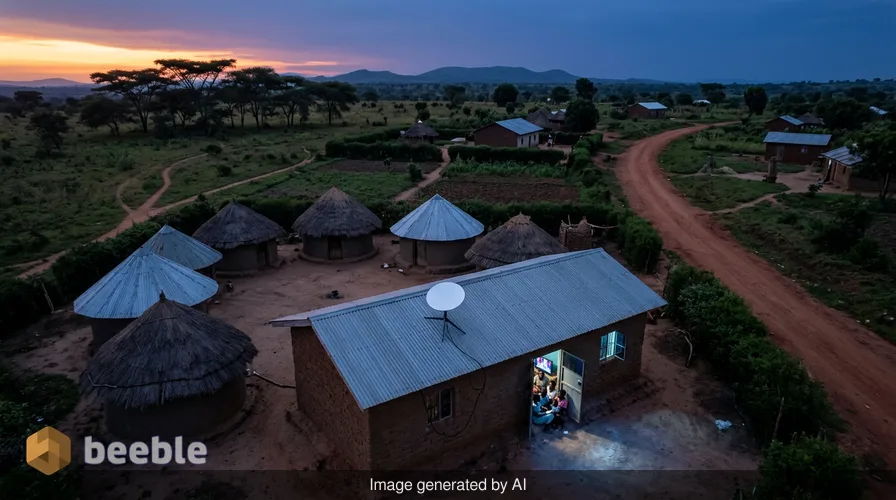
Have you ever wondered why, despite living in an era of rapid digital evolution, your home internet connection still feels like it’s being delivered through a straw? For many in Uganda, the frustration of a buffering video or a dropped work call isn't just a minor annoyance; it is a systemic barrier to participating in the global economy. This week, that barrier began to show its first real cracks.
President Yoweri Museveni recently announced that Uganda has officially granted an operating license to Starlink, the satellite internet venture led by Elon Musk’s SpaceX. This move marks a significant pivot in the East African telecommunications landscape, which has historically been dominated by a few major players. For the average user, this isn't just another corporate contract—it represents the potential for a foundational shift in how the country stays connected.
Behind the Jargon: How Satellite Internet Actually Works
To understand why this is disruptive, we need to look under the hood of how we get online. Most of us rely on fiber-optic cables buried in the ground or 4G/5G towers that dot the skyline. These are robust systems, but they are expensive to build, especially in rural or geographically challenging areas. This is why internet access in Uganda has often been a tale of two cities: decent in Kampala, but a digital desert once you head toward the more remote regions.
Starlink approaches the problem from a different angle—literally. Instead of relying on ground-based infrastructure, it uses a constellation of thousands of small satellites orbiting the Earth at a relatively low altitude.
In simple terms, think of traditional satellite internet like a giant flashlight beam coming from a satellite parked very far away in space (about 35,000 kilometers). Because the distance is so vast, there is a noticeable delay, or latency, in the signal. Starlink’s satellites are roughly 60 times closer to Earth. This proximity allows for a much more streamlined data flow, making the connection fast enough for video calls, online gaming, and real-time financial trading—things that were previously impossible with older satellite technology.
Breaking the Duopoly: On the Market Side
For years, the Ugandan data market has been a tug-of-war between two main giants: South Africa’s MTN Group and India’s Bharti Airtel. While these companies have made significant strides in expanding mobile coverage, consumers have frequently complained about high costs and inconsistent speeds.
From a consumer standpoint, the entry of a third, decentralized player like Starlink is a breath of fresh air. Competition is the most effective tool for driving down prices and forcing incumbents to improve their service. Looking at the big picture, Starlink doesn't need to dig a single trench or lay a single kilometer of cable to reach a village in the Karamoja sub-region. It simply requires a clear view of the sky and a small satellite dish.
This scalability is what makes the technology so potent for emerging markets. It bypasses the physical hurdles of traditional engineering, effectively leapfrogging the slow process of building out land-based networks. However, it is important to filter the corporate PR through a lens of pragmatic skepticism. While the technology is impressive, the price of entry remains a significant hurdle for the everyday user.
The "So What?" Filter: Practical Realities for Ugandans
What this means is that while the service is now legally allowed to operate, it may not be a universal fix overnight. To get started, users generally need to purchase a hardware kit, which includes a satellite dish and a router. Historically, in other African markets like Nigeria or Rwanda, this kit has cost several hundred dollars—a steep price for the average household.
To put it another way, Starlink is currently the high-end tool in the shed. For a small business in a rural town, a school that needs a reliable connection for digital learning, or a remote medical clinic, the investment is a game-changer. For a casual smartphone user in the city who just wants to check social media, the current mobile data plans will likely remain the more practical choice for a while.
| Feature | Traditional Fiber/4G | Starlink Satellite |
|---|---|---|
| Availability | Urban & Semi-urban | Nationwide (requires sky view) |
| Setup Cost | Low to Moderate | High (Hardware required) |
| Latency (Lag) | Low (Fiber) to Moderate (4G) | Low to Moderate |
| Reliability | Susceptible to cable cuts/power | Susceptible to heavy rain |
| Portability | Fixed (Fiber) or Mobile (4G) | Semi-portable (Dish required) |
Looking at the Big Picture: Economic and Social Impact
Zooming out, the arrival of Starlink is about more than just faster Netflix streaming. In a country where agriculture is the backbone of the economy, reliable internet can provide farmers with real-time weather data, crop pricing, and access to international buyers. It allows local software developers to work for global firms without worrying about their connection dropping during a sprint meeting.
President Museveni’s emphasis on Starlink complying with local laws is also a key detail. This suggests that the Uganda Communications Commission (UCC) will have a level of transparent oversight regarding data privacy and security. While some might see regulation as a bottleneck, in this case, it provides a stable framework for a foreign tech giant to operate within the national interest.
Conversely, we must consider the environmental and logistical footprint. A sky filled with thousands of satellites has raised concerns among astronomers about light pollution, and there is always the question of how hardware will be serviced or recycled at the end of its life cycle. These are the shifting challenges of the modern age—balancing the desperate need for connectivity with the long-term health of our orbital and local environments.
The Bottom Line
Ultimately, Starlink’s entry into Uganda is a disruptive event that challenges the status quo. It serves as a reminder that the digital divide is not a permanent fixture, but a problem that can be solved with enough innovation and competition.
For the average user, the takeaway is simple: you now have a choice. Even if you don't sign up for Starlink tomorrow, its presence in the market will likely push your current provider to work harder for your business. It is a win for the consumer, a win for the rural entrepreneur, and a significant step toward a more interconnected Uganda.
As you navigate your digital life this week, take a moment to observe how much of your daily routine depends on invisible industrial mechanics. Whether it's the fiber cable under your street or the satellite 500 kilometers above your head, the way we talk to the world is changing. The question is no longer if we can get connected, but how fast we can run once we are.
Sources:
- Official Statement: President Yoweri Museveni via X (formerly Twitter).
- Regulatory Brief: Uganda Communications Commission (UCC) licensing guidelines.
- Market Analysis: MTN Group and Bharti Airtel annual investor reports.
- Technical Specifications: SpaceX Starlink LEO constellation documentation.
- Regional Trends: African Telecommunications Union (ATU) connectivity reports.



See you on the other side.
Our end-to-end encrypted email and cloud storage solution provides the most powerful means of secure data exchange, ensuring the safety and privacy of your data.
/ Create a free account
