


Can You Really Build an App While Standing in Line for Coffee?

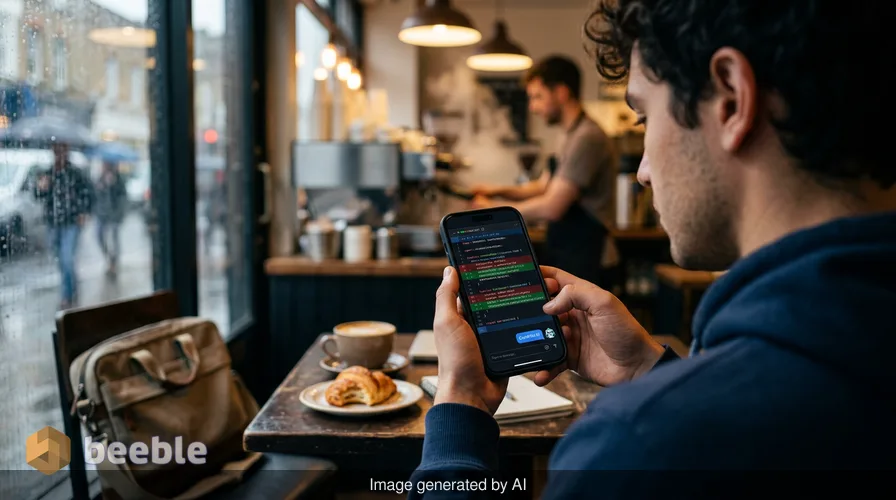
Ever had that sinking feeling that you left a stove on at home, only the stove is a thousand-line script running on a cloud server that might be burning through your monthly API budget? For years, software development has been a desk-bound discipline, tethered to multi-monitor setups and mechanical keyboards. But OpenAI’s latest announcement suggests the era of the stationary programmer is coming to an end.
With the integration of Codex into the ChatGPT mobile app, the company is betting that we are ready to manage complex software projects from the palms of our hands. This isn't just about reading code on a small screen; it is about the transition of AI from a simple chatbot to a tireless intern that works while you’re commuting, provided you’re there to give it the occasional thumbs-up.
Beyond the Text Box: What is Codex Now?
To understand why this move to mobile matters, we have to look at what Codex has become. When it first launched, Codex was essentially a sophisticated version of predictive text for programmers. You started a line of code, and it finished it. Today, it has evolved into an agentic tool. In simple terms, an agent is an AI that doesn't just talk; it does. It can browse the web, run tests, fix its own bugs, and now, it can do all of that in the background while you go about your day.
OpenAI’s new update allows users to monitor these live environments directly from their phones. If you have a complex data scraping project running or a new web app being built by the AI, you can see the progress in real-time. Looking at the big picture, this moves the human role from the person writing every line to the manager overseeing a digital workforce. You aren't typing code with your thumbs—thankfully—but you are approving the AI’s next steps, switching between different versions of a project, and tweaking the underlying logic on the fly.
The Shift from Human-in-the-Loop to Human-on-the-Loop
Historically, coding required a high level of focused immersion. You had to hold the entire logic of a program in your head at once. AI agents are changing that cognitive load. Behind the jargon of agentic workflows lies a simple reality: the AI is doing the heavy lifting, and you are acting as the quality control officer.
From a consumer standpoint, this is a massive shift in how we interact with technology. It’s the difference between driving a car and being the air traffic controller for a fleet of drones. OpenAI’s statement that users can work across all threads and approve commands from a phone highlights this shift. If the AI hits a fork in the road—say, choosing between two different ways to secure a login page—it can ping your phone, show you the pros and cons, and wait for your tap to proceed.
The Competitive Pressure: OpenAI vs. Anthropic
OpenAI isn't working in a vacuum. This release is a direct response to the volatile and fast-moving competition in the AI sector. Just months ago, Anthropic released its Remote Control feature for Claude Code, which offered a similar promise of mobile oversight. Curiously, while OpenAI has the larger name recognition, Anthropic has been quietly winning over the hearts of professional developers who value the precision and safety-first approach of the Claude models.
This rivalry is a win for the average user because it accelerates the rollout of robust, user-friendly features. We are seeing a race to see who can provide the most streamlined experience. While OpenAI focuses on the interconnected ecosystem of its Chrome extension and mobile app, Anthropic is pushing for deeper integration into existing enterprise tools.
| Feature | OpenAI Codex (Mobile) | Anthropic Remote Control |
|---|---|---|
| Platform Support | iOS, Android, Web, Chrome | Web, CLI-focused Mobile |
| Background Execution | Yes (Desktop & Mobile Sync) | Yes |
| Command Approval | Push Notifications / In-App | Remote Terminal Prompts |
| Live Environment View | Full GUI in-app | Streamed Log Outputs |
| Model Flexibility | Can switch models mid-thread | Locked to specific Claude versions |
The Pragmatic Reality: Is It Actually Useful?
Now, let’s apply the so-what filter. Is anyone actually going to build the next Facebook while sitting on a bus? Probably not. The screen real estate on a smartphone is a foundational limitation that no amount of AI magic can fully overcome. However, the use case for this isn't high-intensity creation; it’s maintenance and intervention.
Practically speaking, this is a godsend for the independent developer or the small business owner. Imagine you’ve deployed a new feature for your online store, and the AI agent is monitoring for errors. You’re out for dinner, and the agent detects a systemic crash. Instead of rushing home or searching for a laptop in a coffee shop, you get a notification, review the suggested fix on your phone, and hit approve. The crisis is averted before the appetizers arrive.
Conversely, there is a risk of the always-on culture becoming even more invasive. If your work can follow you to the grocery store, will it ever actually stop? The digital crude oil of the 21st century—data and code—never stops flowing, and these tools ensure we are always connected to the pipe.
Security and the Opaque Nature of Agents
Under the hood, moving these capabilities to mobile raises some transparently difficult security questions. When an AI agent is running tasks autonomously in the background, it has access to your files, your servers, and potentially your browser sessions via the new Chrome extension.
OpenAI has implemented a system where the agent must ask for permission before executing sensitive commands. This is why the mobile app is so critical; it serves as the physical key to the digital lock. By requiring a human to approve a command on a trusted mobile device, OpenAI is attempting to mitigate the risks of an agent going rogue or making a costly mistake. However, for the average user, the complexity of what the AI is actually doing can sometimes feel opaque. It requires a high level of trust to hit approve on a block of code you only skimmed on a five-inch screen.
Looking Ahead: The Democratization of Development
Ultimately, this is about making the creation of technology more resilient and accessible. We are moving away from a world where you need to be a math whiz with a $3,000 laptop to build a software solution. As these tools become more intuitive and decentralized, the barrier to entry for turning an idea into a functioning product continues to drop.
What this means for you is a shift in how you should view your own digital literacy. You may not need to learn the syntax of Python or C++ in 2026, but you will need to learn how to manage an AI that does. The skill of the future isn't writing code; it’s the ability to provide clear instructions and make sound editorial judgments on the outputs an AI generates.
As we look at the big picture, the arrival of Codex on your phone is a signal that the invisible backbone of our modern life—software—is becoming more plastic and responsive. We are no longer just consumers of apps; we are becoming the high-level architects of our own digital experiences, capable of managing complex systems from anywhere on earth.
From a practical foresight perspective, it is time to stop thinking of your phone as a consumption device and start seeing it as a management console. Whether you are a hobbyist or a professional, the tools of production are no longer sitting on your desk—they are in your pocket. Observe your digital habits over the next few weeks. See where an autonomous intern could take a task off your plate, and consider if you're ready to be the one who signs the checks.
Sources:
- OpenAI Newsroom: "Codex Mobile and Agentic Workflows" (May 2026)
- Anthropic Development Blog: "The Future of Remote Control in Claude Code"
- TechCrunch: "The Rise of the AI Agent: How Mobile is Changing the Dev Landscape"
- MarketWatch: "OpenAI vs Anthropic: The Battle for the Developer Desktop"



See you on the other side.
Our end-to-end encrypted email and cloud storage solution provides the most powerful means of secure data exchange, ensuring the safety and privacy of your data.
/ Create a free account
