


Can Your Home Security Camera Finally Think for Itself?

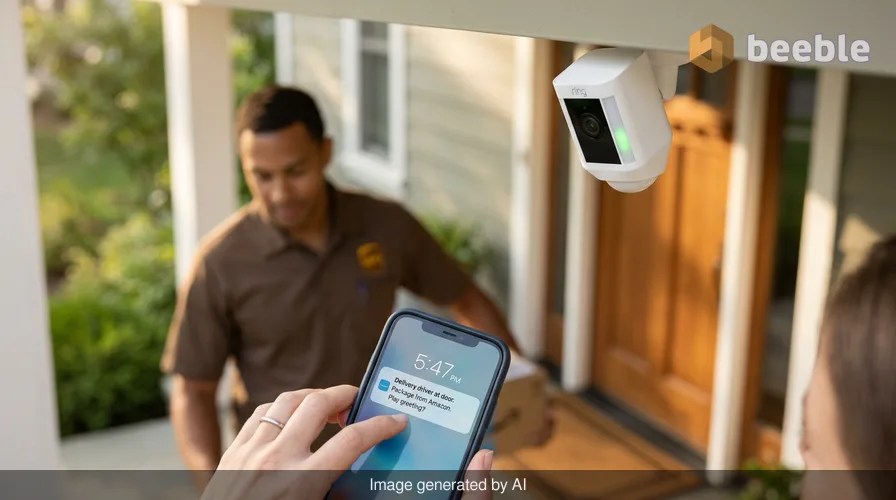
Have you ever looked at your expensive smart camera and wondered why it is so good at telling you a person is at the door, but so bad at doing anything meaningful about it? For years, the smart home has felt less like an intuitive living space and more like a collection of fragile digital switches. You could set a rule to turn on the porch light when motion was detected, but the system couldn't tell the difference between a delivery driver and a stray cat without a specialized (and often expensive) subscription.
Looking at the big picture, the industry is moving away from these rigid, if-this-then-that structures. Google’s latest update to Gemini for Home, its AI-first replacement for the venerable Google Home Assistant, marks a foundational shift in how our houses perceive the world. By integrating high-level visual reasoning directly into the automation engine, Google is attempting to turn the humble security camera into a digital concierge—one that doesn't just see pixels moving, but understands the context of what is happening in your driveway or living room.
From Pixels to Logic: The Death of the Motion Sensor
Historically, smart home cameras have relied on relatively primitive triggers. They looked for changes in groups of pixels or used basic infrared sensors to detect heat. Even when machine learning arrived on the scene to identify "people" or "packages," the logic remained binary. If X happens, then do Y. If you wanted something complex, you had to spend hours menu-diving in an app.
Under the hood, Gemini for Home works differently. It treats your camera feed as a live data stream that it can "read" like a book. Because Gemini is a multimodal large language model, it can analyze visual information and correlate it with natural language instructions. This is a disruptive change for the average user because it removes the need to understand how the software works. You no longer need to find the specific "Package Detection" toggle in a sub-menu; you simply tell the system what you want it to look for in plain English.
For example, you could prompt the system: "If the kids come home from school and I’m not in the kitchen, send a notification to my phone and play their favorite playlist in the living room." The AI isn't just looking for a person; it is looking for specific people, at a specific time, and checking the status of another room before deciding which action to take. This level of systemic intelligence was previously the domain of high-end, professionally installed automation systems costing thousands of dollars.
The Natural Language Breakthrough
One of the most frustrating aspects of the old Google Assistant was its linguistic fragility. If you didn't phrase your command exactly right, you were met with the dreaded "I'm sorry, I don't understand." In simple terms, the old system was a dictionary, while Gemini is a translator.
As part of this May 2026 update, Google has streamlined the process of creating routines. Instead of a series of drop-down menus, users are presented with a text box. You describe the event—such as "the dog getting on the sofa" or "the garage door being left open for more than ten minutes"—and Gemini translates that description into a functional routine. This creates a more user-friendly experience that democratizes complex home automation.
Practically speaking, this means the barrier to entry for a truly "smart" home has dropped. You don't need to be a hobbyist or a coder to make your home react to your life. Behind the jargon of "visual intelligence," this is really about making technology adapt to humans, rather than forcing humans to learn the language of machines.
Reliability and the "Tireless Intern" Problem
If we view AI as a tireless intern, we have to admit that this particular intern has, until recently, been a bit prone to making mistakes. Google’s transition from Assistant to Gemini hasn't been without its growing pains. Early adopters in late 2025 reported that the AI would frequently claim it couldn't perform tasks it clearly had the permissions for, or it would struggle to manage multiple requests at once.
This update addresses these foundational reliability issues. Google claims Gemini for Home is now more resilient when handling concurrent requests. In everyday life, this means you can say, "Turn off the lights, lock the front door, and set a timer for the oven for 20 minutes," and the AI won't trip over its own logic. Furthermore, the assistant’s understanding of timers and alarms—a core function of any kitchen-based smart display—has been overhauled to prevent the AI from losing track of active countdowns.
| Feature | Old Google Assistant | Gemini for Home (May 2026 Update) |
|---|---|---|
| Trigger Logic | Rigid, pre-set events | Natural language descriptions |
| Visual Awareness | Basic object recognition | Contextual scene understanding |
| Request Handling | Serial (one at a time) | Concurrent (multiple requests) |
| Language Tone | Formal, keyword-dependent | Casual, conversational |
| Ecosystem Depth | Broad but shallow | Deeply interconnected AI logic |
The Missing Piece of the Puzzle
While the software is evolving at a breakneck pace, the hardware side of the equation remains curiously stagnant. At the center of Google’s long-term strategy is the new Google Home Speaker, which was announced back in October 2025. It was promised for a "Spring 2026" release, and yet, as we sit in late May, it is still nowhere to be found on store shelves.
This delay creates a bottleneck for the broader rollout of these features. While existing Nest Hubs and cameras can handle the new Gemini updates, the upcoming speaker is rumored to have dedicated on-device AI processing. This would make the system more robust and less dependent on the cloud, which is a major win for privacy and speed. On the market side, this delay suggests that while Google has mastered the "brain" (the software), the "body" (the hardware) is still stuck in the volatile world of global supply chains and manufacturing refinements.
What This Means for Your Privacy and Budget
From a consumer standpoint, these updates are a double-edged sword. On one hand, you are getting significantly more value out of your existing hardware. Your 2022 Nest Cam just became a much more powerful tool without you spending a dime. On the other hand, a home that "understands" what it sees is a home that is constantly processing private visual data.
Google has been transparent about the fact that this processing happens primarily in the cloud for now, though they are pushing for more on-device handling in future hardware. For the average user, the trade-off is clear: convenience versus data footprint. If you want a home that knows when the glass breaks or when a package is dropped, you are essentially inviting a digital observer into your private space.
Ultimately, the bottom line is that the smart home is finally becoming "smart" in the way we were promised a decade ago. It is shifting from a collection of remote-controlled gadgets to an interconnected ecosystem capable of limited reasoning.
Practical Foresight
As you integrate these new features, I encourage you to observe your digital habits over the next few weeks. Start small by setting up one natural language automation—perhaps something simple like having your hallway lights turn on only when the camera sees you carrying groceries. This will help you gauge the reliability of Gemini’s visual intelligence without over-relying on it for critical security tasks.
Moreover, keep an eye on your data settings. With Gemini taking a more active role in interpreting your daily life, it is a good time to audit which cameras have access to these advanced features and which should remain "dumb" for the sake of privacy. The future of the home isn't just about what your tech can do for you, but how much you trust it to see.
Sources:
- Google Nest & Home Official Blog - Spring Update 2026
- Google I/O 2026 Keynote - "The Future of Gemini in the Home"
- Market Analysis: AI Integration in Consumer IoT - Q2 2026 Report
- Hardware Supply Chain Monthly - May 2026 Edition



See you on the other side.
Our end-to-end encrypted email and cloud storage solution provides the most powerful means of secure data exchange, ensuring the safety and privacy of your data.
/ Create a free account
