


Could Robots and Drones Really Drop Your Food Delivery Bill to $1?

The Promise of a $1 Delivery Revolution
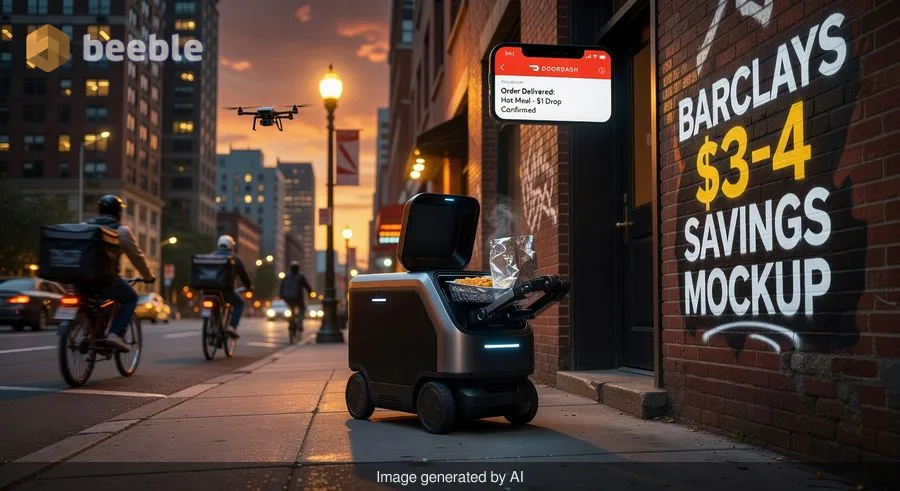
Imagine ordering pizza on a rainy evening, and instead of waiting for a harried courier on a scooter, a quiet drone hums overhead or a sidewalk robot trundles up like a dutiful pet. For the average user, this isn't sci-fi anymore. Barclays analysts project that autonomous food delivery—via robots and drones—could slash costs to as low as $1 per order. That's a potential drop of $8 to $9 from today's rider-based deliveries in high-wage areas. Practically speaking, it could mean billions in extra profits for platforms like DoorDash, reshaping how we think about that late-night craving.
Current autonomous costs hover at $5 to $7 per drop in early markets, already $3 to $4 cheaper than human riders. Zooming out, if penetration hits 10% by 2035, Barclays estimates a $16 billion annual profitability boost globally. But is this realistic, or just another corporate forecast dressed in shiny tech?
How Autonomous Delivery Actually Works
Behind the jargon, autonomous delivery splits into two main flavors: sidewalk delivery robots (SDRs) and drones. SDRs are those boxy, wheeled bots you might spot zipping along urban paths, dodging pedestrians with sensors and AI mapping. Companies like Starship Technologies and Serve Robotics deploy them in places like San Francisco and parts of Europe, carrying meals from nearby restaurants to your door in 15-30 minutes.
Drones take to the air, ideal for suburban sprawl or campuses. Wing (Alphabet's project) and Zipline handle drops via parachutes or winches, bypassing traffic entirely. DoorDash has piloted both, partnering with these operators to test scalability.
Under the hood, these systems rely on a tireless intern-like AI: GPS, LiDAR for obstacle avoidance, and machine learning to predict human behavior. A drone might scan for power lines mid-flight; a robot navigates curbs like a cautious toddler. Costs tumble because there's no hourly wage, no tips, and minimal fuel—electric batteries recharge overnight.
To put it another way, it's like upgrading from a bicycle messenger to a self-driving conveyor belt. Early data from U.S. pilots shows reliability nearing 99%, with mishaps rarer than rider accidents.
The Numbers: From Niche to Mainstream
Autonomous delivery is embryonic today, under 1% of global orders. Barclays forecasts 2% by 2030 and 10% by 2035, driven by labor shortages and rising wages. Here's a quick breakdown:
| Metric | Current | 2030 Projection | 2035 Projection |
|---|---|---|---|
| Penetration | <1% | 2% | 10% |
| Cost per Order | $5-7 | $3-4 savings | ~$1 |
| Global Profit Pool | Minimal | Building | $16B annual |
In high-labor-cost spots like the U.S. or UK, riders earn $15-25/hour plus tips, pushing delivery fees to $4-6 on top of food costs. Robots sidestep this, amortizing hardware over thousands of drops. Meituan in China, facing similar pressures, is rolling out robot fleets in dense cities.
For the average user, this means your $20 burger run could shrink by 20-30% long-term. But hurdles remain: regulations cap drone flights, weather grounds them, and robots struggle with stairs or rural roads.
Winners and Laggards in the Automation Race
DoorDash leads with commercial deployments in over 30 U.S. cities via Serve and Starship. Meituan's robot army in Shenzhen handles 10,000+ daily orders. Uber Eats eyes integration through partnerships, while Prosus (via Delivery Hero) positions for Europe.
On the market side, Grab and Talabat lag in pilots but could surge in Southeast Asia and the Middle East. Curiously, high-density, high-wage markets win first—think California over rural India.
Practically speaking, if you're in a test city, you might already see these bots. I've watched one deliver tacos in my neighborhood; it's oddly mesmerizing, like a Roomba with ambition.
Everyday Impacts: Cheaper Eats or Hidden Tradeoffs?
From a consumer standpoint, $1 deliveries sound like a win. Faster service without surge pricing during storms. Platforms pocket savings, potentially passing some to you via lower fees or promos. In everyday life, it democratizes access—elderly folks or office workers get hot meals without human hassle.
Yet, mild skepticism is warranted. Job displacement looms for millions of riders, many gig workers without safety nets. Environmentally, drones cut emissions versus gas scooters, but battery production has its own footprint. Reliability? A 2025 FAA report noted drone failures at 1 in 1,000 flights, mostly minor.
What this means is tangible savings amid volatile food inflation. A family ordering thrice weekly saves $50 monthly at scale. But watch for data privacy—cameras on these bots map your street in unprecedented detail.
Regulatory and Tech Hurdles Ahead
Governments are catching up. The U.S. FAA expanded drone rules in 2025, allowing beyond-visual-line-of-sight ops in select zones. Europe mandates geo-fencing for safety. China leads with laxer rules, fueling Meituan's edge.
Technologically, battery life limits drone range to 10-20 miles; robots top out at walking speed. Scalability demands robust infrastructure—charging stations like EV plugs for delivery hubs.
Historically, this echoes ride-sharing's disruption of taxis. Taxis adapted or faded; riders might pivot to oversight roles. The bottom line: progress accelerates where pilots prove payouts.
Beyond the Forecast: What to Watch
Ultimately, this shift hinges on execution. DoorDash's Q1 2026 earnings hinted at 5% autonomous mix, ahead of Barclays' curve. If costs hit $1, expect menu prices to stabilize as platforms claw back margins.
In simple terms, autonomous delivery isn't replacing riders overnight. It's a streamlined supplement, resilient against labor volatility.
As we trace from your doorbell back to the warehouse, appreciate these invisible mechanics. Next time a robot rolls up, consider the global supply chains—chips from Taiwan, software from Silicon Valley—quietly transforming your dinner routine. Shift your lens: these aren't gadgets, but the foundational gears making urban life cheaper and more efficient. Observe how your habits evolve with them.



See you on the other side.
Our end-to-end encrypted email and cloud storage solution provides the most powerful means of secure data exchange, ensuring the safety and privacy of your data.
/ Create a free account
