


Crypto Market Outlook: Navigating Volatility After Hawkish FOMC Minutes

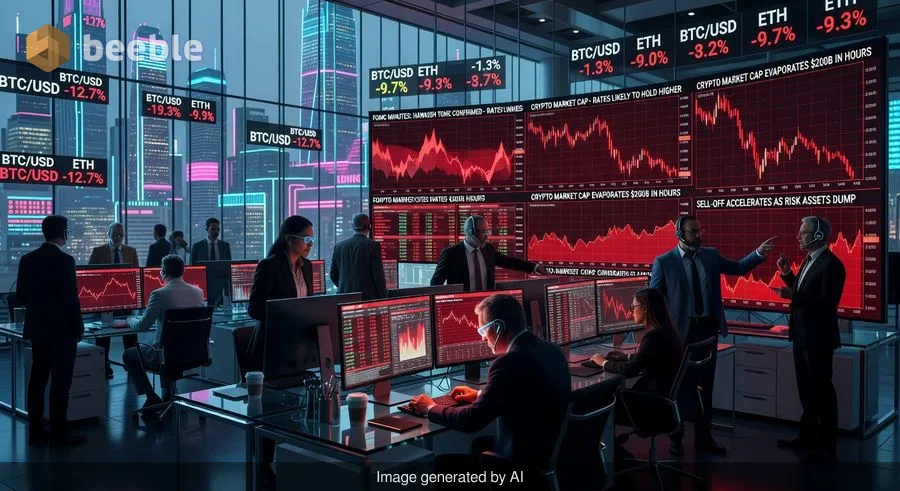
The digital asset market is currently navigating a period of heightened turbulence following the release of the latest Federal Open Market Committee (FOMC) minutes. As of March 6, 2026, the sentiment across trading floors has shifted from cautious optimism to a defensive crouch. The Federal Reserve’s latest communications suggest a 'higher-for-longer' stance on interest rates, a move that has historically sent ripples through the risk-asset ecosystem.
For crypto investors, the immediate reaction was a sharp correction across major tokens. Bitcoin (BTC) and Ethereum (ETH) saw significant liquidations within hours of the report, as traders recalibrated their expectations for liquidity in the coming quarters. Understanding the mechanics of this sell-off is crucial for anyone looking to manage a portfolio in this high-stakes environment.
The Hawkish Pivot: Why the Fed Still Matters
In the context of central banking, a 'hawkish' tone implies that the committee is more concerned about curbing inflation than stimulating economic growth. The March 2026 minutes revealed that despite a cooling labor market, persistent service-sector inflation remains a thorn in the side of the Fed’s 2% target.
When the Fed signals that rate cuts are off the table—or worse, that further hikes remain a possibility—the 'cost of carry' for speculative assets increases. Investors often flee toward the safety of U.S. Treasuries, which offer guaranteed yields, leaving decentralized assets like Bitcoin to face selling pressure. This isn't just a crypto phenomenon; the Nasdaq and other tech-heavy indices often mirror this downward trajectory during hawkish cycles.
Bitcoin’s Technical Support Levels
Bitcoin remains the bellwether for the broader market. Following the FOMC release, the premier cryptocurrency broke below several key moving averages. Analysts are now closely watching the psychological support level of $82,000. If the selling pressure continues, the next major 'floor' is anticipated near the 200-day exponential moving average (EMA).
| Level Type | Price Target (USD) | Significance |
|---|---|---|
| Immediate Support | $82,000 | Psychological barrier and previous consolidation zone. |
| Major Support | $78,500 | 200-day EMA; a breach here suggests a long-term bearish shift. |
| Resistance | $88,000 | The level BTC must reclaim to invalidate the current sell-off. |
While the long-term thesis for Bitcoin remains rooted in its scarcity and institutional adoption, the short-term reality is dictated by macro liquidity. A stronger dollar (DXY) typically acts as a headwind for BTC, and the recent FOMC minutes have provided the dollar with a fresh tailwind.
The Altcoin Bleed: Ethereum and Beyond
Ethereum and the broader altcoin market often act as high-beta versions of Bitcoin. When Bitcoin drops 3%, it is common to see Ethereum drop 5% and smaller-cap tokens slide by double digits. This is largely due to the 'risk-off' sentiment where capital flows back to the most liquid and established assets first.
Ethereum is currently testing support near $3,800. The concern for ETH holders is the potential delay in further ecosystem upgrades if development funding—often tied to token prices—tightens. However, some analysts argue that these corrections are healthy 'flushes' that remove over-leveraged positions, paving the way for more sustainable growth once the macro dust settles.
The Correlation Conundrum
One of the most persistent challenges for crypto in 2026 is its high correlation with traditional finance. The dream of Bitcoin as a 'decoupled' hedge against the traditional system hasn't fully materialized in the face of institutional participation. Because large hedge funds and ETFs now hold significant portions of the supply, they treat crypto as part of a broader 'risk' bucket. When the Fed tightens the taps, these institutions sell across the board to maintain their risk-parity ratios.
Think of it like a rising tide lifting all boats, but a receding tide revealing who has been swimming without a suit. The hawkish minutes are the receding tide, exposing the vulnerabilities of projects without strong fundamental utility.
Practical Takeaways for Investors
Navigating a market sell-off requires a blend of emotional discipline and technical strategy. Here is a checklist for managing your position during this hawkish phase:
- Review Leverage: If you are trading on margin, ensure your liquidation prices are well below the current support levels. Volatility spikes can wipe out leveraged positions even if the long-term direction is correct.
- Dollar-Cost Averaging (DCA): Rather than trying to 'catch the knife' by buying the bottom, consider spreading entries over several weeks to average out the volatility.
- Monitor the DXY: Keep an eye on the U.S. Dollar Index. A peaking dollar often signals a bottom for crypto prices.
- Focus on Fundamentals: Use periods of red charts to research projects with actual revenue and user growth rather than those relying purely on hype.
Looking Ahead: The Next FOMC Meeting
The market is now looking toward the next formal interest rate decision. If upcoming Consumer Price Index (CPI) data comes in lower than expected, it could soften the Fed’s hawkish stance and spark a 'relief rally.' Until then, the crypto market is likely to remain in a range-bound, volatile state as it digests the reality of a restrictive monetary policy.
In the world of tech and finance, the only constant is change. While the current sell-off feels painful, it is a standard chapter in the broader story of market cycles. Staying informed and maintaining a long-term perspective are the best tools an investor has against the noise of the daily ticker.
Sources
- Federal Reserve Board - Official FOMC Minutes Archive
- CoinDesk - Market Analysis and Data
- Bloomberg Markets - Macroeconomic Trends
- The Block - Institutional Crypto Research
- Reuters - Financial News and Central Bank Reporting



See you on the other side.
Our end-to-end encrypted email and cloud storage solution provides the most powerful means of secure data exchange, ensuring the safety and privacy of your data.
/ Create a free account
