


DeepSeek is Moving Beyond the Brain to Build the Hands of AI Development

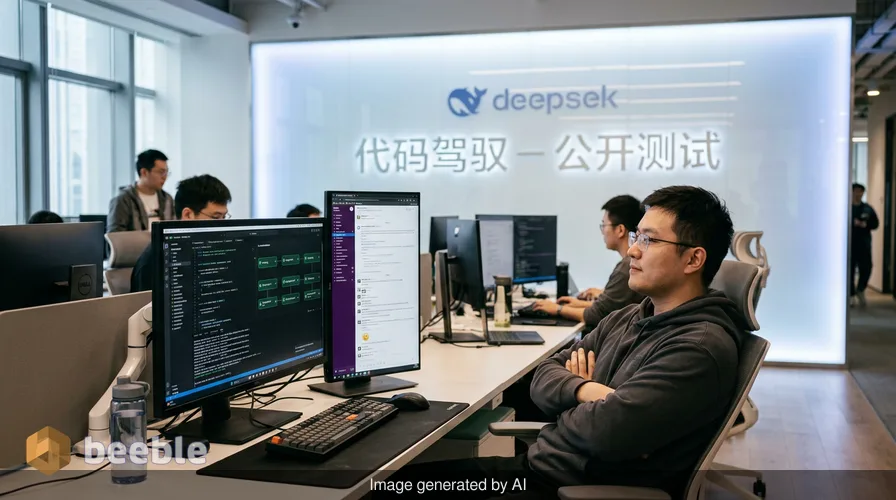
While the world has spent the last three years obsessed with which AI model is the smartest, a quiet shift is occurring in how those models actually interact with our world. We have spent billions of dollars perfecting the "brain" of the AI, but we have largely neglected the "hands"—the interfaces and tools that allow an AI to actually touch a file system, run a command, or fix a bug.
DeepSeek, the Beijing-based AI lab that has consistently punched above its weight, is no longer content just providing the brain. With the announcement of its upcoming "Code Harness" project, the company is signaling a move to own the entire body of AI-driven software engineering. While most analysts are looking at this as just another product launch, the reality is a fundamental challenge to how Western tech giants like Anthropic and OpenAI maintain their grip on the developer ecosystem.
What Exactly is a Code Harness?
Behind the jargon of "agentic coding," the concept is actually quite intuitive. If you have ever used ChatGPT to write a snippet of code, you know the routine: you ask for a script, the AI gives you text, and then you—the human—have to copy, paste, test, and debug it. You are the harness. You are the one providing the hands and the environment for the AI’s thoughts to become reality.
An agentic tool like Claude Code or DeepSeek’s proposed Code Harness removes the human middleman. In simple terms, it is a piece of software that lives inside a developer's computer. It doesn't just suggest code; it has the authority to create folders, run terminal commands, execute tests, and observe the results. If the code it wrote fails a test, it sees the error and tries again until it works.
DeepSeek’s formula for this is remarkably transparent: Model + Harness = Agent. They are building the specialized environment that allows their Large Language Model (LLM) to act as an autonomous employee rather than just a smart search engine.
The Arithmetic of Disruption
To understand why this move is causing ripples in the market, we have to look at the math. For the average user, the cost of AI might seem like a flat monthly subscription, but for businesses and developers, it is a game of pennies that adds up to millions.
Historically, the barrier to entry for high-end AI coding has been the massive cost of "tokens"—the fundamental units of text the AI processes. DeepSeek’s latest pricing for its V4 models represents a systemic shift in the economics of the industry.
| Model | Input Cost (per 1M tokens) | Ownership Type |
|---|---|---|
| Claude Opus 4.7 (Anthropic) | ~$15.00 | Full Stack (Model + Tool) |
| DeepSeek V4 Pro | ~$0.44 | Model Only (Current) |
| DeepSeek V4 Flash | ~$0.14 | Model Only (Current) |
| DeepSeek Code Harness | TBD (Expected Low-Cost) | Full Stack (Future) |
Looking at the big picture, DeepSeek is providing a model that is nearly 100 times cheaper than its primary Western competitors. Currently, many developers use DeepSeek’s cheap "brain" inside Anthropic’s expensive "harness." By building their own tool, DeepSeek is cutting the final cord, allowing developers to stay entirely within a low-cost, high-performance ecosystem.
The Beijing Requirement: Why Location Matters
Curiously, DeepSeek has made it clear that this project is not a decentralized, remote-friendly endeavor. The requirement for the new team to be based in Beijing is a foundational part of their strategy. While Silicon Valley has largely embraced a distributed workforce, the Chinese AI sector is moving toward a highly concentrated, localized model of development.
Beijing is the symbolic and political nerve center of China's tech ambitions. By keeping the development of Code Harness within the city limits, DeepSeek ensures a streamlined connection with the local infrastructure and, perhaps more importantly, the regulatory environment. For the average user in the West, this creates a tangible tension: the tool is unprecedented in its cost-efficiency, but it is built within a system that is increasingly opaque and separate from global norms.
AI as the Tireless Intern
Practically speaking, we should view these agentic tools not as "god-like machines," but as a tireless intern. Imagine an intern who never sleeps, has read every manual ever written, and works for pennies an hour. If you give that intern a desk and a computer (the Harness), they can churn through the boring, repetitive tasks that usually bog down a software project—like updating library dependencies or writing unit tests.
DeepSeek isn't just trying to make a smarter intern; they are trying to build the office the intern works in. By controlling the terminal and the interface, they make their AI more robust and resilient. They aren't just selling the lightbulb; they are installing the entire electrical grid.
What This Means for You
From a consumer standpoint, the rise of a robust, low-cost Chinese alternative to American AI tools will likely lead to a few inevitable outcomes:
- Software Deflation: As the cost of engineering tasks drops by 90% or more, we may see a wave of niche software products and apps that were previously too expensive to build.
- The Integration War: Expect OpenAI and Anthropic to drop their prices or add "exclusive" features to their coding tools to prevent a mass exodus to DeepSeek's cheaper ecosystem.
- Privacy and Sovereignty: For professional developers, the choice will become practical vs. political. Do you use the most cost-effective tool if it originates from an environment with different data governance standards?
Ultimately, DeepSeek’s move into the "harness" space proves that the AI era is entering its industrial phase. The novelty of a chatting bot is wearing off, replaced by the need for tools that can actually do the work. Whether or not you ever write a line of code, the infrastructure of the digital world you inhabit is being rebuilt, one autonomous command at a time.
As we watch this play out, it is worth observing your own digital habits. We are moving from a world where we tell computers how to do something, to a world where we simply tell them what we want done. The "harness" is the bridge to that future, and right now, the most affordable bridge is being built in Beijing.
Sources:
- DeepSeek official recruitment portal and job listings (May 2026).
- DeepSeek V4 Model API Documentation and Pricing Schedule.
- Anthropic Claude 4.7 Technical Specifications and Tiered Pricing.
- Market analysis reports on AI agentic workflows (Q2 2026).



See you on the other side.
Our end-to-end encrypted email and cloud storage solution provides the most powerful means of secure data exchange, ensuring the safety and privacy of your data.
/ Create a free account
