


Europe is No Longer Content Borrowing the Silicon Brains of its Rivals

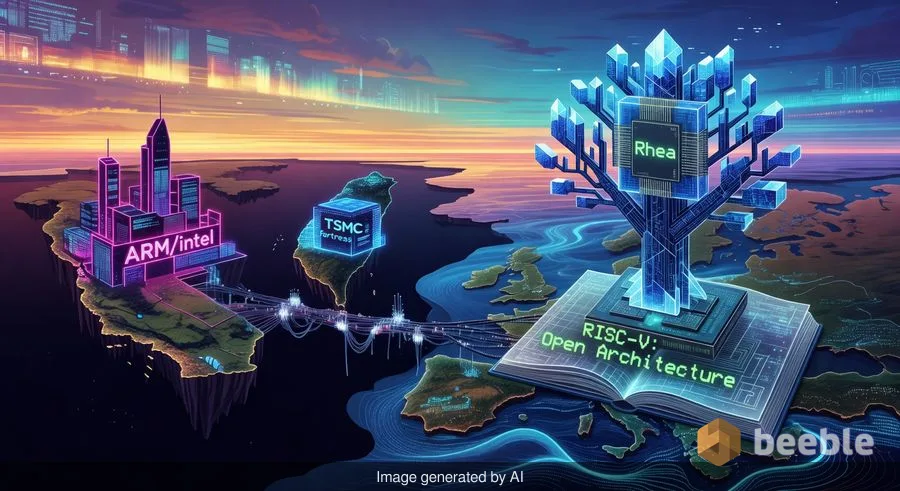
Think for a moment about the invisible pulse that keeps a modern city breathing. It is not just electricity or water; it is the constant, frantic movement of data. When you tap your phone to pay for a coffee, when a weather satellite predicts a storm over the Mediterranean, or when an automated braking system in a European-made EV prevents a collision, you are relying on a microscopic piece of architecture. These are the processors—the digital crude oil of the 21st century—that translate raw data into the tangible actions of our daily lives.
Historically, these 'brains' have almost exclusively been designed in California or manufactured in Taiwan. This geographic concentration has created a systemic vulnerability that European policymakers have spent years trying to address. We recently hit a major milestone in that journey: the European Processor Initiative (EPI) has officially completed its second development stage, known as SGA2. Looking at the big picture, this is not just a triumph for engineers in white coats; it is a foundational shift in how Europe intends to protect its economic independence and technological future.
The Anatomy of a Homegrown Chip
To understand why this matters, we have to look under the hood at what the EPI actually produced. In simple terms, the project is building two distinct types of processors. The first is a general-purpose processor called 'Rhea,' designed for massive data centers and supercomputers. The second is an accelerator based on RISC-V technology, which acts like a specialized intern that handles specific, heavy-duty tasks like artificial intelligence or complex math much faster than a standard chip could.
For the average user, the word 'RISC-V' probably sounds like a confusing piece of alphabet soup. To put it another way, imagine if every time you wanted to bake a cake, you had to pay a fee to a single company that owned the only recipe in the world. That is how much of the chip industry works today, with companies like ARM or Intel holding the keys to the designs. RISC-V is an open-source recipe. It allows European engineers to build, customize, and own their designs from the ground up without asking for permission or paying exorbitant royalties to overseas giants.
| Component | Purpose | Analogy |
|---|---|---|
| Rhea GPP | General computing for servers | The multi-talented manager of a large office |
| EPAC Accelerator | High-speed AI and math tasks | The specialist surgeon brought in for one complex task |
| RISC-V Architecture | Open-source design framework | A public cookbook that anyone can use and improve |
| VPP (Vector Processor) | Intensive scientific data processing | A high-speed assembly line for numbers |
Why Sovereignty is More Than a Buzzword
You might wonder why Europe is spending hundreds of millions of euros to build its own chips when Intel and NVIDIA already make excellent ones. On the market side, the answer is resilience. We have seen how volatile global supply chains can be. During the semiconductor shortages of the early 2020s, car factories across Germany and France ground to a halt because they couldn't get fifty-cent microchips from Asia.
Practically speaking, the EPI is an insurance policy. By finishing the second stage of this project, Europe has proven it can design high-end silicon that competes with the best in the world. This moves the continent from being a mere consumer of tech to a creator. Curiously, this also has massive implications for data privacy. When the 'brains' of your government’s servers or your hospital’s data centers are designed locally, there is a much higher level of transparency regarding how that hardware handles your sensitive information. There are no 'black boxes' or hidden backdoors installed by foreign entities.
From Supercomputers to Your Driveway
While the current focus of the EPI is on exascale computing—machines capable of performing a quintillion calculations per second—the technology will eventually trickle down into the gadgets we use every day. High-performance computing is the laboratory where tomorrow's consumer tech is born.
Behind the jargon of 'SGA2 completion' lies a very tangible benefit for the automotive industry. Modern cars are becoming data centers on wheels. They require immense processing power to handle autonomous driving features and real-time navigation. By developing the EPAC (European Processor Accelerator), the EPI is providing European automakers with a scalable, robust alternative to foreign chips. This ensures that the 'invisible backbone' of European industry remains strong, even if trade relations with other global powers turn sour.
From a consumer standpoint, this might not result in a cheaper smartphone next month, but it does lead to a more stable market. When there are more players in the high-end chip game, there is more competition, which eventually drives down costs and spurs innovation. It prevents any single company from having a monopoly on the speed and efficiency of our digital lives.
The Road to Stage Three
As the project transitions into its third stage (SGA3), the focus shifts from 'can we build it?' to 'can we mass-produce it?' This is where the rubber meets the road. Designing a chip is a monumental feat of human intellect, but manufacturing it at scale in a decentralized, interconnected global economy is an even bigger challenge.
Ultimately, the completion of this second phase signals that Europe is no longer a laggard in the silicon race. We are seeing the emergence of a streamlined ecosystem where European research institutions and private companies are working in lockstep. Historically, Europe has been excellent at invention but has often struggled with commercialization. The EPI is trying to break that cycle by ensuring the designs are not just academic exercises but are ready for the rigorous demands of the industrial market.
What This Means for You
For the everyday user, the takeaway is one of quiet security. You may never see a Rhea chip or interact directly with a RISC-V accelerator, but you will benefit from the results.
- Economic Resilience: Your next car or major appliance is less likely to be delayed by a global trade war or a factory shutdown on the other side of the planet.
- Enhanced Privacy: Public services and healthcare systems will increasingly run on hardware that is transparent and locally audited, reducing the risk of systemic data breaches.
- Industrial Jobs: This initiative fosters a high-tech workforce within Europe, keeping talent and tax revenue within the continent rather than exporting it to Silicon Valley.
To wrap things up, the European Processor Initiative is a reminder that in our modern world, independence is measured in nanometers. By finishing this second stage, Europe has moved one step closer to ensuring that the digital heart of its society beats to its own rhythm. As we look ahead, the challenge will be to keep this momentum in a shifting global landscape where technology is the ultimate currency.
Next time you hear about a breakthrough in weather forecasting or see a more efficient electric vehicle on the road, remember that there is likely a new kind of European brain working behind the scenes, making it all possible.
Sources:
- European Processor Initiative (EPI) Official Project Documentation.
- European Commission Digital Excellence Briefings.
- EuroHPC Joint Undertaking (EuroHPC JU) Technical Reports.
- Innovation News Network Industry Analysis.



See you on the other side.
Our end-to-end encrypted email and cloud storage solution provides the most powerful means of secure data exchange, ensuring the safety and privacy of your data.
/ Create a free account
