


Europe's €838 million research investment is a long-term play for your wallet

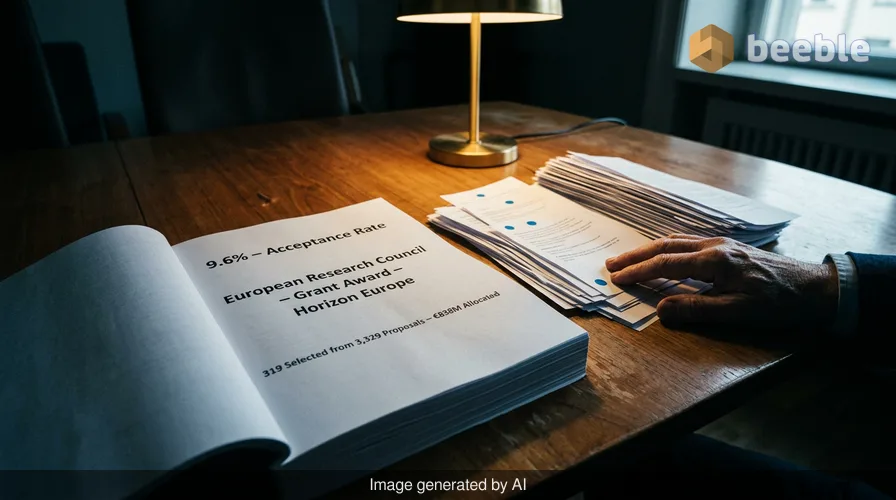
Just 9.6% of applicants for the latest European Research Council grants received funding this year. Out of 3,329 proposals, the organization selected 319 established researchers to share a total of €838 million. This funding belongs to the Horizon Europe program, which is the primary mechanism the European Union uses to drive scientific discovery. Each grant provides up to €2.5 million for a five-year period. These numbers might seem distant from the average consumer’s daily life, but they dictate the trajectory of future medicine, digital infrastructure, and consumer electronics.
Behind the jargon of high-risk, high-reward research is a simple economic reality. Scientific breakthroughs often require a decade of quiet work before they appear as a feature on a smartphone or a treatment at a local clinic. The European Research Council acts as a specialized venture capital firm for the public good. It selects projects that are too early for private companies to fund but have the potential to disrupt entire industries. By providing this capital, the EU ensures that the foundational work for the next generation of technology happens within its borders.
Why Europe is buying back the world's best minds
One of the most striking statistics in the 2025 announcement is the increase in researchers moving to Europe from abroad. Thirteen successful applicants are currently based outside the continent, including nine from the United States, two from Australia, and two from Canada. This is a significant jump from the previous year, when only four winners came from outside the region. The increase is the result of a deliberate policy called the Choose Europe for Science initiative.
To the average user, this looks like a talent draft. Under the hood, the initiative offers relocating scientists an additional €2m to set up their labs. This financial incentive is a response to the global competition for talent, where the US and China often attract top minds with massive private-sector salaries. Seven of this year's winners utilized this relocation support. This shift suggests that Europe is successfully positioning itself as a stable and well-funded alternative for researchers who want to pursue long-term projects without the quarterly pressure of corporate shareholders.
Geographically, Germany has the most recipients with 52 awardees. The United Kingdom follows with 45, and Italy has 29. The inclusion of the UK is noteworthy, as it remains a heavy hitter in the European research ecosystem despite the complexities of its post-Brexit relationship with the EU. These grants support researchers across 24 countries, which ensures that the economic benefits of high-tech research are decentralized across the continent.
The math behind your next smooth commute
Many of the funded projects focus on mathematics and algorithms for large-scale networks. While this sounds abstract, it is the invisible backbone of modern life. Large-scale networks include everything from the digital infrastructure that delivers high-definition video to your television to the physical transport systems that deliver groceries to your local store. As our world becomes more interconnected, these networks become more volatile and harder to manage.
Researchers are now developing new mathematical models to handle this complexity. For the average user, this means more resilient internet connections and more efficient public transport. Imagine a city where traffic lights and train schedules adjust in real-time to avoid bottlenecks before they happen. This is not possible with current algorithms. The research funded by these grants aims to create the streamlined logic required to run cities and digital services with fewer errors and lower energy costs.
On the market side, these advancements have systemic implications. Companies that manage logistics or cloud computing rely on these foundational breakthroughs to reduce their operational expenses. When these companies save money through better network efficiency, it often leads to lower prices or more reliable services for the consumer. The work happening in these mathematics departments today is the precursor to the ultra-reliable digital services of the 2030s.
How quantum research changes your smartphone
Another significant portion of the €838 million goes toward the study of magnets and quantum materials. Quantum physics is often presented as a mysterious field, but its practical applications are tangible. Modern electronics are reaching the physical limits of traditional silicon chips. To make computers faster and batteries last longer, scientists must find new ways to manipulate matter at the atomic level.
Under the hood, quantum research is about the digital crude oil of the future. The materials discovered in these labs will eventually replace the components in our current gadgets. This research is particularly relevant to the automotive industry. As the world shifts toward electric vehicles, the demand for more efficient magnets and energy storage is unprecedented. The ERC is funding projects that investigate the biological and physical mechanisms that could lead to more sustainable and powerful electronic components.
These projects are five-year commitments. This duration allows researchers to move past the initial experimental phase into the development of prototypes. For the tech industry, this creates a pipeline of innovation. A breakthrough in a lab in 2026 could become a patented technology by 2030 and a standard feature in consumer hardware by 2032. This long-term cycle is how heavy industry remains resilient against short-term market fluctuations.
Solving the causes of stuttering and addiction
The health-related grants focus on issues that have a high societal impact but are often overlooked by big pharmaceutical companies. Research into the biological mechanisms behind drug addiction, women’s fertility, and the causes of stuttering is on the 2025 agenda. These are complex problems that do not have a single, easy solution.
Looking at the big picture, these health projects aim to reduce the long-term economic burden of chronic conditions. Stuttering, for example, affects millions of people and can influence career paths and mental health. By understanding the neuroscience behind it, researchers can develop better therapies. Similarly, research into fertility addresses the demographic shifts occurring across Europe.
From a consumer standpoint, this research eventually trickles down into new health apps, diagnostic tools, and treatments. It is a reminder that tech is not just about screens and silicon. It is also about the biological hardware of the human body. The 319 winners include experts in medicine and neuroscience who are looking for the root causes of conditions rather than just treating the symptoms.
What this means for the European job market
Beyond the scientific papers and lab breakthroughs, this funding has a direct impact on employment. The ERC expects these 319 projects to generate more than 3,000 new research positions across Europe. This includes roles for PhD students, post-doctoral researchers, and technical staff.
This is a cyclical process. By funding established researchers, the EU creates a training ground for the next generation of scientists and engineers. Many of the people who fill these 3,000 roles will eventually move into the private sector. They will bring with them the expertise they gained while working on these high-risk projects. This creates a workforce that is capable of managing the complex tech industries that are foundational to the European economy.
Ultimately, the €838 million is an investment in the continent's intellectual infrastructure. It ensures that when a new industry emerges — whether it is in green energy or advanced AI — Europe has the experts and the labs ready to lead. For the average citizen, this translates to a more competitive economy and a higher standard of living.
The next wave of discovery
The announcement of the 2025 winners is not the end of the process. The 2026 competition is already open for applications, with a deadline of 27 August 2026. This continuous cycle of funding ensures that the research ecosystem does not stagnate.
For the reader, the bottom line is clear. Scientific research is a slow-moving but powerful engine. While the news today is about grants and budgets, the result is the technology and medicine you will use in a few years. It is worth observing how these funds are distributed, as they signal which industries the EU believes are the most important for the future. As you use your smartphone or visit a doctor, remember that the invisible backbone of those experiences was likely funded years ago by a grant just like these.
Sources:
European Research Council (ERC) official press release, June 2026.
Horizon Europe Program Guidelines, 2025-2027.
EU Choose Europe for Science Initiative Report, 2025.



See you on the other side.
Our end-to-end encrypted email and cloud storage solution provides the most powerful means of secure data exchange, ensuring the safety and privacy of your data.
/ Create a free account
