


Forget the hype -- Portugal's new self-driving cars are under a very tight leash

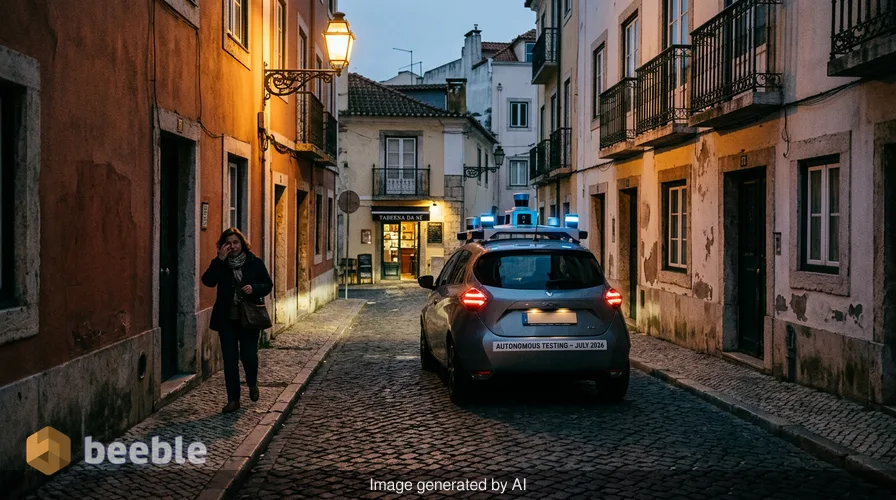
Have you ever wondered what it feels like to share a narrow, cobblestone street with a car that has no human thoughts? Starting this July, residents and tourists in Portugal will find out. The Portuguese government has approved a new set of rules that allows autonomous vehicles to begin testing on public roads. This isn't a sudden rush toward a sci-fi future. It is a carefully managed experiment with more safety nets than a circus act. While headlines often paint a picture of robotaxis zooming through city centers, the reality on the ground in Lisbon or Porto will be much slower and more regulated.
Portugal is joining a growing list of European nations trying to figure out how software and asphalt mix. The decree-law published in the Official Gazette sets the stage for research labs and tech companies to bring their prototypes out of the private garages and into the real world. For the average person, this means your morning commute might soon include a vehicle covered in spinning sensors and cameras. But do not expect these cars to be aggressive. The law is designed to make these digital drivers the most cautious entities on the road.
A digital learner with a heavy insurance policy
When a human driver makes a mistake, insurance companies handle the fallout based on decades of data. When a computer makes a mistake, the variables change. Portugal has addressed this by requiring testing companies to carry massive insurance policies. The minimum cover for these autonomous tests is four times higher than the usual level required for standard vehicles. This insurance must cover both bodily injury and material damage to third parties.
This high financial bar serves a specific purpose. It ensures that only serious, well-funded organizations put their technology on public streets. It turns insurance into a filter. By making the cost of entry so high, the government is effectively saying that if you want to experiment in public, you must have the capital to back up every possible error. For the consumer, this means that in the rare event of a collision with a prototype, the financial protection is significantly higher than it is with a regular car. This is a practical way to manage the risk of disruptive technology.
The human backup remains the boss
There is a popular myth that self-driving cars mean the human can take a nap or watch a movie. In Portugal, the law firmly rejects this idea. Every autonomous vehicle in these tests must have an operator. This person is not just a passenger. They have to hold a driving license for at least six years. Furthermore, they must have a clean record with no traffic crimes or serious offenses in the last five years.
These operators are like flight instructors. They are there to take over the moment the software gets confused. The government also recognizes that watching a computer drive is mentally exhausting. Operators cannot perform their duties for more than three consecutive hours. After that, they must take a break for at least one hour. This rule prevents the kind of fatigue that leads to slow reaction times. The vehicle software acts as a tireless intern, but the human remains the experienced supervisor who is legally responsible for everything that happens.
Speed limits and the slow road to progress
One of the most visible changes for regular drivers will be the pace of traffic. Any autonomous vehicle under testing must follow a stricter speed limit than everyone else. Specifically, they must drive at 20 kilometers per hour below the posted speed limit for that road. If you are in a 50 km/h zone, the self-driving car will be doing 30 km/h.
This makes the cars easy to spot and easy to avoid. It also minimizes the force of any potential impact. While this might be frustrating for a driver stuck behind a slow-moving robot, it is a sensible safety measure for an emerging technology. For the average user, the takeaway is simple. If you see a car with a lot of hardware on the roof, give it space. It is legally bound to be the slowest car on the block. This rule reflects a pragmatic approach to safety where the goal is not speed, but the collection of clean, incident-free data.
The black box is always watching
Every test vehicle serves as a mobile data center. The law requires these cars to record every detail of their performance. This includes the car's speed, steering movements, and braking history. More importantly, it records every time the human operator has to intervene. If the human grabs the wheel, the system logs why and when.
This data is not just for the companies. A detailed report must go to the Institute for Mobility and Transport (IMT) at the end of the testing period. This report includes descriptions of any accidents or even minor incidents. This level of transparency is unusual in the private sector, but it is necessary here. It allows regulators to see if the technology is actually getting better or if it is struggling with specific Portuguese road conditions, like the country's famous tram tracks or steep hills. Essentially, the government is building a massive library of digital driving behavior to inform future laws.
Why this matters for your future commute
The Portuguese government believes that autonomous driving will help democratize mobility. The idea is that people who cannot drive due to physical constraints or age will eventually have a reliable way to get around. It is also an attempt to reduce the number of private cars on the road. If a fleet of autonomous vehicles can move people efficiently, the need for every individual to own a car decreases.
Looking at the big picture, this is about fixing the inefficiencies of our current transport model. Most cars sit empty in parking lots for 90% of the day. A shared, autonomous system could keep vehicles moving, reducing the need for massive parking structures in city centers. While we are years away from this being a daily reality for everyone, these July tests are the foundational steps. They turn the road into a classroom where the software learns the nuances of human behavior.
Practical foresight for the road ahead
As these tests begin, do not expect a sudden revolution in how you get to work. Instead, look for the gradual integration of these systems into public transport or delivery services. The heavy industry of car manufacturing is the invisible backbone of modern life, and it is currently undergoing a massive shift from mechanical engineering to software development.
For now, the best thing you can do is stay observant. If you live in an area where these tests occur, watch how the cars handle the local environment. Notice how they interact with pedestrians and cyclists. The technology is resilient, but it is still in its infancy. Portugal is providing a controlled environment for this technology to mature without compromising public safety. The bottom line is that the road is getting smarter, but for the next few years, the human brain is still the most important computer in the car.
Sources:
- Decree-Law approved by the Portuguese Council of Ministers, April 2026.
- Official Gazette of the Portuguese Republic (Diário da República), June 2026.
- Institute for Mobility and Transport (IMT) regulatory guidelines for autonomous testing.



See you on the other side.
Our end-to-end encrypted email and cloud storage solution provides the most powerful means of secure data exchange, ensuring the safety and privacy of your data.
/ Create a free account
