


France Is Breaking Up with Windows: What It Means for the Future of Your Data

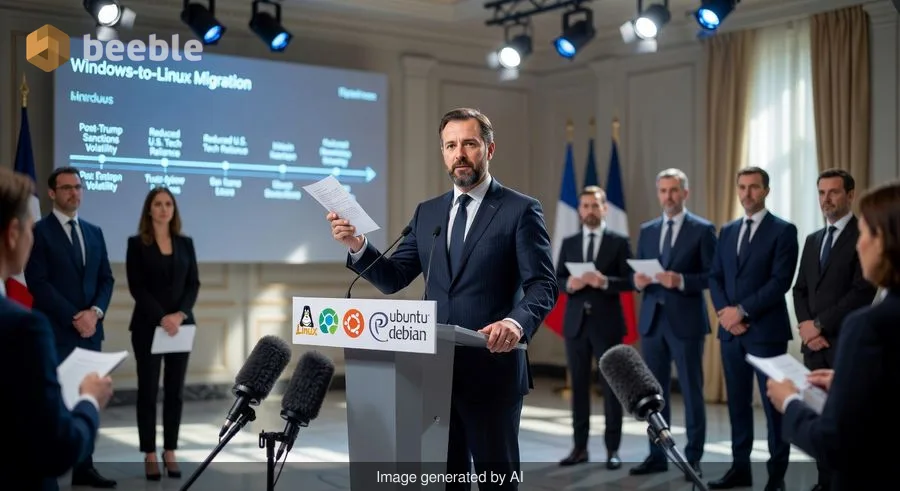
Imagine if your landlord suddenly decided to change the locks on your house, not because you missed a payment, but because they disagreed with your politics. For decades, nations have rented their digital infrastructure from U.S. tech giants, trusting that the keys would always work. But in a move signaling a massive shift in global power dynamics, France has decided it is time to build its own house.
The French government recently announced plans to phase out Microsoft Windows on government computers, swapping the ubiquitous operating system for Linux. This isn't just a software update; it is a declaration of independence in the digital age. French minister David Amiel stated that the effort was aimed at regaining control of the country's "digital destiny," arguing that the government can no longer accept a lack of control over its own data and infrastructure.
While this sounds like high-level geopolitics, the ripple effects could eventually change the software everyday users rely on, making this a story worth watching closely.
Why France Is Pulling the Plug on Windows
To understand the "why," we have to look at the concept of "digital sovereignty." For years, Europe has grown uncomfortable with how much of its digital backbone is owned by a handful of American companies. If you run a government on Windows and store data on U.S.-based cloud servers, you are essentially playing in someone else's sandbox.
Historically, this reliance was merely an annoyance. But the political landscape has shifted. The provided context notes that following the return of the Trump administration in January 2025, the U.S. government has increasingly weaponized technology access. From sanctioning International Criminal Court judges to cutting off critics from essential services, the U.S. has demonstrated that technology is now a lever of geopolitical pressure.
In simple terms, France realized that relying on a foreign entity for critical infrastructure is a national security risk. If the U.S. government can order Microsoft to cut off access, the French government could be paralyzed overnight. By switching to Linux—an open-source operating system—they take the keys back.
Under the Hood: Why Linux Is Different
For the average consumer, the name Linux might sound technical or niche. You might associate it with server rooms or hackers in movies. In reality, Linux is just an operating system, like Windows or macOS, but with one foundational difference: it is open source.
Think of Windows as a car with the hood welded shut. Only the manufacturer can fix the engine or modify how it runs. You can drive it, but you don't truly own the mechanics. Linux, conversely, is like a car that comes with the blueprints. Anyone can look at the engine, modify it, fix it, or improve it. No single company owns it, and no single government can lock you out of it.
This transparency is what France is banking on. By using Linux, the French government can audit the code line by line to ensure there are no backdoors allowing foreign spies to snoop. They can also customize the system to fit their specific security needs, creating a digital fortress that they control from the ground up.
The Domino Effect Across Europe
France is not acting in isolation. This is part of a broader European trend often referred to as "technological sovereignty." Earlier this year, the French government already ditched Microsoft Teams in favor of a French-made, open-source alternative based on Jitsi. They are also planning to migrate their health data platform to a trusted domestic solution.
Looking at the big picture, the European Parliament has already voted to identify areas where the EU can reduce its reliance on foreign providers. France is simply the first major nation to take a sledgehammer to the status quo. If successful, other nations feeling the squeeze of U.S. sanctions or political pressure may follow suit, creating a fragmented internet where nations use entirely different tech stacks.
What This Means for Your Laptop
Practically speaking, does this mean you should ditch Windows for Linux tomorrow? Probably not. For the everyday user, the transition is not without friction.
The French government has a specific advantage: they have IT teams and developers who can maintain and customize Linux distributions. The average user just wants their computer to work out of the box. While Linux has become incredibly user-friendly in recent years—with versions like Ubuntu and Mint rivaling Windows in ease of use—it still lacks the massive software library that Windows boasts. If you rely on specialized software like Adobe Creative Suite or certain high-end PC games, Linux might still feel like a bumpy road.
However, there is a tangible upside for consumers. As governments pour money into open-source projects, the technology gets better for everyone. The tools France develops to secure its government computers often trickle down to the public versions of Linux. This leads to better privacy tools, more secure operating systems, and free alternatives to expensive software subscriptions.
The Bottom Line
France’s decision to migrate away from Windows is a watershed moment. It marks the end of the era where U.S. tech dominance went unchallenged. We are entering a phase where nations treat software infrastructure with the same seriousness they treat energy grids or water supplies.
For the consumer, this is a wake-up call. We often treat our operating systems as background noise, ignoring the complex web of ownership and control behind the screen. As governments pivot toward open-source solutions to protect their sovereignty, we might see a future where the most secure, transparent, and cost-effective software isn't owned by a corporation, but built by a community. It might be time to start looking under the hood of your own digital life.
Sources
- Official statements from the French government and Minister David Amiel regarding digital sovereignty.
- Reports from the European Parliament on reducing reliance on foreign technology providers.
- TechCrunch coverage on France's migration from Microsoft services to open-source alternatives.
- Analysis of U.S. sanctions policies and their impact on international tech access.



See you on the other side.
Our end-to-end encrypted email and cloud storage solution provides the most powerful means of secure data exchange, ensuring the safety and privacy of your data.
/ Create a free account
