


From Code to Chemicals: Why AI Giants Are Recruiting Weapons Specialists

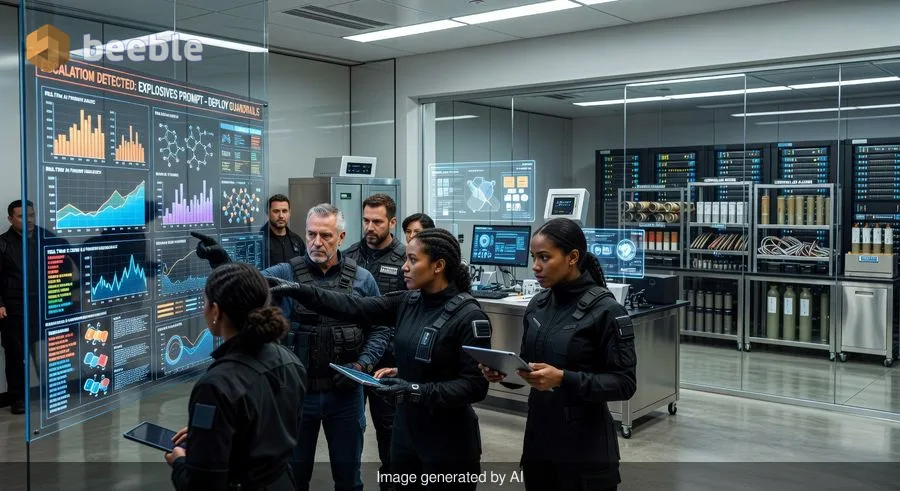
Can a chatbot actually be a catalyst for a physical catastrophe? It is a question that would have sounded like the plot of a techno-thriller just five years ago. Yet, as we navigate the landscape of 2026, the answer is being treated with deadly seriousness by the architects of our digital future. Anthropic and OpenAI, the titans of the generative AI era, are no longer just looking for software engineers and data scientists. They are now aggressively recruiting specialists in chemical weapons, explosives, and biological threats.
This shift marks a transformative moment in the evolution of the tech industry. We are moving past the era of 'move fast and break things'—where the things broken were usually just legacy business models—into a precarious reality where the 'things' could be public safety and international security. Organizations are increasingly behaving like living organisms, developing immune systems to protect themselves and the public from the unintended consequences of their own remarkable intelligence.
The New Frontier of Red Teaming
Anthropic recently signaled this shift with a high-profile job posting for a policy expert specializing in chemical weapons and explosions. The role isn't about building weapons, of course; it is about preventing the 'catastrophic misuse' of their Claude models. To put it another way, they are hiring the people who know how to build a bomb so they can teach the AI exactly why it should never help anyone else do the same.
In my early days working in tech startups, the biggest 'security' concern we had was a database leak or a buggy API. I remember the frantic energy of those late-night sessions, fueled by cold pizza, where the stakes felt high but the physical world remained untouched. Consequently, seeing the job descriptions coming out of San Francisco today feels like a surreal corporate transition. The person hired for this role will design and monitor the guardrails for how AI models react to prompts about sensitive chemical compounds. They are the 'rapid response' team for a new kind of digital fire.
Why Now? The CBRN Risk
The acronym frequently whispered in the halls of OpenAI and Anthropic is CBRN: Chemical, Biological, Radiological, and Nuclear. As frontier models become more capable, they gain a nuanced understanding of scientific literature. While this is innovative for drug discovery and material science, it is equally dangerous if the model can synthesize instructions for a nerve agent or a crude explosive device.
Curiously, the risk isn't just that the AI knows the 'recipe.' It is that the AI can act as a highly efficient project manager for someone with ill intent. It can troubleshoot chemical reactions, suggest alternative precursors that bypass legal restrictions, and provide step-by-step guidance on equipment setup. In contrast to a static search engine, an interactive AI can hold a user’s hand through a dangerous process. This is why the 'building blocks' of these models must be infused with safety from the ground up.
OpenAI’s Preparedness Framework
OpenAI has taken a similar path with its 'Preparedness' team. This group is tasked with evaluating frontier models against 'catastrophic' risks. They have developed an intricate scoring system to track how close a model gets to being able to assist in a biological or chemical attack. If a model crosses a certain threshold of capability without adequate safeguards, the framework mandates that it cannot be released to the public.
Nevertheless, the challenge remains immense. AI safety is not a 'set it and forget it' feature. It is a journey, not a destination. As models evolve, they find new ways to bypass old filters—a phenomenon known as 'jailbreaking.' By hiring experts who have spent their careers in labs and high-security environments, AI companies are trying to stay one step ahead of the creative malice that often follows technological breakthroughs.
The Ethical Ecosystem
We must view the technology industry as an ecosystem. When a new, powerful predator—or in this case, a transformative tool—is introduced, the entire environment must adapt to maintain equilibrium. The hiring of weapons specialists is a sign that the industry is maturing. It is an admission that the power these companies wield is too great for a 'wait and see' approach.
During my time managing remote teams across different time zones, I learned that the most successful projects weren't the ones with the fastest developers, but the ones with the best foresight. You have to anticipate where the friction will occur. In the context of AI, that friction is the intersection of digital intelligence and physical harm.
Practical Takeaways for the AI Era
While most of us aren't building LLMs or handling chemical precursors, the professionalization of AI safety has real-world implications for how we interact with technology. Here is what you should keep in mind:
- Expect More Friction: As guardrails become more sophisticated, you may find AI models more 'refusal-prone' when discussing sensitive scientific topics. This is a feature, not a bug.
- Regulatory Compliance: If you are a developer using these APIs, stay informed about the 'Responsible Scaling Policies' of the providers. Your own applications may be subject to these safety audits.
- The Value of Domain Expertise: This trend proves that 'soft' tech skills aren't enough. The most valuable people in tech right now are those who bridge the gap between silicon and the physical sciences.
As we look toward the rest of 2026, the collaboration between nuclear physicists, chemists, and coders will likely become the standard, not the exception. It is a strange, slightly unnerving, but ultimately necessary evolution in our quest to build tools that are as safe as they are smart.



See you on the other side.
Our end-to-end encrypted email and cloud storage solution provides the most powerful means of secure data exchange, ensuring the safety and privacy of your data.
/ Create a free account
