


From Sci-Fi to Sidewalks: How China’s New Bioluminescent Plants Could Redefine Urban Light

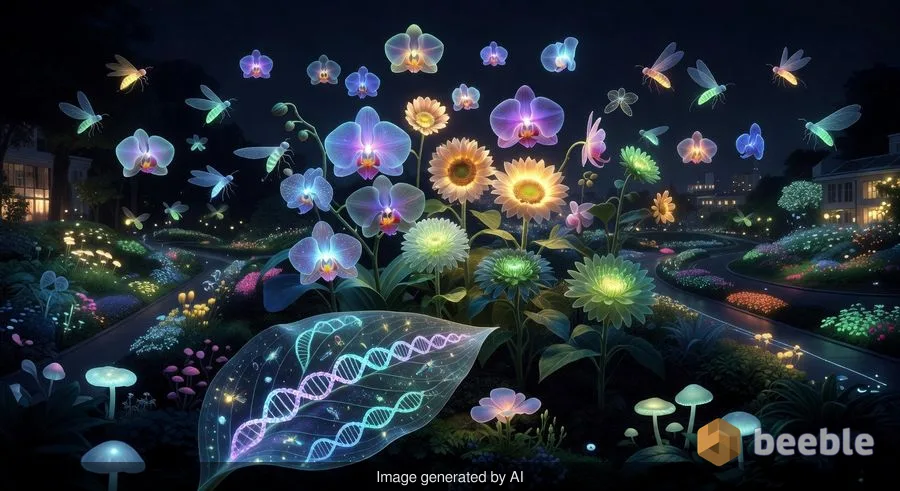
Could the very trees lining our streets eventually render the electric grid obsolete for urban illumination? It is a question that sounds like it belongs in a screenplay for a high-budget space opera, yet recent developments in genetic engineering suggest we are closer to that reality than ever before. Scientists in China have recently unveiled a diverse collection of genetically modified plants that emit a consistent, natural glow, potentially transforming the way we think about sustainable architecture and public spaces.
Growing up in a small town, I remember how the night sky was a velvet canvas of stars, largely because we lacked the aggressive light pollution of major hubs. Later, after earning my degree in sociology and traveling to tech expos from Lisbon to Shanghai, I saw the opposite: cities that never sleep, powered by a massive, energy-hungry infrastructure of LEDs and high-pressure sodium lamps. This new breakthrough in bioluminescence feels like a bridge between those two worlds—a way to bring light back to the organic realm.
The Genetic Blueprint of Living Light
At the heart of this innovation is a sophisticated bit of biological engineering. Under the hood, researchers have successfully integrated light-producing pathways from fireflies and certain species of luminous fungi into the DNA of common flora. While previous attempts at creating glowing plants often resulted in dim, flickering light that required chemical triggers, this new generation is self-sustaining.
Essentially, the scientists have treated the plant’s genome like software architecture as a blueprint. By inserting the fungal bioluminescence cycle—which involves the conversion of caffeic acid (a molecule naturally present in all plants) into luciferin—the plants can glow continuously throughout their life cycle. Curiously, this process doesn't seem to drain the plant’s energy reserves to a point of exhaustion; instead, the light production is integrated into the plant's metabolic rhythm, functioning almost like an asynchronous background task in a computer program.
Expanding the Botanical Catalog
What makes this specific announcement from the Chinese research teams so remarkable is the sheer variety of species involved. We aren't just talking about a single type of tobacco plant or a lonely petunia. The researchers have successfully engineered over 20 different species, including sunflowers, chrysanthemums, and even delicate orchids.
In practice, this diversity is a game-changer for landscape architects. During a recent visit to a tech-forward coworking space in Bali, I saw how designers are desperate for ways to integrate nature into high-tech environments. Imagine a hotel lobby where the primary light source is a canopy of glowing orchids, or a city park where sunflowers provide a soft, amber guidance along the paths at night. This isn't just a novelty; it is a multifaceted approach to reducing our reliance on the traditional utility grid.
Can Nature Truly Scale to Replace LEDs?
Despite the excitement, we must remain thoughtful about the limitations. To put it another way, a glowing chrysanthemum is not yet a 100-watt bulb. The light emitted is soft and ambient—perfect for mood lighting or pathfinding, but perhaps not yet sufficient for a high-speed highway or a surgical suite.
Nevertheless, the potential for energy savings at scale is significant. If even 10% of a city’s decorative lighting were replaced by bioluminescent flora, the reduction in carbon emissions would be substantial. This is the paradigm-shifting potential of green tech: moving away from hardware that consumes energy toward biological systems that produce value as a byproduct of their existence.
| Feature | Traditional LED Lighting | Bioluminescent Plants |
|---|---|---|
| Energy Source | Electricity (Grid) | Photosynthesis/Metabolism |
| Carbon Footprint | Moderate to High | Negative (Carbon Sequestration) |
| Maintenance | Bulb replacement/Wiring | Watering/Soil Nutrients |
| Light Intensity | High/Adjustable | Low/Ambient |
| End of Life | Electronic Waste | Organic Compost |
Navigating the Ecological Wild West
As a tech journalist who often tracks my own recovery and sleep cycles with a smart ring, I am acutely aware of how light affects biology. Introducing glowing plants into the wild is not without its risks. We must consider the network as the wild west; without proper regulation, these innovative organisms could disrupt local ecosystems.
For instance, how might nocturnal pollinators like moths react to a forest that never truly goes dark? Could the gene for bioluminescence jump to weed species through cross-pollination? These are the precarious questions that researchers and sociologists must answer before we see these plants in every backyard. The technology is robust, but our understanding of its long-term ecological impact is still evolving.
Finding Balance in a Glowing World
Even with my love for cutting-edge gadgets and the seamless integration of tech into daily life, I still find value in the off-switch. Whether it’s practicing yoga in a darkened room or going for a run in the early morning mist, there is a necessity for darkness. Bioluminescent plants offer a compromise—a way to have light that feels less like an intrusion and more like a natural extension of the environment.
As we look toward the future of urban design, these glowing plants represent a move toward a more resilient and intuitive infrastructure. They suggest a world where our technology isn't something we build over nature, but something we grow with it.
Sources
- Chinese Academy of Sciences: Department of Biotechnology Annual Report 2025/2026.
- Journal of Synthetic Biology: "Metabolic Integration of Fungal Bioluminescence in Angiosperms."
- International Society for Horticultural Science: "Urban Applications of Genetically Modified Ornamental Plants."
- TechExpo Beijing 2026: Keynote on Sustainable Urban Design.



See you on the other side.
Our end-to-end encrypted email and cloud storage solution provides the most powerful means of secure data exchange, ensuring the safety and privacy of your data.
/ Create a free account
