


Games Have Never Been More Predictable, So Why Does a Game We Know Nothing About Feel So Essential?

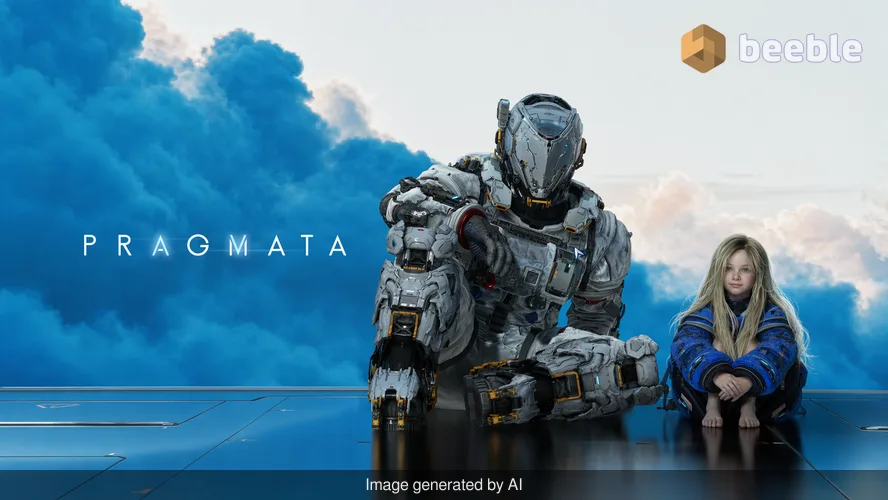
You are sitting on your couch, scrolling through a digital storefront on a Tuesday evening in April 2026. The grid of tiles is a familiar landscape of sequels, remasters, and 'live service' seasons that promise hundreds of hours of content you likely don't have the emotional bandwidth to consume. Your thumb pauses on a single, striking image: a small girl in a futuristic coat, an astronaut in heavy chrome plating, and a backdrop of a lunar surface that looks uncomfortably real. This is Pragmata. You realize that despite its years of silence and the fragmented nature of its marketing, you are more invested in this mystery than in the blockbuster that launched yesterday.
First, we have to look at how Capcom got us here. Behind the scenes, the development of Pragmata has been a masterclass in the art of the strategic disappearance. While other AAA titles were being pushed through the relentless machinery of biannual trailers and 'developer deep dives' that spoil half the mechanics before launch, Capcom opted for a radical, almost archaic silence. Consequently, they transformed a delay into a myth. By refusing to feed the content engine, they allowed the audience’s imagination to do the heavy lifting, essentially turning the game's absence into its most powerful marketing asset. This is the 'impressive' feat the industry is currently buzzing about: Pragmata has just surpassed wishlist numbers for nearly every other major new IP in the 2020s, and it did so by saying almost nothing.
The Architecture of a New IP
Building a new world from scratch in the current gaming landscape is like trying to build a skyscraper in the middle of a hurricane. Historically, the industry has leaned on the 'sequel treadmill' because it is safe; we know what a Resident Evil or a Monster Hunter feels like. From a creator's standpoint, world-building acts as an architectural foundation where even one weak pillar—a derivative setting or a clunky lore dump—can ruin the immersion for a modern, hyper-critical audience. Pragmata’s success lies in its refusal to be easily categorized.
Through this audience lens, we can see that the 'Pragmata mystery' isn't just a lack of information; it’s a deliberate design choice. In everyday terms, it is the difference between a friend telling you exactly what’s in a gift versus handing you a box that’s making a strange, rhythmic ticking sound. Paradoxically, the less we know about the 'what' of Pragmata, the more we obsess over the 'why.' This isn't just a technical achievement; it’s a psychological one. Capcom has successfully navigated the fragmented attention spans of 2026 by providing a resonant image that sticks in the mind precisely because it hasn't been over-explained by a PR team.
The Capcom Renaissance and the Trust Dividend
We cannot talk about Pragmata without talking about the 'Capcom Quality Seal.' Over the last decade, the company has undergone a profound transformation, moving from a period of experimental bloat to a streamlined era of consistent hits. This hasn't happened by accident. By utilizing the RE Engine as a flexible, technical spine across vastly different genres, Capcom has created a seamless experience of quality that audiences now take for granted. Essentially, the 'impressive' milestone Pragmata reached this week—becoming the most wishlisted 'mystery' IP in years—is a dividend paid out from the trust Capcom has banked with Resident Evil 4 Remake and Dragon’s Dogma 2.
Zooming out to the industry level, this trust is the only currency that still matters. In an era of 'content walled gardens' and 'algorithmic curation,' where we are constantly being funneled toward things we’ve already liked, a truly original idea feels disruptive. We are so used to the 'digital buffet' of Game Pass and PlayStation Plus—where everything is accessible but nothing feels special—that a game requiring patience feels like a luxury. Pragmata is the outlier that proves the rule: even in a saturated market, there is still a massive appetite for the unknown, provided the unknown is backed by a pedigree of excellence.
The Conversation Between Player and Developer
Narratively speaking, Pragmata seems to be experimenting with a specific type of 'ludonarrative' bond that we rarely see outside of Team Ico or Kojima Productions. The relationship between the protagonist and the young girl, Diana, isn't just a story beat; it’s a conversation between the player and the developer. If the mechanics of protecting and interacting with her are clunky, the world-building fails. If they are streamlined and immersive, the game becomes a benchmark for the next decade.
Historically, 'escort missions' are the bane of the medium. We’ve all felt the frustration of an AI companion getting stuck on a wall or walking directly into gunfire. However, the technical reports leaking out of Capcom’s R&D indicate that Pragmata is using Diana to showcase a new frontier in AI interaction—not as a burden, but as a multifaceted partner that reacts to the player's playstyle in real-time. Through this lens, the 'impressive' thing isn't just the graphics; it’s the potential for a more profound connection between the human behind the controller and the code on the screen.
Beyond the Screen: Why We Still Wait
There is a specific kind of nostalgia involved in waiting for Pragmata. It reminds us of a time when we found out about games through a single grainy magazine screenshot rather than a 4K, 60fps livestream. In everyday terms, it’s like the anticipation of a letter in the mail versus the instant gratification of a text message. Paradoxically, the 'bloated' development cycle that would have killed most other projects has only added to Pragmata’s allure.
Consequently, the game has become a symbol for the 'Indie vs. AAA' philosophical battle. It has the budget of a blockbuster but the heart of an experimental indie project. This isn't just about a game; it's about whether the industry still has the capacity for wonder. When we look at the 'content' we consume daily, it’s often designed to be ubiquitous and disposable. Pragmata, by contrast, feels opaque and enduring. It challenges the idea that we need to know everything immediately.
Reclaiming the Joy of the Unknown
At its core, Pragmata’s recent surge in popularity and its technical milestones are a reminder to the audience to slow down. We are constantly pushed by algorithms to move on to the next thing, to finish the battle pass, to clear the map markers. Pragmata asks us to sit in the mystery for a little while longer. Behind the scenes, the developers are likely feeling the immense pressure of these high expectations, but from our perspective as critics and consumers, the wait itself has value.
Ultimately, as you look at that digital tile on your screen, you should recognize that your excitement is a choice. In a world of algorithmic curation, being genuinely curious about something that hasn't been focus-grouped into oblivion is a minor act of rebellion. The 'impressive' thing Pragmata did wasn't just breaking a record or showing off new particles; it was reminding us that the most resonant experiences in media are often the ones we didn't see coming. Shift your perspective: don't view the delay as a failure of production, but as a preservation of the 'new.' In the end, the most valuable thing we can give a piece of art is our attention, and Capcom has proven that the best way to earn that attention isn't by shouting the loudest, but by having something actually worth saying when the room finally goes quiet.
Sources
- Capcom Investor Relations: Fiscal Year 2025/2026 Annual Report Findings.
- SteamDB: Global Wishlist Rankings and Engagement Metrics (April 2026).
- The RE Engine Technical Symposium: Case Study on AI Interactivity in Unannounced Projects.
- GameSpot Analysis: 'The Evolution of the Capcom Renaissance' by Industry Experts.



See you on the other side.
Our end-to-end encrypted email and cloud storage solution provides the most powerful means of secure data exchange, ensuring the safety and privacy of your data.
/ Create a free account
