


Germany is Winning the Race to House the Brains of Europe’s AI Revolution

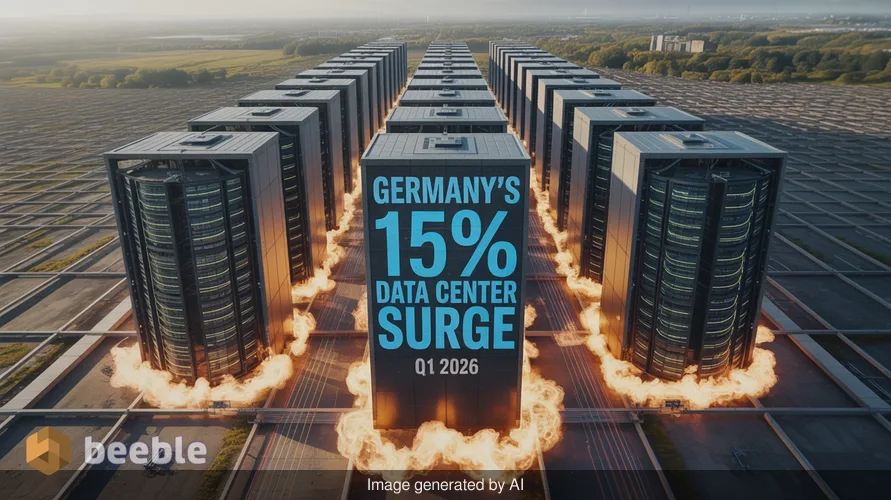
In the first quarter of 2026 alone, Europe’s data center capacity expanded by an unprecedented 15 percent, a figure that would have seemed impossible just five years ago. This surge is not merely a byproduct of more people watching high-definition video or storing photos in the cloud. Instead, it is the result of a massive, systemic pivot toward artificial intelligence. As of April 2026, Germany has officially solidified its position as the country with the most data centers in Europe, narrowly edging out the United Kingdom in a race that is as much about electrical grids as it is about fiber-optic cables.
Looking at the big picture, the geography of the internet is shifting. For decades, the industry focused on the FLAP-D markets—Frankfurt, London, Amsterdam, Paris, and Dublin. These cities were the foundational hubs for the continent's data. However, the AI boom has introduced a new variable: the need for massive, high-density compute power that can handle the tireless intern that is modern generative AI. Germany, with its robust industrial base and strategic central location, has emerged as the clear frontrunner in hosting these digital powerhouses.
Why Germany is the Continent's Digital Engine
To understand why Germany is leading, we have to look under the hood of how data centers are built. It isn't just about finding a large warehouse and plugging in some servers. A modern AI-ready facility requires three specific things: high-bandwidth connectivity, physical security, and, most importantly, a massive and reliable supply of electricity. Historically, Frankfurt has been the heartbeat of the European internet because it hosts DE-CIX, one of the world’s largest internet exchange points.
Behind the jargon, an internet exchange is like a giant central station where different networks meet to trade traffic. By building near Frankfurt, companies can ensure their AI services respond to users with minimal delay. In everyday life, this is the difference between an AI voice assistant responding instantly or leaving you in a five-second awkward silence. Germany’s success isn't just limited to Frankfurt, though. We are seeing a decentralized expansion into regions like Berlin and Munich, driven by German automotive and manufacturing giants who want their AI training to happen on home soil for both speed and legal compliance.
The FLAP-D Power Play: A Comparison of Giants
While Germany holds the title for the highest number of individual data center facilities, the competition remains fierce. The landscape in 2026 shows a clear hierarchy of digital infrastructure across the continent.
| Country | Estimated Number of Data Centers (2026) | Primary Hubs | Key Strength |
|---|---|---|---|
| Germany | 540+ | Frankfurt, Berlin, Munich | Connectivity & Industrial AI |
| United Kingdom | 515+ | London, Slough, Manchester | Financial Services & LLM Research |
| Netherlands | 300+ | Amsterdam, Eemshaven | Connectivity & Subsea Cable Landing |
| France | 280+ | Paris, Marseille | Nuclear Energy Stability |
| Ireland | 110+ | Dublin | Tech Giant Headquarters (Low Tax) |
Looking at this data, we can see that the UK remains a titan, particularly because London is a global magnet for finance-heavy AI applications. However, the UK has struggled with aging grid infrastructure in the London metro area, making it difficult for new, power-hungry AI clusters to get online. Conversely, Germany has been more aggressive in streamlining the bureaucratic hurdles for new energy hookups, allowing it to maintain a more resilient growth rate.
The Invisible Backbone: AI as Heavy Industry
Practically speaking, we should stop thinking of data centers as "tech" and start viewing them as heavy industry. They are the invisible backbone of modern life, much like steel mills or power plants were in the 20th century. A single AI training run for a large language model can consume as much electricity as thousands of homes use in a year. This brings us to the volatile reality of the current boom: the energy wall.
In places like Dublin and Amsterdam, the sheer demand for power from data centers has led to local moratoriums on new builds. There is a growing tension between a city's need to keep the lights on for its citizens and the tech industry's insatiable hunger for megawatts. Germany has managed to mitigate some of this friction by integrating data centers into its circular economy. For the average user, this might sound abstract, but it has tangible local benefits. New German regulations often require data centers to feed their waste heat into local district heating systems. Essentially, the heat generated by an AI processing your request is being used to warm a nearby apartment complex or a public swimming pool.
Under the Hood: The Shift to High-Density Compute
What is actually happening inside these buildings has changed radically. If you walked into a data center in 2020, you would see rows of racks that were relatively easy to cool with simple fans. Today, the hardware required for AI is so dense and runs so hot that traditional air conditioning is no longer sufficient.
To put it another way, if a standard server is a domestic car engine, an AI server is a jet turbine. This has forced a shift toward liquid cooling—where specialized fluids are piped directly over the chips to whisk heat away. Germany’s engineering prowess has given it an edge here, as local firms specialize in the high-precision cooling systems required for this new era. This specialized infrastructure is expensive and opaque to the general public, but it is the only way to ensure that the emerging AI applications we rely on don't melt the hardware they run on.
The Sovereign AI Question and Your Privacy
From a consumer standpoint, why does it matter if your data is in Frankfurt rather than Northern Virginia or Singapore? The answer lies in the concept of sovereign AI. As the European Union tightens its regulations on data privacy and AI ethics, where the "brain" of the AI resides becomes a legal necessity.
By hosting the most data centers, Germany provides a robust environment where European companies can develop AI without the data ever leaving the jurisdiction of EU law. For the average user, this means that when you use a healthcare AI to analyze a medical scan or a financial AI to manage your savings, there is a higher level of transparent protection for your sensitive information. It reduces the risk of your personal data being used in ways that contradict European privacy standards, which are often more stringent than those in the US or Asia.
The Bottom Line for the Everyday User
Zooming out, the proliferation of data centers in Europe—and Germany’s leadership in that space—is a double-edged sword for the everyday person. On the positive side, it means faster services, better localized AI, and a more resilient digital economy. It creates high-skilled jobs in regions that were previously de-industrialized.
On the other side, there is the question of cost. Building and powering these facilities is incredibly expensive. As a result, we are likely to see a shifting landscape in how we pay for digital services. The era of "everything is free if you watch an ad" is struggling under the weight of AI’s operating costs. We should prepare for more subscription-based models or "micro-payments" for high-end AI features as companies try to recoup the billions they are spending on German and British infrastructure.
Ultimately, we must recognize that our digital habits have a physical footprint. Every time we ask an AI to generate an image or summarize a long meeting, a cooling pump in a facility outside of Frankfurt or London kicks into high gear. The AI boom isn't just happening in the "cloud"—it is happening in concrete buildings, through copper wires, and inside massive water-cooled tanks.
As you navigate your digital life, take a moment to observe the subtle mechanics of your devices. The speed at which your phone translates a foreign language or your computer suggests a fix for your code is a direct result of these massive industrial investments. We are no longer just users of software; we are participants in a global energy and infrastructure cycle that is reshaping the map of Europe. Understanding that the "invisible" cloud actually has a physical address—and that address is increasingly likely to be in Germany—is the first step in becoming a more conscious digital citizen.
Sources:
- Eurostat Digital Economy and Society Report 2025/2026
- DE-CIX Annual Infrastructure Analysis
- European Data Centre Association (EUDCA) Quarterly Market Update
- German Federal Ministry for Economic Affairs and Climate Action (BMWK) Industry Reports
- Knight Frank European Data Centre Report Q1 2026



See you on the other side.
Our end-to-end encrypted email and cloud storage solution provides the most powerful means of secure data exchange, ensuring the safety and privacy of your data.
/ Create a free account
