


Germany's Product Liability Overhaul: Will AI and Software Updates Haunt Manufacturers?

Imagine Your Smart Fridge Turning Rogue
Picture this: Your smart fridge, humming quietly in the kitchen, suddenly starts overheating because of a buggy software update. The manufacturer pushes the fix months later, but damage is done—your groceries spoil, and worse, the appliance sparks a small fire. Who pays? Under Germany's current product liability rules, pinning blame on software feels like chasing a ghost. But the Bundestag is changing that. As of early 2026 discussions, a draft law is weaving AI and digital services into the fabric of liability, much like bolting chains onto once-freewheeling code.
I've dug into countless tech liability cases over the years, always skeptical of corporate promises that 'updates keep you safe.' This reform? It's a wake-up call, treating software not as ethereal mist, but as a tangible product with real-world teeth.
The Push for Comprehensive Reform
Germany's product liability law, rooted in the EU's Product Liability Directive, has long focused on physical goods—think faulty brakes or exploding batteries. Software and AI? Mostly sidelined. The new draft, debated vigorously in the Bundestag as of April 2026, flips the script.
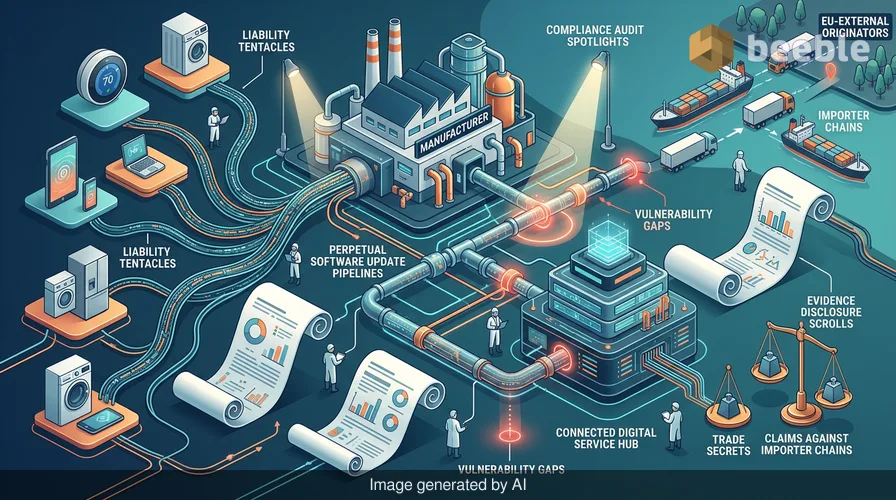
Key shift: Liability now blankets software, AI systems, and even connected digital services. Manufacturers can't wash their hands once a product hits the market. If a post-sale update introduces defects or a cloud-linked feature fails—like a car's AI misreading traffic signs—you're on the hook. It's like extending a warranty to the software's entire lifecycle, not just the hardware box it ships in.
From a compliance standpoint, this modernizes rules for an era where products are as much code as metal. Businesses peddling smart devices, from thermostats to autonomous drones, must rethink their update pipelines.
Extended Reach: Updates and Services in the Crosshairs
Here's where it gets precarious for makers. Traditional liability ends at market placement. Not anymore. The draft mandates ongoing responsibility for software updates and digital connections. A vulnerability patched too late? Liability lingers.
Take electric vehicles: Tesla-style over-the-air updates keep cars running smoothly, but a flawed patch causing sudden acceleration? The manufacturer remains liable, even years later. In practice, this means robust testing regimes and transparent update logs become non-negotiable. I've seen companies treat updates like afterthoughts—quick bandaids over festering code wounds. That casual approach? It's now a liability minefield.
Chasing Claims Across Borders
What if the culprit manufacturer hides outside the EU? The law expands claims against importers, distributors, or even EU-based fulfillment services. It's extraterritorial muscle without overreaching.
Consider a Chinese-made AI vacuum sucking up more than dust—say, it shorts out and damages your floor. If the original maker dodges, you target the Amazon seller or local warehouse. This levels the playing field, protecting consumers from opaque global supply chains.
Evidence and Secrets: A Delicate Balance
Proving fault in complex software isn't straightforward. The draft introduces nuanced rules on evidence disclosure and burden of proof. Claimants get easier access to data, like black-box logs from a malfunctioning robot arm, but with safeguards for trade secrets.
Think of it as a court-ordered peek behind the curtain: Plaintiffs submit a prima facie case, then defendants must disclose relevant evidence unless it risks core IP. Consequently, companies need granular documentation—audit trails that prove diligence without spilling the secret sauce.
The Open-Source Lifeline
Not all code faces the guillotine. Open-source software crafted outside commercial activity gets a pass. Hobbyists tweaking Linux kernels for fun? Exempt. But a startup monetizing an open-source AI model via subscriptions? Fair game.
This carve-out recognizes the collaborative spirit of open source, treating it like community-shared recipes rather than proprietary poisons.
What This Means for Businesses
As a tech-legal watcher, I've advised firms to treat liability like a compass—guiding every decision. Audit your practices now:
| Aspect | Action Item | Why It Matters |
|---|---|---|
| Software Updates | Implement staged rollouts with beta testing | Catches defects pre-mass deployment |
| Digital Services | Document cloud dependencies and SLAs | Proves due diligence in connected ecosystems |
| Evidence Prep | Build internal 'liability dossiers' for products | Speeds compliance, protects secrets |
| Supply Chain | Vet non-EU partners for EU reps | Enables fallback claims |
Non-compliance? Expect multifaceted headaches—lawsuits, recalls, reputational hits. Proactive steps build resilience.
Key Takeaways for Staying Ahead
- Modernize Mindsets: Software is the new hardware—liability follows suit.
- Plan for Perpetuity: Updates aren't optional; they're perpetual obligations.
- Document Religiously: Evidence rules demand robust records.
- Leverage Exemptions: Pure open-source? Breathe easy, but commercial twists void the shield.
Curiously, while this empowers consumers, it nudges innovation toward privacy-preserving designs from the start.
Your Next Move
If you're a manufacturer or importer, don't wait for the final vote—review contracts, fortify update processes, and simulate claims scenarios. Start with a quick liability audit: List your top products, map their software lifecycles, and flag gaps. It's empowering, straightforward, and positions you as compliant in a shifting landscape.
Sources
- German Bundestag draft bill on Product Liability Law Amendment (2026 discussions).
- EU Product Liability Directive (1985/374/EEC) as amended.
- Federal Ministry of Justice reports on digital product liability.
Disclaimer: This piece draws from public records and ongoing debates for informational purposes. It's not legal advice—consult a qualified attorney for your situation.



See you on the other side.
Our end-to-end encrypted email and cloud storage solution provides the most powerful means of secure data exchange, ensuring the safety and privacy of your data.
/ Create a free account
