


Google Docs Integrates Gemini-Powered Audio Summaries: Your Documents, Now Narrated

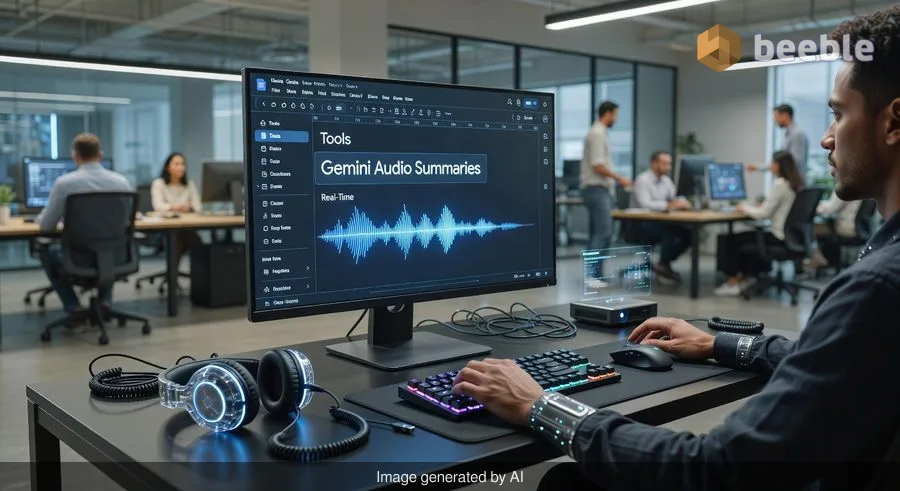
The era of the 'tl;dr' has officially moved from the screen to the earbuds. Google has announced the rollout of Gemini-powered Audio Summaries within Google Docs, a feature designed to transform lengthy, text-heavy documents into concise, conversational audio briefings. For anyone who has ever stared down a thirty-page white paper or a dense quarterly report with a sense of dread, this update offers a much-needed auditory alternative.
This move represents a significant step in Google’s broader strategy to weave generative AI into the fabric of its Workspace ecosystem. Rather than simply providing a text-based bulleted list, the new Audio Summaries leverage advanced synthesis to create a narrative flow, making the information easier to digest while on the move or during a busy commute.
How Audio Summaries Work
Accessing the feature is straightforward. Users can find the new option tucked into the Tools menu within any Google Doc. Once triggered, Gemini parses the document’s content, identifies key themes, and generates a short audio file. This isn't a robotic text-to-speech reading of every word; instead, it is a curated distillation of the document’s most critical points.
The underlying technology utilizes the multimodal capabilities of the Gemini 1.5 Pro model. By understanding the hierarchy of headings, the context of data tables, and the nuances of the author's tone, the AI can prioritize what actually matters. The result is a briefing that feels less like a machine reading a script and more like a colleague catching you up on a project in the hallway.
Breaking the Screen Barrier
The primary value proposition here is flexibility. In a modern work environment where 'Zoom fatigue' and digital eye strain are rampant, the ability to step away from the monitor without falling behind on reading is a significant productivity win.
Consider a legal professional reviewing case files or a marketing manager catching up on campaign post-mortems. By converting these documents into audio, they can consume the core insights while walking, driving, or simply resting their eyes. It turns 'dead time' into productive time, effectively decoupling information consumption from the physical desk.
Availability and Rollout Details
As with most high-end AI features, Google is taking a tiered approach to the release. The feature began its rollout on February 13, 2026, and is currently available to the following groups:
- Google Workspace Business and Enterprise subscribers.
- Google One AI Premium members.
- Select Education Plus users.
While the feature is currently limited to English-language documents, Google has hinted that expanded language support is expected later this year. Users should look for the 'Generate Audio Summary' option under the Tools tab, though it may take a few weeks to appear for all eligible accounts as the phased deployment continues.
Comparing Summary Formats
To understand where Audio Summaries fit into your workflow, it helps to compare them against traditional text summaries.
| Feature | Text Summaries | Audio Summaries |
|---|---|---|
| Primary Use Case | Quick scanning at a desk | Multitasking and 'eyes-free' consumption |
| Engagement Level | High visual focus required | Low visual focus; high auditory retention |
| Format | Bullet points or paragraphs | Conversational narrative |
| Accessibility | Standard | High (beneficial for visually impaired users) |
| Speed | Instant generation | Short processing time for synthesis |
Practical Tips for Best Results
To ensure Gemini produces a high-quality audio summary, the structure of your source document matters. The AI relies on organizational cues to determine what is important.
First, use proper heading styles. Gemini uses H1, H2, and H3 tags to understand the document's logical flow. A document with no formatting may result in a summary that feels disjointed. Second, clean up your data. If your document contains massive, unformatted raw data tables, the AI may struggle to verbalize the trends accurately. Providing a brief text description of what a table represents can help the AI synthesize that information into the audio track.
Finally, be mindful of the document length. While Gemini can handle hundreds of pages, the most effective audio summaries are generated from documents between 5 and 50 pages. For massive manuscripts, the summary may become overly generalized to fit the audio format's typical 3-to-5-minute duration.
The Future of the Auditory Office
This update is more than just a convenience; it is a signal of where document collaboration is headed. We are moving toward a 'format-agnostic' future where the information we create can be seamlessly converted into whatever medium suits our current context.
Whether you are a student trying to review lecture notes or an executive staying briefed on global operations, Audio Summaries in Google Docs provide a bridge between the written word and the spoken one. As AI continues to evolve, the barrier between 'reading' and 'listening' will likely continue to disappear, making information more accessible to everyone, everywhere.
Sources:
- Google Workspace Updates Official Blog
- Google Gemini Product Documentation
- Google Cloud AI Newsroom



See you on the other side.
Our end-to-end encrypted email and cloud storage solution provides the most powerful means of secure data exchange, ensuring the safety and privacy of your data.
/ Create a free account
