


Google’s Internal AI Divide Proves Even the Giants Can’t Force Their Own Employees to Use Their Software

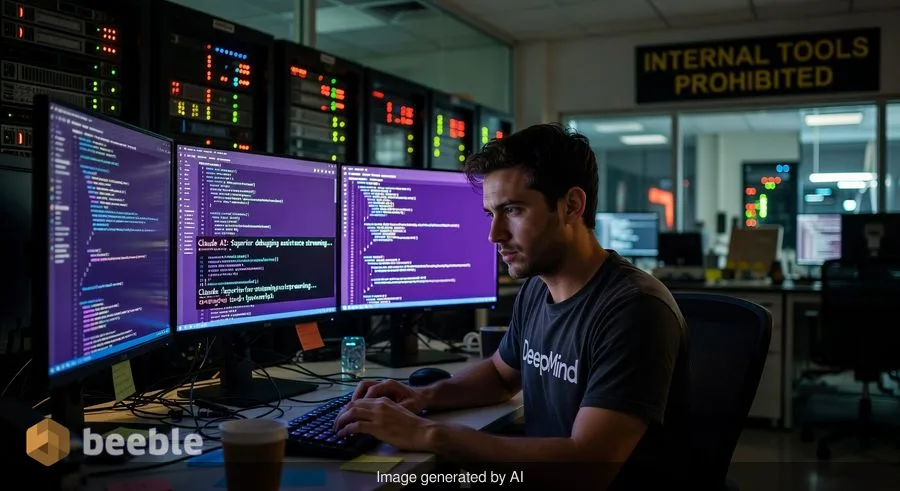
We are often told that the biggest tech companies in the world are monolithic fortresses where every employee lives, breathes, and codes using the company’s own product—a practice famously known as "dogfooding." While it seems logical that Google would require its engineers to use Gemini for every task to prove its superiority, the reality on the ground in 2026 is far more fragmented. A systemic rift has emerged within the Google ecosystem, separating the "haves" who are permitted to use Anthropic’s Claude AI from the "have-nots" who are restricted to internal Google models.
This isn't just a story about office politics; it’s a peek under the hood of how the world’s most powerful AI labs actually function. When the people building the future of the internet are reaching for a competitor's tool to get their work done, it signals a shift in the digital power dynamic. Essentially, the prestige of a brand is currently taking a backseat to the raw utility of the software. For the average user, this internal drama at Google provides a rare, transparent look at the practical hierarchy of AI tools and what it means for the products we use every day.
The Elite Exception: Why DeepMind Gets the Good Stuff
To understand this divide, we have to look at Google DeepMind. Historically, DeepMind has always been the jewel in Google’s crown—an elite research arm that operates with a degree of autonomy that rank-and-file engineers can only dream of. In recent months, news has surfaced that certain DeepMind employees have been granted special permission to use Claude, the flagship AI from Anthropic, specifically for coding purposes.
Looking at the big picture, this creates a curious paradox. Google has spent billions of dollars and countless marketing hours positioning Gemini as the premier AI for productivity and development. Yet, for their most high-stakes projects, they are allowing their top-tier talent to use a rival's engine. This isn't just a minor perk; it is a tactical decision. In the world of high-level programming, AI acts as a tireless intern, handling the tedious boilerplate code so the humans can focus on the architectural heavy lifting. If the "intern" provided by the rival company is faster or more accurate, the pressure to use it becomes overwhelming.
Conversely, the rest of the company—the engineers maintaining Search, YouTube, and Gmail—remain tethered to Google’s internal models. This has led to a palpable tension. When a company tells its workforce that AI is the future and that everyone is expected to integrate it into their daily workflow, employees naturally want the most robust tool available. Being told to use a shovel while the team across the hall is using a backhoe is a recipe for workplace friction.
Why Claude is Winning the Coding War
You might wonder why a Google engineer would even want to use Claude when they have Gemini at their fingertips. To put it another way, if you were a master carpenter, you wouldn't care whose name was on the chisel; you would care about the sharpness of the blade.
In the tech community, Claude has gained a reputation for having a more nuanced understanding of complex code structures and a "long context window" that allows it to remember massive amounts of information across a single conversation. For a developer working on a piece of software with millions of lines of code, that memory is foundational. While Gemini is incredibly capable, many developers find that Claude’s reasoning feels more intuitive and less prone to the "hallucinations" or errors that plague early-stage AI.
This preference highlights a volatile reality in the AI market: lead times are short, and the throne is never secure. A model that is the industry leader today can be surpassed by a streamlined update from a competitor tomorrow. By allowing DeepMind to use Claude, Google is implicitly admitting that, for specific high-level tasks, their own software isn't currently the best tool for the job. It is a pragmatic, if slightly embarrassing, concession to productivity over pride.
The Frenemy Dynamic: Google’s $2 Billion Relationship with Anthropic
There is a deeper layer of complexity here that involves the flow of capital. Google isn't just a competitor to Anthropic; they are one of its biggest backers. In late 2023, Google committed to investing $2 billion in Anthropic. This creates an interconnected web where Google is essentially funding the development of the tool that its own engineers prefer over its internal products.
From a market standpoint, this is a brilliant hedge. If Google’s internal AI wins, Google wins. If Anthropic wins, Google still owns a piece of the winner. However, from a corporate culture standpoint, it is a nightmare. It creates an opaque hierarchy where only the "elite" researchers are trusted to use external tools, while everyone else is expected to be a loyal brand ambassador.
This decentralized approach to AI adoption within a single company is unprecedented. Usually, a tech giant would mandate a single platform to ensure security and data privacy. The fact that Google is willing to let its data flow into Anthropic’s systems (likely under heavy contractual guardrails) shows just how desperate they are to maintain their lead in the AI research race. They are willing to sacrifice brand consistency for the sake of scalable innovation.
What This Means for the Everyday User
So, what does an internal fight about coding tools at a tech giant mean for you? Practically speaking, it serves as a reality check for the marketing hype we see every day.
- Don't Be a Brand Loyalist: If Google’s own engineers are switching between tools to find the one that works best, you should too. We are in a period of shifting standards. The best AI for writing an email might not be the best AI for planning a vacation or organizing your finances. The "winner" of the AI war hasn't been crowned yet, and being tool-agnostic is your greatest advantage.
- The Transparency Gap: This internal divide shows that the public-facing version of a product isn't always what the experts are using behind the scenes. When a company tells you their AI is "state-of-the-art," remember that their own lead researchers might be using something else to build it. Always look for tangible results over corporate PR.
- Productivity Over Everything: The takeaway from the DeepMind "haves" is that in the modern economy, output is king. Google is willing to tolerate internal grumbling and a minor PR bruise if it means their researchers are more efficient. For your own work, prioritize the tool that actually shortens your to-do list, regardless of the logo in the top corner.
Looking Ahead: The Future of the AI Fault Line
Ultimately, the tension at Google is a microcosm of a larger trend in the global workforce. As AI becomes a foundational part of every job, the divide between those who have access to "Tier 1" AI and those stuck with "Tier 2" AI will become a new form of inequality. In the same way that a faster laptop or a better internet connection once provided a competitive edge, access to superior reasoning models will define who moves fastest in the digital economy.
Google will eventually have to bridge this fault line. They will either need to upgrade Gemini to the point where no one misses Claude, or they will have to democratize access to third-party tools for all their engineers. Until then, the "Claude haves" will continue to be a source of envy and a signal to the rest of us that even in the halls of the most powerful tech companies on earth, the best tool for the job is often found outside your own four walls.
As we move further into 2026, observe your own digital habits. Are you using a tool because it’s the one your company provided, or because it’s truly the most resilient and user-friendly option? The choice to seek out the best tool, even when it’s not the most convenient or "official" one, is what often separates the leaders from the followers in any industry.
Sources:
- Internal Corporate Reports, Google Alphabet Investor Relations (2024-2025)
- DeepMind Research Division Annual Strategy Briefings
- Anthropic Corporate Partnership Disclosures and Investment History
- Industry Analysis: The 2026 AI Developer Productivity Index



See you on the other side.
Our end-to-end encrypted email and cloud storage solution provides the most powerful means of secure data exchange, ensuring the safety and privacy of your data.
/ Create a free account
