


Growing Data Privacy Concerns: Why Consumers Are Losing Trust in 2026

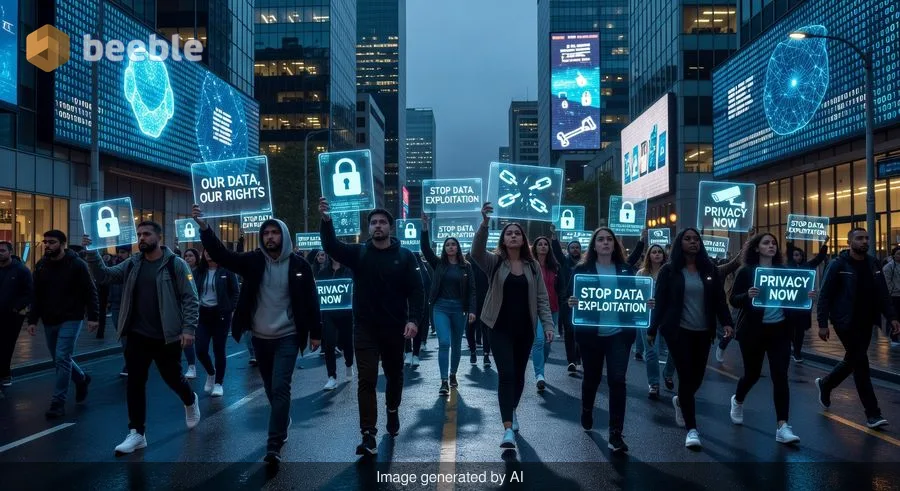
The Trust Deficit in Our Digital Lives
We share more personal information online than ever before—from fitness tracker data to shopping habits, location history to biometric scans. Yet a striking paradox has emerged: as our digital footprints expand, public confidence in how companies handle that data continues to erode.
Recent studies paint a sobering picture. Approximately 68% of consumers express significant concern about their online privacy, with many choosing to withhold personal information rather than risk misuse. This isn't merely abstract anxiety—it represents a fundamental shift in how people interact with technology and the companies behind it.
The question is no longer whether data privacy matters to consumers, but rather how deeply this apprehension will reshape the digital economy.
What's Driving the Privacy Anxiety?
Several interconnected factors fuel today's privacy concerns, each reinforcing the others in a cycle of diminishing trust.
High-profile data breaches continue to make headlines with alarming regularity. Throughout 2025 and into early 2026, major corporations across healthcare, retail, and technology sectors reported security incidents exposing millions of customer records. Each breach serves as a stark reminder that even sophisticated organizations struggle to protect the information entrusted to them.
Opaque data practices compound the problem. Many consumers feel they have little understanding of what happens to their information after clicking "I agree" on lengthy terms of service documents. A 2025 study found that the average privacy policy requires college-level reading comprehension and takes nearly 20 minutes to read—assuming anyone actually reads them at all.
Third-party data sharing adds another layer of complexity. Your information rarely stays with the company you directly interact with. Instead, it flows through elaborate networks of data brokers, advertising partners, and analytics firms. This ecosystem operates largely invisibly, making it nearly impossible for individuals to track where their data goes or who can access it.
AI and algorithmic decision-making introduce new uncertainties. As companies increasingly use artificial intelligence to analyze personal data for everything from credit decisions to hiring recommendations, consumers worry about biased algorithms making consequential choices based on incomplete or flawed information.
The Regulatory Response Takes Shape
Governments worldwide have responded to public pressure with increasingly stringent privacy regulations, though implementation varies dramatically by region.
The European Union's General Data Protection Regulation (GDPR) remains the gold standard, having influenced privacy frameworks globally since its 2018 implementation. It establishes clear rights for individuals, including the ability to access their data, request corrections, and demand deletion in certain circumstances.
In the United States, the landscape remains fragmented. California's Consumer Privacy Act (CCPA) and its successor, the California Privacy Rights Act (CPRA), provide robust protections for residents of America's most populous state. As of early 2026, over a dozen states have enacted their own privacy laws, creating a patchwork that challenges businesses operating across state lines. Federal comprehensive privacy legislation remains elusive, though renewed efforts are underway in Congress.
China's Personal Information Protection Law (PIPL), which took effect in November 2021, represents another major regulatory pillar. It imposes strict requirements on data handling and cross-border transfers, reflecting Beijing's emphasis on data sovereignty.
The Business Impact: Trust as Currency
Privacy concerns aren't merely a public relations challenge—they carry tangible business consequences.
Companies report that privacy anxiety directly affects conversion rates. Potential customers abandon transactions when asked for information they consider excessive or irrelevant. A 2025 survey of e-commerce businesses found that 42% of shopping cart abandonments occurred at the account creation or checkout stage, often triggered by requests for phone numbers, birthdates, or other personal details.
Brand reputation suffers when privacy incidents occur. Recovery takes years, not months. Organizations that experience data breaches face immediate customer churn, with studies showing that 35-40% of affected customers take their business elsewhere.
Recruitment challenges emerge too. Privacy-conscious younger workers increasingly scrutinize potential employers' data practices. Companies known for aggressive data collection or poor security face disadvantages in competitive talent markets.
What Consumers Can Do Right Now
While systemic change requires regulatory action and corporate accountability, individuals aren't powerless. Several practical steps can meaningfully improve personal privacy.
Audit your digital footprint. Take inventory of accounts, subscriptions, and services you've signed up for over the years. Delete those you no longer use. Each abandoned account represents a potential vulnerability.
Embrace privacy-focused alternatives. Browsers like Brave or Firefox with appropriate extensions, search engines such as DuckDuckGo, and encrypted messaging apps like Signal offer robust privacy without sacrificing functionality. These tools have matured considerably and often match mainstream alternatives in features.
Use password managers and two-factor authentication. Data breaches may be inevitable, but you can limit the damage. Unique passwords for each service mean that one compromised account doesn't cascade into many. Hardware security keys offer even stronger protection for critical accounts.
Exercise your legal rights. Under GDPR, CCPA, and similar laws, you can request copies of your data, demand corrections, and sometimes require deletion. Many companies now provide self-service portals for these requests. Use them.
Read permission requests carefully. Mobile apps often request far more access than necessary. Does a flashlight app really need your location and contacts? Grant permissions sparingly and review them periodically in your device settings.
Consider data minimization. Before providing information, ask whether it's truly necessary. You're often not required to fill every form field. Leave optional fields blank when possible.
The Road Ahead: Privacy by Design
The tension between data-driven innovation and privacy protection won't resolve quickly. However, some encouraging trends suggest possible paths forward.
Privacy-enhancing technologies (PETs) are advancing rapidly. Techniques like differential privacy, homomorphic encryption, and federated learning allow useful data analysis while limiting exposure of individual information. Major tech companies have begun incorporating these approaches, though implementation remains inconsistent.
The concept of "privacy by design"—building privacy protections into products from the outset rather than bolting them on later—gains traction. Regulations increasingly mandate this approach, and forward-thinking companies recognize it as a competitive advantage.
Consumer awareness continues growing. Younger generations, in particular, demonstrate sophisticated understanding of privacy trade-offs and increasingly demand transparency from the companies they patronize.
Building a More Privacy-Respecting Digital Future
The current crisis of consumer confidence in data protection represents both challenge and opportunity. Organizations that take privacy seriously—not merely as compliance exercise but as core business value—will earn customer loyalty in an increasingly skeptical marketplace.
For consumers, vigilance and informed choices matter. Privacy isn't binary; it exists on a spectrum. Perfect privacy remains elusive in modern connected life, but meaningful protection is achievable through combination of technology, regulation, and individual action.
The 68% of people expressing concern about online privacy aren't overreacting. They're responding rationally to demonstrated risks. The question now is whether businesses and policymakers will respond with equal rationality, rebuilding the trust that makes digital innovation possible.
As we navigate 2026 and beyond, data privacy will likely remain a defining issue of our technological age. The companies and individuals who adapt thoughtfully to this new reality will be best positioned to thrive in whatever digital future emerges.
Sources
- International Association of Privacy Professionals (IAPP): Privacy and Consumer Trust Report
- Pew Research Center: Americans and Privacy studies
- European Commission: GDPR official documentation
- California Attorney General: CCPA/CPRA implementation guidance
- National Institute of Standards and Technology (NIST): Privacy Framework documentation
- Various tech industry publications covering recent data breach incidents and privacy trends through February 2026



See you on the other side.
Our end-to-end encrypted email and cloud storage solution provides the most powerful means of secure data exchange, ensuring the safety and privacy of your data.
/ Create a free account
