


GTA 6 Promises to be the Most Spectacular Entertainment on Earth, but Can any Price Tag Ever Be Truly 'Reasonable'?

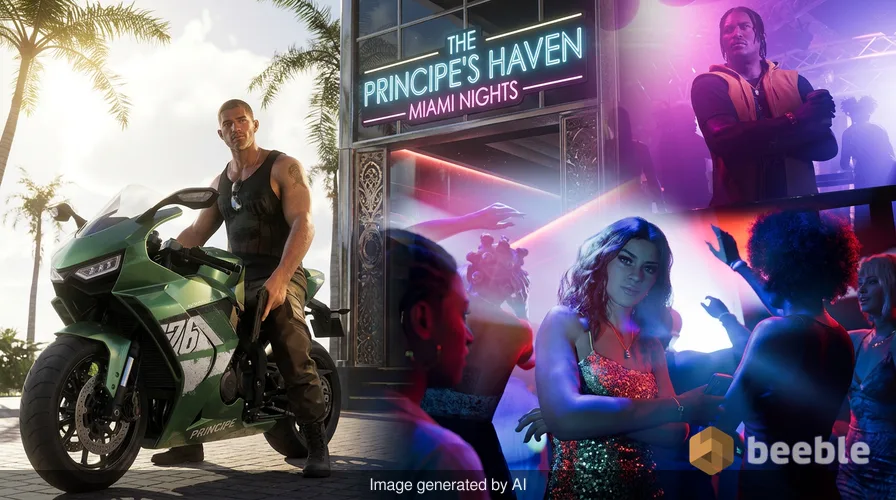
There is a specific, hollow tension that settles in the chest the moment you hover your cursor over a 'Purchase' button for a high-stakes digital product. It is a cocktail of adrenaline and quiet resentment—the thrill of finally touching a piece of culture you have waited years for, clashing violently with the cold reality of a dwindling bank balance. We have all been there, staring at the screen on a Friday night, justifying the cost of a new release by mentally calculating how many hours of 'distraction' it provides per dollar, as if our leisure time were a purely transactional commodity. This visceral tug-of-war is the internal autopsy of a modern consumer: we crave the profound, immersive experience of a generation-defining masterpiece, yet we are increasingly fatigued by the escalating cost of entry.
Behind this emotional friction lies a calculated corporate machinery that is currently recalibrating the very definition of 'value.' Strauss Zelnick, the CEO of Take-Two Interactive, recently stepped onto the stage at iicon in Las Vegas to address the elephant in the room: the price of Grand Theft Auto 6. By using the word 'reasonable' to describe the upcoming game’s cost, Zelnick wasn't just answering a pricing question; he was performing a delicate linguistic surgery on the audience's expectations. From a corporate standpoint, the pricing of a game like GTA 6 is not merely a number—it is a data-driven intersection of consumer psychology, historical inflation, and the sheer, bloated cost of maintaining a workforce capable of building a digital world that rivals reality.
The Architectural Foundation of Value Delivery
When we talk about the 'value' of a video game, we are often talking about its architectural foundation. In world-building, a single weak pillar—be it a clunky user interface, a derivative story, or a seamless world that is actually filled with repetitive filler—can ruin the entire immersion. For Rockstar, the pressure is to ensure that the foundation is made of gold. Zelnick’s assertion that their job is to 'charge way way way less of the value delivery' is an attempt to frame the game as a bargain, regardless of whether the final sticker price is $70, $80, or higher.
In everyday terms, this is the 'Disney World Logic.' You might complain about the price of the ticket, the overpriced bottled water, and the long lines, but once you are standing in front of the castle, the sheer scale of the production is designed to make you feel that the cost was justified. Rockstar is aiming for that same psychological bypass. If GTA 6 truly becomes the 'most spectacular piece of entertainment on Earth,' the audience's memory of the price tag is expected to dissolve into the background, replaced by the resonant experience of the game itself. However, this relies on a dangerous assumption: that the consumer's wallet is as expansive as the game's map.
The $80 Rubicon and the Ghost of Inflation
Historically, the pricing of video games has been one of the most stable metrics in entertainment, which Zelnick pointed out with some frustration. While a movie ticket has nearly doubled in price in some regions over the last decade and streaming subscriptions have fragmented into a dozen different monthly bills, games held the $60 line for an eternity before inching toward $70. Paradoxically, as games became more expensive to produce—bloating into multi-hundred-million-dollar behemoths—the cost to the player remained stagnant.
We saw the first major crack in this ceiling in 2025 when Nintendo launched Mario Kart World at $80. It was a disruptive moment that signaled the end of the $70 era for elite tier titles. To a publisher, the $80 price point is a necessary correction for a decade of inflation. To a player, it feels like an additional tax on a hobby that is already becoming prohibitively expensive. This shift creates a fragmented market where 'AAA' no longer just means high quality; it means a luxury tier of entertainment that requires a significant financial commitment before the first frame even loads.
The Illusion of Choice in the Content Walled Garden
As we approach the November 19, 2026, release date—a date Zelnick joked would see a global surge in 'sick days'—we have to look at the broader industry trend of the Content Walled Garden. Rockstar is no longer just selling a game; they are selling an ecosystem. The predecessor, GTA 5, wasn't just a success because of its initial sales; it survived for over a decade because of GTA Online. Consequently, the initial price of GTA 6 is almost secondary to the long-term revenue stream the game is expected to generate through microtransactions and live-service updates.
This is where the 'reasonable' argument becomes opaque. If a game is designed to be a ubiquitous, ten-year platform, is a higher upfront cost a fair entry fee, or is it double-dipping? For many players, the fear isn't just the $80 price tag—it’s the realization that the game is designed to constantly ask for more. Through this audience lens, the 'value' Zelnick describes isn't a gift given to the player; it is an investment the player makes into a platform that Rockstar will continue to monetize for the next decade. The game mechanics become a conversation between player and developer, but often, the developer is the one holding the megaphone.
Success and the Daunting Challenge of Hype
Zelnick admitted to being 'terrified' by how to measure success for GTA 6. This is an uncharacteristically honest admission from a high-level executive. When a product has more hype than any other piece of media in history, it ceases to be a product and becomes a cultural event. The 'upside' he mentions—the revenue—will almost certainly take care of itself, given that GTA 5 moved over 225 million units. But the cultural cost is higher.
If the game launches and feels even slightly derivative of its predecessor, or if the performance on the PS5 and Xbox Series X|S is clunky, the 'reasonable' price will immediately feel like a betrayal. In the age of algorithmic curation and instant social media feedback, the window for a game to prove its value is shrinking. We are living through a period of franchise fatigue where audiences are increasingly skeptical of 'revolutionary' PR claims. Rockstar isn't just fighting for our dollars; they are fighting against the exhaustion of a player base that has seen 'the next big thing' fail to deliver time and time again.
Reclaiming the Human Scale of Leisure
Ultimately, the discussion around the price of GTA 6 is a microcosm of our relationship with modern media. We are often caught in a cycle of consuming 'content' rather than experiencing art, pushed by algorithms and marketing blitzes to be part of the 'conversation' at any cost. When Zelnick speaks of 'value delivery,' he is speaking the language of a producer. As consumers, we need to speak the language of the experience.
Is it 'reasonable' to spend $80 on a game? Perhaps, if that game offers a profound, multifaceted narrative and hundreds of hours of seamless exploration. But we must also ask ourselves if we are buying the game because it adds value to our lives, or simply because it has become a ubiquitous requirement of modern social life. As we count down the months to November 19, the challenge for the audience is to remain hyper-observant. We should demand that the 'most spectacular piece of entertainment on Earth' treats our time and our wallets with as much respect as it treats its own technical ambitions.
In an era where we often scroll through endless digital buffets only to find nothing that truly resonates, the arrival of a titan like GTA 6 is a rare moment to pause. It is a chance to observe our own habits, to question the corporate logic of the 'luxury game,' and to decide for ourselves what our leisure time is actually worth. Whether we call in sick or not, the real success of the game won't be found in Take-Two’s quarterly earnings, but in whether the experience leaves us feeling like we've gained something profound—or if we’re just left waiting for the next expensive distraction.
Sources
- Take-Two Interactive Earnings Reports (2024-2026)
- IGN Interview with Strauss Zelnick at iicon Las Vegas (May 2026)
- Consumer Price Index data regarding entertainment and software (2013-2026)
- Industry analysis on AAA development budgets and the 'inflationary gap' in game pricing
- Sales data reports for Grand Theft Auto V and Grand Theft Auto Online



See you on the other side.
Our end-to-end encrypted email and cloud storage solution provides the most powerful means of secure data exchange, ensuring the safety and privacy of your data.
/ Create a free account
