


High-End Gaming Has Never Been More Expensive, Yet Hardware Has Never Mattered Less

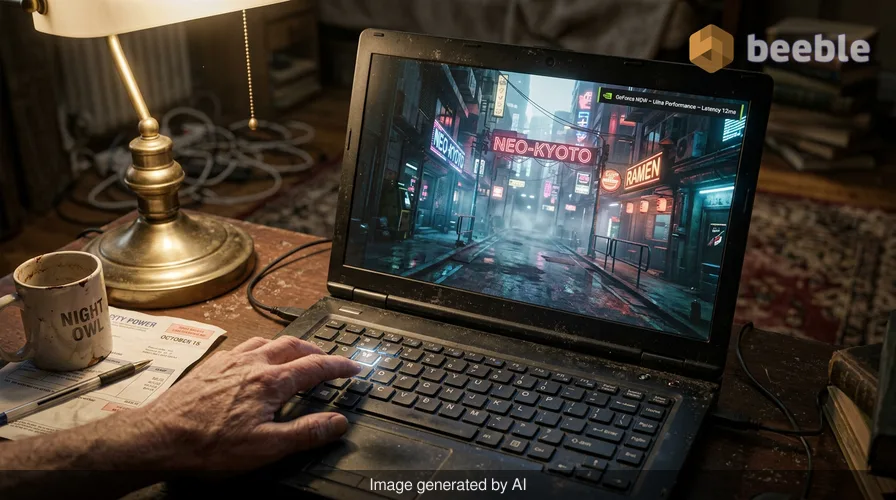
We used to measure our gaming status by the weight of a tower and the decibel level of its cooling fans. Now, we measure it by the stability of our fiber optic connection and the latency of a remote server park. Historically, entering the world of high-fidelity gaming required a massive up-front sacrifice—a ritualistic trip to a tech retailer followed by hours of cable management and driver troubleshooting. In our current landscape, that entire friction-filled journey has been replaced by a login screen.
Behind the scenes, the industry has undergone a quiet but profound transformation. While the marketing machines of hardware manufacturers continue to push the narrative of the 'essential' thousand-dollar upgrade, a growing segment of the audience is realizing that the box under the desk is increasingly a redundant relic. This is the paradox of 2026: as game engines become more demanding and visual fidelity reaches near-photorealistic peaks, the barrier to entry for the budget-conscious player has actually never been lower. At the heart of this shift is NVIDIA GeForce NOW, a service that has effectively decoupled the art of play from the physics of the silicon chip.
The Vanishing Ritual of the Screwdriver
We used to obsess over compatibility charts and thermal paste application. Now, we simply click 'Play' on a browser window. This shift represents more than just a convenience; it is a fundamental restructuring of how we perceive ownership and access. In everyday terms, the old model of gaming was like owning a luxury car—it was beautiful when it worked, but the maintenance costs were constant and the depreciation was brutal. Through this audience lens, GeForce NOW behaves more like a high-speed rail network: you don't own the engine, but you get the same top-tier speed for a fraction of the cost, without ever worrying about an oil change.
Consequently, the 'budget gamer' is no longer the person playing five-year-old titles on low settings. Through the power of the cloud, a student with a three-year-old MacBook or a professional with a dusty office Chromebook can experience the exact same path-traced shadows and seamless frame rates as an enthusiast with a liquid-cooled rig. Historically, hardware was a wall that kept people out; today, it is becoming a window that lets everyone in. This democratization isn't just a win for the wallet; it’s a direct challenge to the gatekeeping culture that has defined PC gaming for decades.
The Content Walled Garden vs. The Open Library
We used to be trapped by the 'Netflix-ification' of gaming, where our access to a library was entirely dependent on a monthly subscription to a specific publisher. Now, we are seeing the rise of the 'bring-your-own-game' model, which respects the player's existing digital shelf. Behind the scenes, GeForce NOW’s greatest strength isn't its server architecture, but its philosophical alignment with the consumer. By connecting to Steam, Epic Games Store, and GOG, the service avoids the fragmented trap of exclusive content silos.
Paradoxically, the most 'pro-consumer' move in the cloud space wasn't creating more content, but allowing us to use what we already own. From a creator's standpoint, this is a dream scenario. A small indie developer doesn't have to worry if their game is too 'bloated' for a low-end PC to handle; they can trust that the cloud will provide the heavy lifting. Essentially, this removes the technical ceiling for both the developer and the player. We no longer have to choose between buying a new game or saving for a new GPU; for the cost of a few cups of coffee a month, we can have both.
The Great Decoupling of Performance and Price
We used to see a linear relationship between how much a gamer spent and how good their screen looked. Now, that line has been shattered by the efficiency of remote data centers. To understand the financial shift, one only needs to look at the current price of a mid-to-high-range graphics card in 2026. When factoring in inflation and the ongoing complexity of chip manufacturing, a physical upgrade is a significant lifestyle investment.
| Feature | Traditional Local Hardware | GeForce NOW (Ultimate Tier) |
|---|---|---|
| Upfront Cost | $800 - $2,000+ | $0 (Uses existing device) |
| Maintenance | Hardware cleaning, driver fixes | Managed by NVIDIA |
| Power Consumption | 300W - 600W+ (High utility bill) | Minimal (Mobile/Laptop level) |
| Portability | Fixed to a desk | Phone, Tablet, Laptop, TV |
| Upgradability | User must buy new parts every 3-4 years | Automatic server-side upgrades |
Zooming out to the industry level, this table highlights a stark reality. The local PC is becoming a luxury boutique item, while the cloud is becoming the ubiquitous utility. We used to accept that high-end gaming was an expensive hobby. Now, we recognize that it was only expensive because we were paying for the 'shell' rather than the experience. By shifting the burden of compute to the cloud, the budget-conscious gamer is essentially 'renting' a supercomputer for the price of a standard streaming sub, bypassing the predatory pricing of the secondary hardware market.
Decoding the Latency of Social Stigma
We used to scoff at cloud gaming as a clunky, laggy mess that was only fit for turn-based strategy games. Now, with the expansion of 5G and ubiquitous high-speed fiber, the 'feel' of cloud gaming is often indistinguishable from local play for the vast majority of the population. This shift is resonant because it mirrors how we transitioned from physical media to Spotify or Netflix. There was always a vocal minority that insisted the 'quality' wasn't there, until one day, the convenience and cost-effectiveness simply outweighed the marginal gains of physical ownership.
In everyday terms, the average player cares more about the fact that they can play Cyberpunk 2077 on their lunch break at work than they do about the three-millisecond difference in input lag that only a professional esports athlete would notice. At its core, the cloud has matured. It is no longer an experimental gimmick; it is a streamlined service that solves the biggest problem in gaming: the 'bloated' file size. We used to wait four hours for a 150GB game to download and install. Now, we are playing within thirty seconds of clicking a button. The time saved is, for many, as valuable as the money saved.
The Illusion of Progress and the Reality of Access
We used to believe that the industry's progress was tied to how many transistors we could fit on a board. Now, we understand that true progress is measured by how many people can participate in the cultural conversation. When a blockbuster title drops, the social media discourse is often fragmented between those who can play it and those who have to watch it on YouTube because their hardware can't keep up. GeForce NOW acts as a bridge across this digital divide.
Beyond the screen, this shift impacts the very narrative of gaming. When more people have access to high-end visuals, developers are emboldened to push the boundaries of environmental storytelling and immersive world-building. They no longer have to optimize for the 'lowest common denominator' of hardware if that denominator is a high-end server in the cloud. Paradoxically, by being 'budget-conscious,' players are actually supporting the most advanced technical reaches of the medium. They are proof that you don't need a high net worth to have high-fidelity tastes.
Reclaiming the Joy of Play
As we navigate the complexities of a fragmented entertainment landscape, it is easy to feel overwhelmed by the costs. We are constantly told we need the next iteration, the faster chip, the brighter screen. However, the rise of robust cloud services like GeForce NOW suggests a different path—one where we reclaim our leisure time from the treadmill of hardware upgrades.
We should look at our gaming habits not as a series of purchases, but as a series of experiences. If you can enjoy a profound narrative or a seamless multiplayer session on a device you already own, the industry’s push for 'bigger and better' hardware becomes a background noise you can choose to ignore. Through this lens, the most revolutionary thing a gamer can do in 2026 is to stop worrying about their specs and simply start playing. The power is no longer in the box; it’s in the connection.
Sources:
- NVIDIA GeForce NOW Official Technical Documentation (2024-2026).
- Global Cloud Gaming Market Report 2025: Trends in Consumer Access.
- Analysis of GPU Pricing Volatility: A Five-Year Retrospective (2021-2026).
- Survey on Gaming Habits: The Shift from Hardware Ownership to Service Access.



See you on the other side.
Our end-to-end encrypted email and cloud storage solution provides the most powerful means of secure data exchange, ensuring the safety and privacy of your data.
/ Create a free account
