


How a simple text message is changing the way we spend money

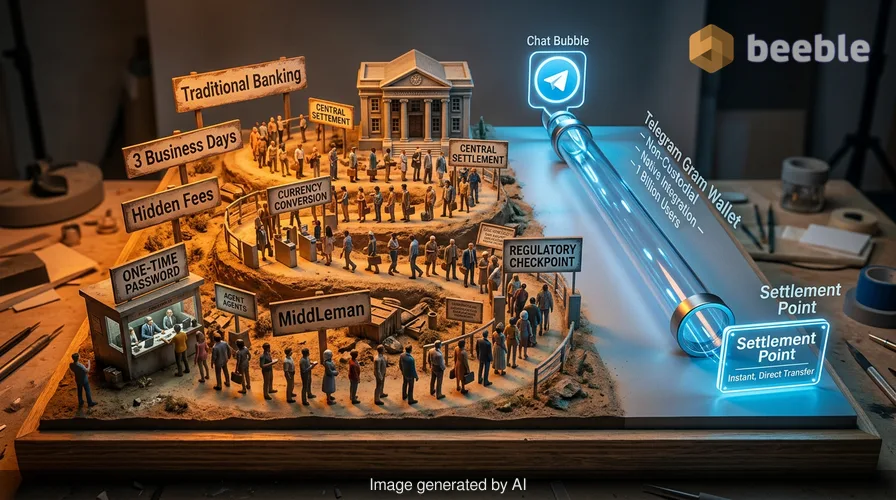
Have you ever tried to send twenty dollars to a friend in another country? You open a traditional banking app. You wait for a one-time password. You pay a hidden currency conversion fee. The money disappears for three business days while institutions verify the claim. This friction is a pervasive ghost in our financial machine. It makes the digital world feel sluggish even as our internet speeds increase. We accept these delays as a mundane reality of modern life because we believe that safety requires a middleman.
A native non-custodial wallet removes this intermediary by embedding cryptographic signatures directly within the interface of a messaging platform. Users sign transactions locally on their personal devices. This process allows the network to process transfers without requiring a central server to approve the movement of funds. The wallet generates a private key that stays on the hardware of the user. Consequently, the individual retains full control over their assets without relying on a bank to act as a gatekeeper.
The jump from chat to finance
On Tuesday, July 21, 2026, Telegram founder Pavel Durov announced that his platform will ship a native non-custodial Gram wallet inside every app this summer. The update targets more than one billion users. Durov claims this rollout is the largest of its kind in human history. Following the announcement, the GRAM token climbed 8.4% to reach a price of $1.53. This move is a tangible step toward turning a messaging app into a global payment rail.
Zooming out, this trend is part of a systemic shift in how we view digital assets. For years, crypto was a speculative hobby for a fragmented group of tech enthusiasts. Now, it is moving into the ubiquitous apps we use for daily communication. Telegram previously relied on custodial solutions or optional add-ons. A native integration makes the financial layer part of the core software. This change simplifies the user experience for people who have never owned a digital asset.
In everyday terms, this means the distance between a conversation and a transaction is disappearing. You might discuss splitting a dinner bill and settle the debt in the same chat bubble. The GRAM token is the unit of account for these interactions. The market cap for the asset currently sits at $4.17 billion. Despite the recent price jump, the token is still down more than 54% over the past year. This volatility highlights the paradoxical nature of the current market, where massive adoption news meets a long-term price correction.
The glass bank vault metaphor
To understand a non-custodial wallet, imagine a glass bank vault. Everyone can walk through the lobby and see the money sitting inside the transparent boxes. The public can verify exactly how much is there and where it came from. However, only you have the physical key to your specific box. The bank staff does not have a master key. They cannot freeze your box or prevent you from opening it.
This is how the GRAM wallet operates on the blockchain. The ledger is public and transparent. Your funds are visible to the network, but the power to move them is decentralized. In the past, using this technology required complex software and a deep understanding of private keys. Telegram is attempting to hide this complexity behind a familiar user interface. Curiously, the success of this plan depends on whether users actually want to be their own bankers.
Managing your own keys involves a high level of personal responsibility. If you lose your access code, there is no "forgot password" button that can recover the funds. This is the structural tradeoff of the non-custodial model. You gain freedom from bank fees, but you lose the safety net of institutional oversight. Historically, retail users have preferred convenience over absolute control.
The shift from Toncoin to GRAM
This rollout follows a significant rebrand that concluded on June 15, 2026. The community voted with an 81.22% majority to move away from the Toncoin name in favor of GRAM. This rebrand coincided with the launch of a dedicated Apple Watch app and a sixfold reduction in network transaction fees. These technical upgrades are symptomatic of a network preparing for high-volume retail use.
On a macro level, the move toward zero-fee transactions challenges the business model of traditional payment processors. Companies like Visa and Mastercard rely on small percentages of every swipe to generate revenue. If a billion people can move value for free, those transaction fees become an unnecessary tax on the economy. Paradoxically, the traditional financial system is starting to look more expensive and less efficient than the decentralized alternatives it once dismissed.
Behind the scenes of this trend, Telegram is taking over the development of the network itself. The company assumed control in May 2026 to ensure the infrastructure could handle the influx of new users. This centralization of development stands in contrast to the decentralized nature of the wallet. It is a nuanced balance between corporate efficiency and blockchain transparency.
Skepticism and the inflation trap
Not everyone is convinced that GRAM is the future of money. Blockstream CEO Adam Back recently raised concerns about the token's inflation mechanics. He argued that comparing GRAM to Bitcoin is misleading because Bitcoin has a hard cap on its supply. GRAM, by contrast, has a different monetary policy that may dilute the value of long-term holders.
Inflation acts as an invisible leak in your wallet. If the supply of a token increases too quickly, the purchasing power of each individual unit drops. This is a deeply rooted problem in both fiat and crypto markets. While Pavel Durov promotes GRAM as a superior alternative to traditional money, the underlying math must remain resilient to survive a market cycle. Market corrections act like a forest fire — they clear out the dead wood so new growth can happen.
Speculative bubbles often hide these structural flaws until liquidity dries up. The 54% drop in GRAM's price over the last year suggests that many early investors have already exited their positions. For a billion new users, the entry price of $1.53 is far more attractive than the highs of previous years. However, the risk of further devaluation remains a tangible concern for anyone holding the token for more than a few days.
Reclaiming control of the digital dollar
Ultimately, the arrival of a native wallet in a major messaging app is a multifaceted milestone. It moves crypto from a specialized exchange into the pocket of the average person. On an individual level, this changes how we perceive the money in our phones. It is no longer just a number in a bank's database; it is a digital object that we truly own.
Practically speaking, you should observe your own reaction to this shift. Are you excited by the prospect of zero fees, or does the lack of a "forgot password" button make you anxious? This internal tension defines the current era of finance. We are caught between the old world of institutional trust and the new world of individual agency.
As this technology becomes pervasive, take a moment to look at your digital habits. The way you spend, save, and send money is becoming more interconnected with the way you communicate. This integration offers efficiency, but it also demands a higher level of financial mindfulness. The glass vault is open. The key is in your hand. The responsibility is yours alone.
Sources
- BeInCrypto Rankings: Market capitalization and price data for GRAM.
- Telegram Official Channel: Pavel Durov’s public statements regarding the native wallet rollout.
- TON Community Governance: Voting results for the June 15 rebrand.
- Blockstream Public Statements: Adam Back’s analysis of token inflation and supply mechanics.
- CoinMarketCap: Historical price performance and total supply data for top 30 crypto assets.



See you on the other side.
Our end-to-end encrypted email and cloud storage solution provides the most powerful means of secure data exchange, ensuring the safety and privacy of your data.
/ Create a free account
