


How institutional plumbing turned Bitcoin into a household utility

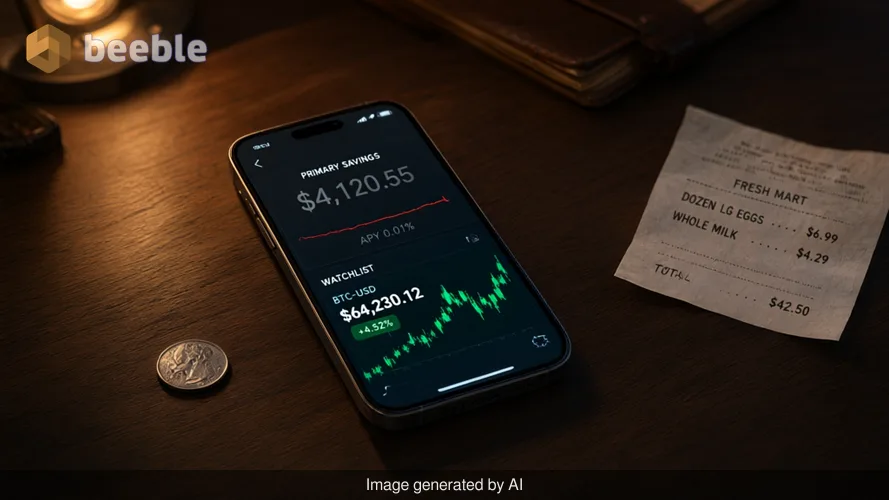
For most of us, the ritual of checking a bank account is a quiet exercise in frustration. You see the same numbers, the same decimal points, and the same fractional interest rate that fails to keep pace with the price of a carton of eggs. We are told that our money is safe, yet we feel its value eroding like an invisible leak in a wallet. This persistent anxiety often drives people toward the edges of the financial world, looking for something that moves faster than a stagnant savings account. Historically, this search led to speculative stocks or gold, but today, that search increasingly ends at a digital ticker symbol on a traditional brokerage app.
The invisible leak in the modern wallet
Financially speaking, the gap between what we earn and what we can actually buy is widening. In everyday terms, this is why the same twenty-dollar bill that once covered a week of lunches now barely covers two. As a result, the psychological pressure to find a hedge against this erosion is systemic. People are not just looking for a way to get rich; they are looking for a way to stay level. This search for stability in a volatile world is the primary driver behind the massive figures we see in the morning financial reports.
On September 21, 2026, the digital and traditional financial worlds collided in a way that was both profound and predictable. While the average person was simply trying to balance their monthly budget, institutional investors and retail savers through ETFs moved nearly $1 billion into Bitcoin. This was not a move made in the dark corners of the internet. It happened through the same institutions that manage retirement funds and college savings plans. The contrast is stark: in the past, Bitcoin was a niche interest for the technologically savvy; today, it is a line item in a diversified portfolio for the cautious saver.
A billion dollar signal in the digital noise
According to SoSoValue data, US spot Bitcoin exchange-traded funds (ETFs) pulled in $999 million of net inflows as the price of Bitcoin broke through the $86,000 mark. This is the strongest single day of buying in 2026. The scale of this intake is symptomatic of a larger shift in how the public perceives digital assets. Zooming out, this is the largest daily total since October 2025, when the market saw $1.2 billion in activity.
When we measure this activity in the asset itself, the numbers are even more striking. The funds absorbed approximately 11,530 BTC. This is the largest one-day net intake since November 2024. The buying surge occurred as the price traded briefly above $87,000, its highest level since the start of the year. Three major players drove the majority of this volume. BlackRock’s iShares Bitcoin Trust (IBIT) took the lead with $381.4 million. The ARK 21Shares Bitcoin ETF (ARKB) followed with $289.1 million, and Fidelity’s Wise Origin Bitcoin Fund (FBTC) contributed $238.8 million. Together, these three products accounted for over $909 million of the daily total.
The mechanical shift from hobby to institution
To understand why this matters for the person checking their phone at a coffee shop, we have to look at the plumbing. In practice, an ETF is like a glass bank vault. The blockchain technology underneath allows everyone to see the money inside, but the ETF structure allows the owner to use a familiar key. You do not need to manage private keys or worry about the security of a digital exchange. You simply buy a share of the vault. This convenience has turned a once-opaque process into something as mundane as buying a share of a tech company.
Bloomberg Intelligence ETF analyst Eric Balchunas points out that the fourth-largest daily intake for BlackRock’s fund is a constructive signal. He argues that the irregular pattern of these creations is a sign of health. Paradoxically, if the money came in at the exact same time every day, it would suggest that one large machine or a single bank was making the decision. Instead, the uneven flow suggests that thousands of different people and small firms are making independent choices at different times. This is the definition of dispersed investor activity.
Why eighty-six thousand dollars feels like a new floor
Market cycles are often described as a psychological pendulum swinging between greed and fear. When Bitcoin was $16,000, many people felt fear. Now that it is $86,000, the narrative has shifted toward acceptance. This is a classic example of herd behavior in behavioral economics. However, there is a structural difference this time. In previous cycles, the price was driven by retail traders on unregulated exchanges. Today, the price is supported by the liquidity of the world’s largest asset managers.
Liquidity is simply a measure of how easily you can turn an asset into spendable cash. For a long time, Bitcoin was relatively illiquid for the average person. If you wanted to sell, you had to navigate a digital wild west. Now, with $1 billion flowing through ETFs in a single day, the asset is deeply rooted in the global financial index. Consequently, the price surge to $86,000 is not just a speculative bubble; it is a reflection of the asset being integrated into the plumbing of the global economy.
Dispersed activity and the health of the network
Behind the scenes of this trend, we see a transition from fiat currency as a collective belief system to a hybrid model. Governments issue money backed by trust, but the blockchain offers a decentralized alternative backed by math. On an individual level, the decision to buy a Bitcoin ETF is often a vote of no confidence in the traditional inflationary pressure that eats away at savings.
Financially speaking, the fact that all six of the largest Bitcoin ETFs saw inflows on the same day is multifaceted. It suggests that the demand is not isolated to one brand or one type of investor. It is pervasive. As Eric Balchunas noted, these irregular inflow days better reflect a broad base of users rather than a single large model or institution. This is important because a fragmented and diverse group of owners is usually more resilient than a few large holders who might all sell at once.
Reclaiming perspective in a volatile world
Ultimately, the record-breaking day for Bitcoin ETFs is more than just a headline about a price increase. It is a story about how we are choosing to protect our labor. Whether you own a fraction of a Bitcoin or none at all, the shift in how $1 billion moves across the world affects you. It changes how banks think about your savings and how governments think about their currency.
In everyday terms, we should look at these market shifts not with FOMO, but with curiosity. The next time you see a headline about billions of dollars moving into a digital vault, take a moment to look at your own financial habits. Are you saving out of habit, or are you saving with an understanding of where the world is going? The goal of financial mindfulness is not to pick the next winning asset, but to understand the mechanics of the system you are participating in.
As we move further into 2026, the distinction between a "crypto investor" and a "traditional investor" will likely vanish. We will all simply be participants in a global, transparent, and highly liquid digital economy. The glass vault is open, the plumbing is connected, and the invisible leak in our wallets finally has a patch.
Sources
SoSoValue Market Data Indices
Bloomberg Intelligence ETF Research Reports
SEC Form S-1 Spot Bitcoin ETF Filings
CoinMarketCap Crypto Price Indices
Federal Reserve Economic Data (FRED) Inflation Reports



See you on the other side.
Our end-to-end encrypted email and cloud storage solution provides the most powerful means of secure data exchange, ensuring the safety and privacy of your data.
/ Create a free account
