


How the Fan-Made Remix Became the Music Industry’s Newest Product

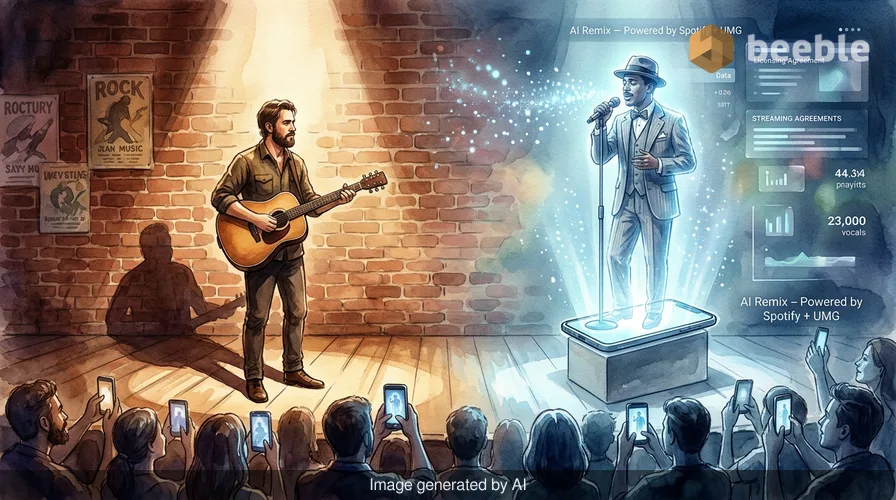
We used to treat the recorded song as a sacred, immutable object. When we bought a vinyl record or a CD, we were purchasing a definitive statement—a finished piece of architecture that we could inhabit but never renovate. If an artist decided a track should be four minutes of melancholy synth-pop, that was the reality we accepted. Now, we treat the song as a set of blueprints, an open-ended invitation to tinker, distort, and re-imagine. The wall between the creator and the consumer has not just been breached; it has been commercialized.
The recent licensing agreement between Spotify and Universal Music Group (UMG) is the formal white flag in a long-standing war over musical authority. By allowing Premium subscribers to generate AI-driven remixes and covers of their favorite artists, Spotify is effectively turning the passive listener into a junior producer. For a monthly fee, the tools once reserved for elite studios are being handed to anyone with a smartphone and a passing curiosity about what Taylor Swift might sound like singing a jazz standard.
Behind the scenes, this move represents a calculated response to the fragmented way we consume media today. For years, the industry watched helplessly as unofficial "sped-up" or "slowed + reverb" versions of hits dominated TikTok and YouTube, siphoning off millions of potential royalties into a legal gray area. Paradoxically, the solution wasn't to ban the remixes, but to own the tools used to make them. By bringing generative AI into the Spotify ecosystem, UMG and Spotify are attempting to capture the wild energy of internet fandom and corral it into a neat, monetizable package.
The Death of the Definitive Master
Historically, the "official version" of a song was the only one that mattered for the charts and the history books. We used to wait for the radio edit or the album version. Now, we exist in an era of the modular track. If you spend any time on social media, you’ve likely encountered the phenomenon of the “Nightcore” edit—songs pitched up and accelerated until they resemble a frantic sugar high. These aren't just glitches in the system; they are the new primary way younger audiences engage with melody.
From a creator’s standpoint, this shift is profoundly disruptive. It challenges the very notion of artistic intent. When a listener uses an AI tool to change the tempo, key, or even the vocalist of a song, they are effectively co-authoring the experience. Spotify’s co-CEO Alex Norström suggests that these fan-made covers are the next frontier in "solving hard problems for music," but the underlying reality is a shift in power. The artist provides the raw materials—the stems, the vocal timber, the lyrical structure—and the audience provides the final polish. Essentially, the song is no longer a destination; it is a platform.
Monetizing the Bedroom DJ
Zooming out to the industry level, the financial logic behind this deal is as clear as it is aggressive. Spotify’s shares surged 16% following the announcement, a testament to Wall Street’s hunger for any strategy that moves beyond the stagnant $11.99-a-month subscription model. This AI remix feature is expected to arrive as a paid add-on, a tier above the standard Premium. It is the music industry’s version of a "Battle Pass" or a “DLC” in gaming—a way to extract additional value from the most engaged users.
In everyday terms, it’s the difference between buying a meal and buying the right to go into the kitchen and cook with the chef’s ingredients. For UMG, home to titans like Billie Eilish and Ariana Grande, this is a way to ensure that even the derivative versions of their music generate income. Instead of fighting the "clunky" and often infringing AI covers on third-party sites, they are building a walled garden where every remix is tracked, licensed, and compensated. It is a streamlined solution to a chaotic problem, though it raises questions about whether we are paying for creativity or merely for the illusion of it.
The Green Checkmark and the Crisis of Authenticity
As we navigate this new landscape, the question of what is "real" becomes increasingly opaque. Spotify’s introduction of the “Verified by Spotify” badge—a green checkmark for human artists—is a fascinating admission of the confusion to come. We are entering an era where we need a corporate stamp of approval to tell us if the voice we are hearing was actually recorded by a human being in a booth or hallucinated by a server farm in Northern Europe.
This verification system is a defensive measure against the ubiquitous nature of AI. As the platform becomes flooded with AI-generated remixes and "licensed covers," the value of the original human performance becomes the most precious commodity. Paradoxically, by making it easier to create derivative AI content, Spotify is making the original "human" content more exclusive. It’s a classic economic move: when supply becomes infinite, the authentic source becomes the only thing worth a premium.
From Curator to Architect
Through this audience lens, our relationship with the Spotify interface is changing. We are moving away from being curators—choosing which songs to put in a playlist—and toward becoming architects. The app is no longer just a jukebox; it’s a workstation. This mirrors trends in gaming, where titles like Roblox or Fortnite have moved away from static experiences toward user-generated content (UGC) hubs.
However, there is a risk that this level of interactivity leads to a certain kind of aesthetic exhaustion. When every song can be anything, does it end up feeling like nothing? There is a specific kind of resonant magic in a song that is "perfect" because of the choices the artist made—the way a certain note cracks or the specific, intentional silence between verses. When we give the listener the power to “fix” or “remix” those choices, we might be sacrificing the very friction that makes music emotionally impactful. We are trading the profound for the customizable.
The Algorithmic Loop of Fandom
There is also the matter of how this reinforces the content walled garden. By keeping the AI tools within the app, Spotify ensures that the data of what we like, how we remix, and which artists we “interact” with stays proprietary. It creates a closed loop where the algorithm sees you like a specific artist, gives you the tools to remix them, and then suggests more remixes based on your own creations.
This is the ultimate evolution of algorithmic curation. It’s no longer just about what you want to hear; it’s about what you want to do. It’s an immersive experience designed to keep eyes on the screen and ears in the buds for as long as possible. But behind the seamless UI, there is a tension. Fandom used to be about community—sharing a specific, identical experience with thousands of other people. If everyone is listening to their own personalized, AI-tweaked version of a Taylor Swift song, does the shared cultural moment become fragmented?
Reclaiming the Human Connection
As we move toward the mid-2020s, the "revolutionary" claims of tech giants deserve a healthy dose of skepticism. Spotify and UMG are pitching this as a win for "human artistry," but it is fundamentally a win for the balance sheet. It is an attempt to turn the act of listening into an act of production, ensuring that even our idle hobbies generate data and revenue for the ecosystem.
Ultimately, we should ask ourselves what we want from our relationship with music. Do we want to be the directors of every soundtrack, or do we want to be moved by a vision that isn't our own? There is a unique joy in the surrender of listening—in letting an artist take you somewhere you wouldn't have thought to go yourself. As the buttons to remix and redo appear on our screens, perhaps the most radical thing a listener can do is simply press play and leave the song exactly as it is.
Sources
- Financial Times: Spotify revenue growth and UMG licensing analysis (May 2024/2026 reports).
- Spotify Newsroom: "Verified by Spotify" and AI verification system documentation.
- Universal Music Group: Press release on "Artist-Centric" AI frameworks and Lucian Grainge’s industry addresses.
- IFPI Global Music Report: Trends in user-generated content and social media music consumption.



See you on the other side.
Our end-to-end encrypted email and cloud storage solution provides the most powerful means of secure data exchange, ensuring the safety and privacy of your data.
/ Create a free account
