


Inside the California factory trying to solve the electric vehicle range problem

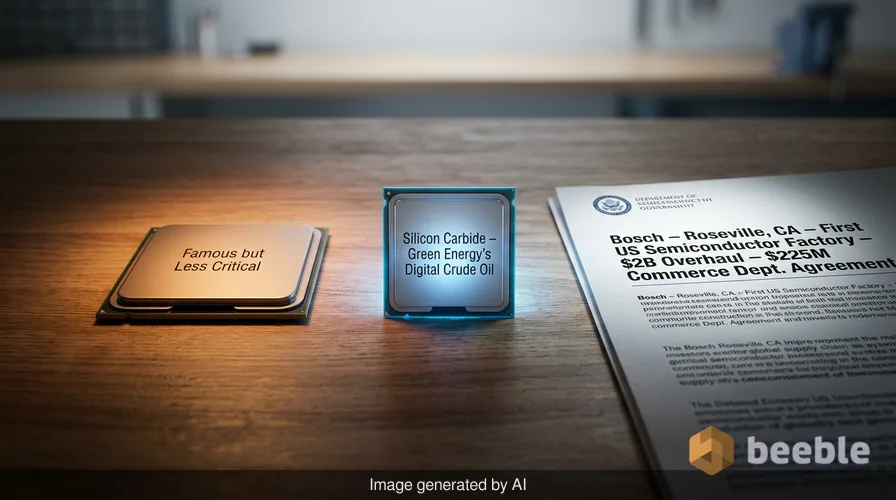
Every time an electric vehicle driver plugs into a fast charger and waits forty minutes for a battery to top up, they are interacting with a bottleneck in material science. The speed of that charge, the heat generated by the car, and the distance it travels on a single charge depend on a handful of small, silver-grey components hidden deep within the vehicle power system. These are silicon carbide semiconductors. While they lack the fame of the processors inside a smartphone, they are the digital crude oil of the green energy transition.
Bosch is now bringing the production of these specific chips to American soil. The German industrial giant recently began sample production at its first semiconductor factory in the United States, located in Roseville, California. This move follows a $225 million agreement with the U.S. Commerce Department, part of a larger $2 billion overhaul of a facility Bosch purchased from TSI Semiconductors last year. Looking at the big picture, this factory is a physical response to the supply chain chaos of the early 2020s that left car dealerships empty and electronics prices volatile.
The anatomy of a power chip
To understand why a factory in California matters to a car buyer in Ohio or a tech worker in Texas, one must look under the hood at how modern electronics manage power. Most chips used in computers or infotainment screens are made of pure silicon. Silicon is excellent for processing data but starts to fail when it handles the high-voltage electricity required to move a two-ton vehicle at highway speeds. It leaks energy as heat, which wastes battery life and requires heavy, expensive cooling systems.
Silicon carbide is a different beast. By combining silicon with carbon, engineers create a material that is much tougher and more efficient at conducting electricity. Practically speaking, these chips act like a high-performance valve. They take the direct current from a battery and convert it into the alternating current the motor needs with almost no energy loss. Because they handle heat so well, car manufacturers can use smaller, lighter cooling systems. This weight reduction allows the car to travel further on the same amount of electricity. From a consumer standpoint, this is the most direct path to ending range anxiety without simply stuffing a larger, heavier battery into the floor of the car.
Why Roseville is the new front line
Historically, the semiconductor industry followed a predictable path toward offshore manufacturing in search of lower costs. That logic changed when the pandemic-era chip shortage cost the global automotive industry billions in lost revenue. The Roseville plant is the result of a massive shift in strategy where proximity to the customer is now more valuable than the lowest possible labor cost.
Paul Thomas, president and CEO of Bosch in North America, noted that the U.S.-Mexico-Canada Agreement on trade influenced this decision. Automakers want to work with suppliers that are physically near their assembly lines to avoid the risks of trans-Pacific shipping. By reconfiguring the Roseville site, Bosch is positioning itself to be the primary provider for the growing domestic EV market. The factory is not just a building. It is a safeguard against future geopolitical disruptions that could block the flow of essential components from Asia or Europe.
Behind the jargon of supply chain resilience is a simple reality for the car buyer. If a factory in California produces the chips, a trade dispute or a shipping strike in a foreign port is less likely to delay the delivery of a new car. The federal government is backing this logic through the CHIPS and Science Act, which provided the $225 million in funding. This money is a down payment on a secure domestic supply chain for industries that the government considers vital to national security.
A secondary boost for the AI boom
While the automotive sector is the primary driver for this investment, these chips have a second life in the world of big data. As artificial intelligence models grow more complex, the data centers that house them require massive amounts of electricity. Standard silicon chips in power supplies are becoming a liability because they generate too much heat when pushed to the limit.
Silicon carbide chips from the Roseville plant will likely find their way into the power units of massive server farms. This creates an interesting intersection between the heavy industry of car manufacturing and the high-tech world of AI. Bosch is essentially building a dual-purpose engine for the modern economy. If EV sales slow down, the demand for AI infrastructure can keep the factory lines moving. This flexibility makes the $2 billion investment more stable in a volatile market.
The price of domestic production
There is a pragmatic question that follows any major domestic manufacturing announcement: will this make products more expensive? In the short term, building chips in California is more costly than importing them from established hubs in Taiwan or South Korea. However, the long-term math is different.
| Feature | Traditional Silicon Chips | Silicon Carbide (SiC) Chips |
|---|---|---|
| Energy Efficiency | Lower (High heat loss) | Higher (Minimal heat loss) |
| EV Range Impact | Neutral | Up to 6-10% Increase |
| Charging Speed | Slower due to heat limits | Faster (Handles high voltage better) |
| System Weight | Heavier (Needs more cooling) | Lighter (Compact cooling) |
| Manufacturing Location | Primarily Asia | Increasing US Presence (Roseville) |
For the average user, the higher cost of a domestic chip is often offset by the savings in other parts of the car. If a silicon carbide chip allows an engineer to remove ten pounds of copper wiring and a bulky radiator, the total cost of the vehicle might actually stay flat or even drop. Furthermore, the reliability of a local supply chain prevents the predatory pricing that occurs when parts are scarce.
Strengthening the industrial backbone
This factory represents a piece of the invisible backbone of modern life. Most people will never see a silicon carbide chip, yet their ability to transition away from gasoline depends entirely on the availability of these small wafers. Bosch plans to invest a total of $7.5 billion in its U.S. operations by 2031, which suggests that the Roseville plant is the beginning of a much larger trend.
Secretary of Commerce Howard Lutnick stated that the administration is committed to developing a secure supply chain that enables innovation. This is not just about keeping jobs in the country. It is about making sure that the next generation of industrial technology is designed and built within the same regulatory and economic ecosystem. When the design team and the manufacturing team are in the same time zone, the cycle of innovation moves faster. Problems are solved in days rather than months.
What this means for your next purchase
If you are planning to buy a vehicle in the next three to five years, the developments in Roseville will impact your options. You should expect to see more mid-range EVs that offer 300-plus miles of range without the premium price tag of a massive battery pack. You might also notice that charging times at highway stations begin to drop as more cars adopt the high-voltage systems that silicon carbide enables.
Ultimately, the Bosch expansion is a sign that the era of "just-in-time" manufacturing from distant shores is being replaced by a model of regional self-reliance. For the consumer, this translates to more resilient product availability and a slower rate of price inflation for high-tech goods. The next time you see a new EV on the road, remember that its performance is likely tied to a quiet factory in California that is reinventing how we move electricity.
Sources: Bosch Global Press Office, U.S. Department of Commerce CHIPS Program Office, Reuters Market Analysis, TSI Semiconductors Historical Data.



See you on the other side.
Our end-to-end encrypted email and cloud storage solution provides the most powerful means of secure data exchange, ensuring the safety and privacy of your data.
/ Create a free account
