


Inside the factory where General Motors turns old batteries into new cars

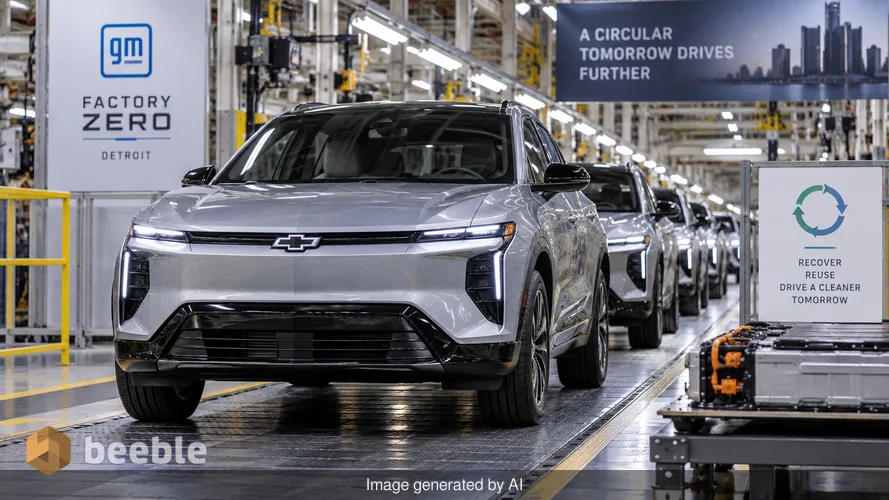
A brand-new electric vehicle rolling off the assembly line at GM’s Factory ZERO in Detroit looks identical to the one that preceded it. The paint is flawless, the software is current, and the motors are silent. However, beneath the floorboards of these latest models lies a quiet shift in how the automotive industry functions. Some of these vehicles are powered by battery cells containing minerals that have already lived a full life in a different car. This is the result of a successful pilot program between General Motors and Cirba Solutions, a company that specializes in battery recycling.
Historically, the life of an electric vehicle battery followed a straight line. Materials like nickel and cobalt were mined from the earth, processed into high-tech components, and eventually discarded when the battery could no longer hold a sufficient charge. This linear model created a constant need for new mines and left a growing pile of industrial waste. The recent collaboration between GM and Cirba Solutions changes this trajectory. By successfully recovering critical minerals from old battery packs and putting them back into new ones, these companies have demonstrated that the battery supply chain can be a circle rather than a dead end.
The journey from scrap heap to showroom floor
Tracing the path of these recycled materials reveals a complex industrial process. It begins at a recovery facility in Ohio managed by Cirba Solutions. Here, technicians receive end-of-life battery packs from older GM electric vehicles. These packs are large, heavy, and contain stored energy that requires careful handling. The facility disassembles the packs and shreds the individual battery cells. This process creates a concentrated mixture known as black mass.
In simple terms, black mass is the concentrated essence of a battery. It is a dark, powdery substance that contains the high-value ingredients required for modern energy storage: nickel, cobalt, and manganese. For the average user, these minerals are the digital crude oil of the modern age. They determine how far a car can drive on a single charge and how quickly it can replenish its energy. Behind the jargon of industrial processing, black mass is the bridge between a piece of trash and a new high-tech component.
Once the black mass is produced, the minerals are not yet ready for a new car. They must undergo a chemical refining process to reach a state called cathode active material, or CAM. The cathode is the part of the battery cell where energy is stored. To work effectively, the recycled minerals must meet the exact same purity standards as materials pulled directly from a mine. The pilot program proved that this is possible. The partners produced new CAM made entirely from recycled nickel, cobalt, and manganese.
Building the cell from the ground up
After the refining process, the 100% recycled material moves to Ultium Cells. This is the joint venture between General Motors and LG Energy Solution that manufactures the actual battery cells used in GM’s newest trucks and SUVs. Here, the recycled CAM is layered into cells, which are then bundled into modules. These modules are finally assembled into the large battery packs that form the structural foundation of vehicles like the Chevrolet Silverado EV or the Cadillac LYRIQ.
Under the hood, these recycled cells perform exactly like those made from virgin materials. The chemistry is identical. This means a driver in one of these pilot vehicles will not notice a difference in range, acceleration, or charging speed. The transformation is invisible to the consumer, but it is foundational for the manufacturer. By proving that recycled materials can satisfy the rigorous demands of automotive engineering, the industry has removed a major doubt about the scalability of the circular economy.
Why this matters for your next car purchase
Looking at the big picture, this pilot program addresses three major problems in the electric vehicle market: cost, supply, and security. On the market side, the price of an electric vehicle is heavily influenced by the cost of the raw materials inside the battery. Mined minerals are subject to volatile price swings. When a new mine in another country shuts down or a shipping lane is blocked, the price of your next car goes up. Recycling provides a domestic source of materials that stays within the country.
Practically speaking, the reliance on newly mined materials is a bottleneck. The world currently projects that nearly 14 million electric vehicle batteries will reach the end of their lives by 2040. At the same time, the demand for new batteries is expected to grow by massive margins over the next decade. If the industry only relies on mining, it will eventually run out of capacity to meet demand. Recycling turns every old car on the road into a potential mine for the next generation of vehicles.
From a consumer standpoint, this also strengthens national security and supply chain resilience. Most of the critical minerals used in batteries are currently processed outside of North America. By developing the ability to process these materials at facilities like the Cirba Solutions plant in Ohio, the automotive industry reduces its dependence on foreign suppliers. This keeps the manufacturing process closer to home and protects the industry from global geopolitical shifts.
Breaking down the economics of the black mass
To understand the scale of this achievement, we can look at the projected demand for lithium-ion batteries. Industry data suggests that annual global demand will reach between 4.2 and 6.8 terawatt-hours in the next ten years. A terawatt-hour is a vast amount of energy, and producing that many batteries requires millions of tons of minerals. While the GM pilot program is a single project, it proves that the technology to recover these materials is ready for commercial use.
| Process Step | Output Material | Role in the Battery |
|---|---|---|
| Shredding & Sorting | Black Mass | Raw source of recycled minerals |
| Chemical Refining | Cathode Active Material (CAM) | The part of the cell that holds the charge |
| Cell Manufacturing | Lithium-ion Cell | The individual power unit |
| Final Assembly | Battery Pack | The structural energy source for the car |
The bottom line is that the value of an electric vehicle battery now extends far beyond its first decade of use. When the car eventually wears out, the minerals inside do not lose their properties. They can be harvested, cleaned, and put back to work. This makes the electric vehicle a cyclical asset rather than a disposable one. It is an industrial reincarnation where the old hardware provides the lifeblood for the new.
The broader impact on other industries
Essentially, the success of this automotive pilot creates a template for other sectors. The same logic applies to the batteries in your smartphone, your laptop, and the massive energy storage systems used by power companies. Data centers, which consume enormous amounts of electricity to run the internet, also rely on large battery backups. If the process works for a multi-ton electric truck, it can work for a handheld device.
Recovering and reusing these minerals will eventually lead to lower-cost batteries. As the infrastructure for recycling grows, the cost of processing black mass will likely fall below the cost of opening and operating a new mine. This is how technology becomes affordable for the average person. The first versions of any new industrial process are expensive, but scaling leads to efficiency. The GM and Cirba Solutions project is the first step toward that efficiency.
Moving toward a circular future
As a result of this pilot, the first vehicles containing these recycled minerals are already heading to consumers. This is no longer a theoretical exercise in a laboratory. It is a practical application of industrial science that is happening on American roads right now. The goal is a future where the automotive industry no longer needs to extract fresh materials from the earth to build new products.
For the average user, the takeaway is simple. The electric vehicle ecosystem is becoming more transparent and less wasteful. You can expect your future vehicles to be part of a larger system that values the materials inside them. Instead of worrying about where your battery will end up in ten years, you can see it as a resource that will eventually power someone else's car. This shift in perspective turns a waste problem into a supply solution. The invisible backbone of modern transportation is becoming more resilient, one recycled cell at a time.
Sources:
- General Motors Official Newsroom
- Cirba Solutions Corporate Press Release
- Ultium Cells Production Reports
- International Energy Agency Battery Outlook 2026



See you on the other side.
Our end-to-end encrypted email and cloud storage solution provides the most powerful means of secure data exchange, ensuring the safety and privacy of your data.
/ Create a free account
