


Inside the Lab Where Apple is Designing the Post-iPhone Era

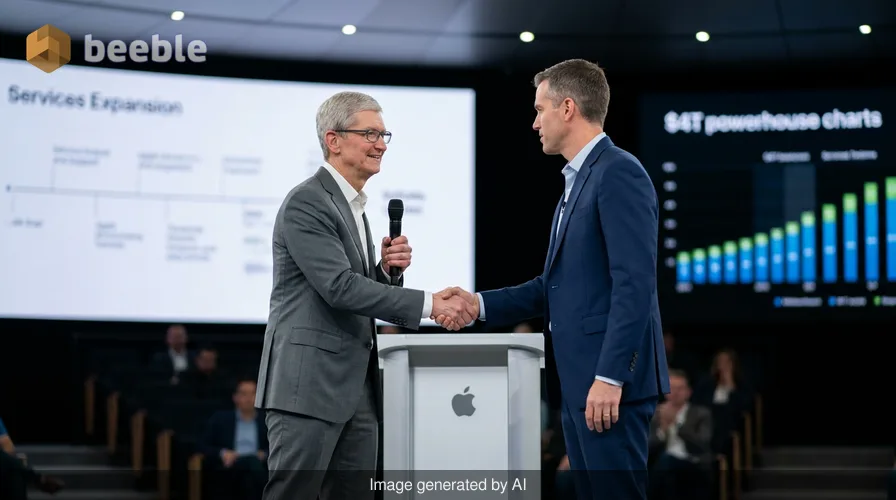
Pick up your iPhone and take a close look at the chamfered edges of the titanium frame. Trace the path of that device backward: from your pocket to a retail shelf, through a high-security port in India or China, and eventually to a cleanroom where robotic arms assemble components smaller than a grain of sand. For the last decade, this entire journey was choreographed by Tim Cook, a master of logistics who turned Apple into a $4 trillion ledger of efficiency. But as of this week, the person holding the blueprints has changed.
On Monday, Apple announced that John Ternus will step into the role of CEO later this year. To understand why this matters, we have to look under the hood of Apple’s corporate identity. If Cook was the architect of the company’s massive global supply chain, Ternus is the engineer who obsessed over how the buttons click and how the screen laminates. He is a hardware thoroughbred who joined the company in 2001, rising through the ranks by touching the products we use every day—from the AirPods in our ears to the Apple Watch on our wrists.
This leadership transition isn't just a change in the organizational chart; it represents a fundamental pivot in how Apple intends to survive the next decade. While the industry has spent the last two years screaming about software-based Artificial Intelligence, Apple is signaling that its future isn’t just in the cloud—it’s in the tangible, physical objects Ternus has spent his life perfecting.
A Shift in DNA: Moving Beyond the Spreadsheet
Historically, Apple’s leadership has alternated between visionary product focus and operational excellence. Steve Jobs gave the world the "what," and Tim Cook gave the world the "how many." Cook’s tenure was a masterclass in scalability. He transformed Apple from a computer company into a services and lifestyle ecosystem, ensuring that every iPhone sold would continue to generate revenue through iCloud subscriptions, App Store fees, and Apple Music.
However, we are entering a volatile period where software alone isn't enough to drive growth. For the average user, the yearly iPhone updates have started to feel iterative rather than disruptive. We’ve reached a point where megapixels and processor speeds offer diminishing returns.
By appointing Ternus, Apple is betting that hardware innovation is the only way to break the stagnation. Ternus isn't a supply-chain specialist; he’s a product guy. In everyday life, this means we are likely to see a move away from the "safe" incremental updates of the Cook era and toward more adventurous—and perhaps risky—form factors. The goal is no longer just to sell you a better version of what you already have, but to convince you that you need a device you haven't even imagined yet.
The Vessel for the Digital Soul
Looking at the big picture, the tech industry is currently obsessed with Large Language Models (LLMs). Most companies are racing to build the biggest, smartest AI intern living in a remote data center. Apple’s approach under Ternus appears more interconnected with the physical world. Instead of just building a smarter chatbot, Apple wants to build better "vessels" for that intelligence.
Practically speaking, this means Apple Intelligence won’t just be a feature on your screen; it will be the brain inside new types of wearables. There is significant momentum behind the development of smart glasses and even AI-powered AirPods equipped with cameras. To put it another way, Ternus wants to move the AI from a box in your hand to a sensor on your body.
By focusing on hardware-led AI, Apple avoids the trap of competing solely on who has the best algorithm. If the AI is seamlessly integrated into a pair of glasses that feel as light as Ray-Bans—a feat of hardware engineering Ternus is uniquely qualified to lead—the specific software model matters less than the user-friendly experience of the device itself.
Finally, the Fold: The 2026 Strategy
One of the most tangible changes under Ternus will be the long-awaited arrival of the foldable iPhone. While competitors like Samsung and Google have been iterating on foldables for years, Apple has remained opaque about its plans, waiting for the technology to mature.
Reports indicate that the first foldable iPhone is slated for a September 2026 release. This puts Ternus in the driver’s seat for what could be the most significant redesign of the iPhone since the iPhone X. For the consumer, this isn't just about a screen that bends; it’s about solving the systemic durability issues that have plagued the category. Ternus’s background in hardware engineering suggests that Apple won't release a foldable until the hinge and display are robust enough to survive the pockets of millions without the "crease" becoming a distraction.
| Feature | Current iPhone Pro | Rumored iPhone Fold (Sept 2026) |
|---|---|---|
| Primary Display | 6.1" / 6.7" OLED | 8.0" Internal Foldable |
| Main Use Case | Mobile Productivity | Tablet-Hybrid / Multi-tasking |
| Portability | Standard Pocket Fit | Thick Folded / Ultra-Thin Unfolded |
| Key Innovation | Dynamic Island | Zero-Gap Hinge Technology |
The New Roommate: Robotics in the Home
Curiously, the most disruptive part of Ternus’s roadmap might not be something you carry at all. Apple has been quietly exploring robotics, a field that aligns perfectly with the new CEO’s personal history. In his college years, Ternus built mechanical limbs for the disabled—a foundational experience that seems to be resurfacing in Apple’s R&D labs.
One concept currently in development is a tabletop robotic device. Imagine an iPad on a motorized arm that can tilt, swivel, and follow you during a FaceTime call or while you’re following a recipe in the kitchen. Zooming out, this is Apple’s play for the "smart home" market, which has largely been a fragmented mess of lightbulbs and thermostats.
Beyond tabletop devices, there are whispers of mobile robots—essentially a set of wheels for Siri. While a humanoid Apple robot is likely years (if not a decade) away, the move into robotics suggests that Ternus sees hardware as something that shouldn't just sit on a table, but should actively participate in our physical environment.
The Reality Check: Tariffs and Tiny Components
Despite the excitement over new gadgets, Ternus inherits a world that is increasingly volatile on the market side. Microchips remain the digital crude oil of our age, and supply remains sensitive to geopolitical shifts.
Apple’s reliance on China has been its greatest strength and its most glaring vulnerability. With the return of aggressive tariff policies, the cost of bringing an iPhone to market could spike. Historically, Apple has absorbed some of these costs to keep prices stable, but there is a limit.
Under Ternus, we are seeing an unprecedented push to diversify. Moving 25% of iPhone production to India is a start, but the interconnected nature of modern electronics means that a single missing resistor from a Chinese factory can halt an entire assembly line in Chennai. Ternus will have to prove he can manage these macro-economic headaches as well as he manages a hardware team. If he can’t, the "innovative" new products he envisions may become luxury items priced out of the reach of the average consumer.
The Bottom Line: What This Means for Your Next Upgrade
Ultimately, the Ternus era signals that the "iPhone plateau" is coming to an end. For the last few years, the advice for most consumers was simple: keep your current phone as long as possible because the new one isn't that different.
That logic is about to change. As Apple moves toward foldables, wearable AI, and home robotics, the hardware itself will once again become the main event. What this means for you is a period of shifting standards. We are moving away from a world of flat glass rectangles toward a more decentralized ecosystem of devices that see, hear, and move.
As you look at your tech habits over the next year, keep an eye on the "physicality" of your devices. Notice how often you look at a screen versus how often you talk to an earbud. The transition to Ternus suggests that Apple is betting you’ll soon be doing a lot more of the latter. Your next big tech purchase might not be a phone at all, but a piece of hardware that lives on your face or follows you through your home, turning the invisible "intern" of AI into a tangible part of your daily life.
Sources:
- Apple Newsroom: Leadership Updates (2026)
- Bloomberg Tech: Apple's Hardware Roadmap and the Rise of John Ternus
- The New York Times: From Mechanical Limbs to CEO: The John Ternus Profile
- MarketWatch: Supply Chain Diversification and the India Pivot
- Counterpoint Research: Global Smartphone Trends and the Foldable Market



See you on the other side.
Our end-to-end encrypted email and cloud storage solution provides the most powerful means of secure data exchange, ensuring the safety and privacy of your data.
/ Create a free account
