


Intel and Musk’s Terafab: How the New 'Digital Crude Oil' Will Power Your Future

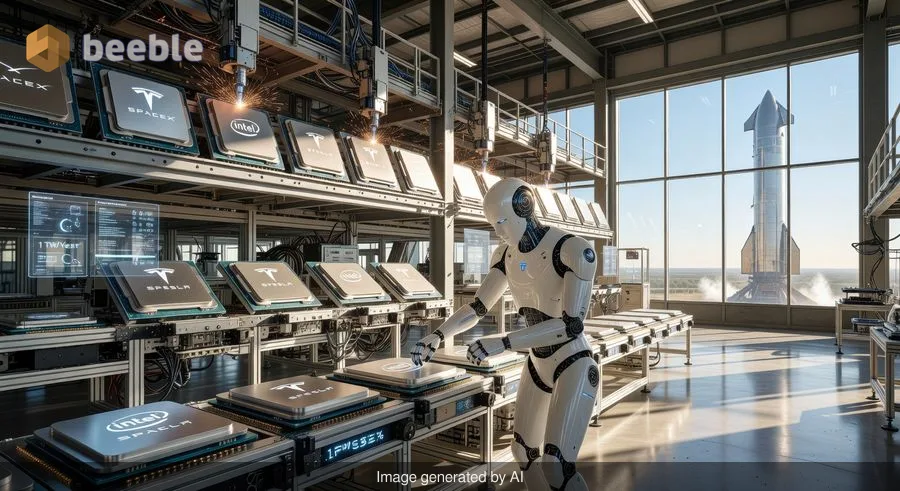
Before a humanoid robot can take its first step or a satellite can beam AI-driven data back to Earth, it exists as a microscopic blueprint on a wafer of silicon. This silicon is the digital crude oil of the 21st century—the essential fuel for everything from the phone in your pocket to the massive data centers floating in orbit. This week, the quest to secure that fuel took a massive leap forward as Intel officially joined Elon Musk’s ambitious 'Terafab' project.
The partnership, confirmed after a high-profile meeting between Musk and Intel CEO Lip-Bu Tan, marks a significant shift in the tech landscape. Intel will now play a foundational role in Musk’s plan to build a massive AI chip complex in Austin, Texas. For the average user, this might seem like just another corporate handshake, but looking at the big picture, it represents a systemic change in how the machines of tomorrow—from self-driving cars to space-based internet—are built and powered.
What is Terafab, Exactly?
In simple terms, Terafab is Musk’s answer to the global shortage of high-end processing power. While companies like Nvidia currently dominate the market for AI chips, Musk is looking to bring that production in-house to ensure his various ventures—Tesla, SpaceX, and xAI—have a resilient supply of hardware.
The goal is staggering: Terafab aims to produce 1 terawatt of compute per year. To put that in perspective, imagine the combined processing power of millions of high-end laptops being churned out of a single facility. This isn't just about making chips; it's about creating a streamlined pipeline where the design, manufacturing, and "packaging" (the process of putting the chip into a protective case that connects it to a circuit board) all happen under one umbrella.
Why Intel is the Missing Piece
For years, Intel was the undisputed king of the chip world, but it recently found itself in a volatile position as rivals moved faster into mobile and AI technology. However, Intel’s recent turnaround efforts are beginning to bear fruit. By partnering with Musk, Intel isn't just selling chips; it's providing the heavy industry expertise needed to build them at an unprecedented scale.
Under the hood, Intel brings specialized capabilities in "silicon logic" and advanced packaging. Think of a chip as a high-density city. Intel is the master architect and construction firm that knows how to stack the buildings (logic) and connect the roads (packaging) so that data can travel at lightning speeds without overheating the system. For Intel, this partnership is a tangible sign that it is once again a major player in the AI race.
From Humanoid Robots to Space Data Centers
The Terafab project is split into two distinct but interconnected facilities.
- The Terrestrial Hub: This facility will focus on the chips that power Tesla’s autonomous driving software and the Optimus humanoid robot. These chips need to be incredibly fast yet energy-efficient, allowing a robot to navigate a complex warehouse or a car to make split-second decisions on a rainy highway.
- The Orbital Hub: Perhaps more disruptive is the plan for AI data centers in space. By moving heavy data processing to orbit, SpaceX can potentially reduce the latency (delay) for global AI services and bypass the physical limitations of ground-based power grids.
Curiously, this news comes just as SpaceX has confidentially filed for an initial public offering (IPO). This move suggests that Musk is aligning his hardware manufacturing (Intel/Terafab) with his financial goals, creating a robust ecosystem that could become the largest stock market listing on record.
The Market Side: Why Investors Are Cheering
On the market side, Intel’s shares jumped over 2% following the announcement. For investors, the partnership acts as a global mood ring, signaling a shift from skepticism to optimism regarding Intel’s restructuring. Historically, Intel has struggled to prove it could support the world’s largest tech giants with their most sensitive projects. This deal with Tesla and SpaceX changes that narrative.
Practically speaking, this collaboration reduces the "single-source" risk. Currently, much of the world’s most advanced AI silicon is manufactured in a few select locations globally. By building Terafab in Texas with Intel’s help, Musk is creating a more decentralized and secure supply chain, which is vital for long-term economic stability.
What This Means for You
You might not be planning to buy a humanoid robot or launch a satellite anytime soon, but the Terafab project will likely affect your wallet and your digital life in several ways:
| Feature | Impact on the Everyday Consumer |
|---|---|
| Gadget Prices | A more robust supply of chips can prevent the price hikes we saw during the recent global shortages. |
| AI Accessibility | As compute power becomes cheaper and more available, the AI tools you use (like digital assistants or translation software) will become faster and more capable. |
| Job Market | The growth of "heavy tech" manufacturing in the U.S. creates a demand for new types of industrial and engineering roles. |
| Investment Opportunities | With SpaceX heading toward an IPO and Intel rebounding, the tech sector remains a primary driver for retirement accounts and personal portfolios. |
The Bottom Line
Ultimately, the Intel-Musk partnership is about more than just two wealthy entities joining forces. It is a foundational step toward a future where high-performance computing is as common and accessible as electricity.
As we move forward, it is worth observing how these massive industrial shifts trickle down into our daily routines. We are witnessing the construction of the invisible backbone of the next decade. Whether it’s a car that drives itself more smoothly or a smarter way to manage global data, the chips coming out of the Terafab will be the silent engines of that change. For the average user, the takeaway is clear: the tech that powers your life is about to get a lot more powerful, and the companies building it are finally finding their stride.
Sources:
- Intel Corporate Communications: Official Social Media Post and CEO Statement, April 2026.
- Tesla Investor Relations: AI Expansion and Terafab Project Roadmap.
- SpaceX Financial Filings: Confidential IPO Documentation and xAI Merger Report.
- D.A. Davidson Market Analysis: Semiconductor Industry Restructuring Report.



See you on the other side.
Our end-to-end encrypted email and cloud storage solution provides the most powerful means of secure data exchange, ensuring the safety and privacy of your data.
/ Create a free account
