


Is a platform creator legally responsible for the messages of millions?

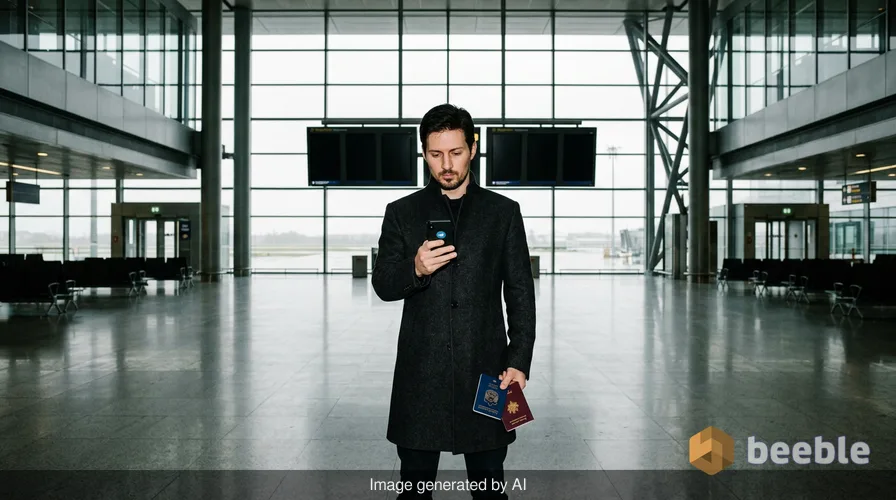
In our physical world, we do not arrest the architect of a bridge because a criminal drove across it. The law generally treats infrastructure providers as neutral parties who are not liable for the conduct of their users. In the digital world, this boundary is far more fragile. Russia just issued an international arrest warrant for Telegram founder Pavel Durov, and the case challenges the very idea of what it means to be a platform owner. This development is a collision between the borderless nature of the internet and the rigid, often punitive power of the state.
Pavel Durov is no stranger to these tensions. He founded VKontakte, often called Russia’s Facebook, and left the country years ago after he refused to hand over user data to security services. He has since lived as a global citizen with French and UAE passports, operating Telegram as a fortress of privacy. The Russian Federal Security Service (FSB) now claims this fortress is a hideout for terrorists. They accuse Durov of complicity in terrorism, alleging he failed to remove channels used by Ukrainian intelligence and extremist groups to coordinate attacks. These charges carry severe weight and could lead to life imprisonment in the Russian legal system.
The legal theory of complicity and platform liability
To understand this case, we must look at the legal definition of complicity. In most jurisdictions, complicity requires a person to have specific intent to help a crime occur. You are an accomplice if you provide the gun, know what it is for, and want the crime to happen. Russia is using a much broader interpretation. The FSB argues that because Telegram provides the tools for communication and does not actively monitor or delete specific content, the creator is responsible for the result.
This logic turns the platform into a curated space rather than a neutral utility. If a government labels a group as extremist, it expects the platform to act as its enforcement arm. When a platform refuses, the law in that country often views the refusal as an act of defiance or support for the illegal activity. In this scenario, the statute of limitations or the burden of proof becomes secondary to the state’s desire for control over the information flow.
How international arrest warrants actually work
An international wanted notice, often called an Interpol Red Notice, is a request to law enforcement worldwide to locate and provisionally arrest a person pending extradition. It is not a global arrest warrant that forces every country to act. Each nation evaluates the request based on its own laws and treaties. Because Durov holds French and UAE citizenship, the situation is a jurisdictional puzzle.
France and the UAE rarely extradite their own citizens to third countries. Furthermore, Interpol has strict rules against using its systems for political purposes. If a notice appears to be a tool for political persecution, Interpol can refuse to publish it or can delete it from their database. Durov argues the case is politically motivated. He believes the Kremlin is seeking a pretext to restrict access to Telegram inside Russia, where it remains one of the few platforms not fully under state control.
A history of friction between Telegram and the state
The relationship between Durov and the Kremlin is a long cycle of conflict and temporary peace. The Russian government blocked Telegram from 2018 to 2020. They spent millions of dollars on technology to stop the app, but Telegram remained accessible to most users through proxies and built-in circumvention tools. The ban was eventually lifted without a clear explanation, leading many to believe a back-room deal had been struck.
The current charges involve a specific chatbot called Dayvinchik, or Leo. The Investigative Committee of Russia claims this bot was used to recruit teenagers for sabotage and terrorism. By targeting a specific bot that allegedly harms children, the state builds a narrative that moves away from political censorship and toward public safety. This tactic makes it harder for international observers to dismiss the charges as purely political.
| Charge Type | Russian Government Allegation | Durov / Telegram Defense |
|---|---|---|
| Terrorism Complicity | Failure to remove Ukrainian intelligence bots and channels. | The platform provides neutral communication tools for all. |
| Cybercrime Support | Telegram bots facilitate illegal financial transactions. | Moderators remove reported illegal content; architecture prevents mass surveillance. |
| Recruitment of Minors | Chatbots like Dayvinchik used for sabotage recruitment. | Bots are created by third parties; the platform is not the author of the content. |
| Political Motive | None admitted; stated goal is civilian protection. | Accusations are a pretext to seize user data and control the platform. |
The French connection and dual citizenship
Jurisdiction is a map with shifting borders. Durov is currently in France, where he has already faced legal scrutiny over the spread of illegal content on his platform. This creates a rare situation where a tech founder faces pressure from both a Western democracy and an authoritarian state simultaneously. The French legal system focuses on the Digital Services Act and domestic regulations regarding illegal pornography and drug sales.
Russia’s warrant adds a layer of complexity to his stay in Europe. If he travels to a country with a strong extradition treaty with Russia, he risks being detained. For a man who has built his brand on being a digital nomad without a fixed home, the world is becoming smaller. His UAE passport offers some protection in the Middle East, but the reach of a Red Notice is long and persistent.
What this means for the everyday user
If you use Telegram, these legal battles might feel distant, but they affect your digital rights. When a government issues a warrant for a founder, the goal is often to force that founder to provide a master key to the platform’s encryption. Telegram does not use end-to-end encryption by default for all chats, but it does for Secret Chats. Its server-side encryption makes it very difficult for authorities to read messages without the cooperation of the company.
From a consumer rights perspective, you should be aware that your data is only as secure as the person holding the keys. If Durov is forced into a legal corner, the terms of service you agreed to might change. In practice, users who discuss sensitive topics should always utilize the Secret Chat feature, which stores the decryption keys only on the participants' devices rather than on Telegram's servers.
Legal takeaways for digital citizens
Protecting your rights in a high-stakes international dispute requires a proactive approach. While you cannot influence the FSB or Interpol, you can control your own digital footprint.
- Review the privacy settings on all communication apps to understand who has access to your metadata.
- Enable two-factor authentication to prevent unauthorized access if a government attempts to hijack your account via a telecom provider.
- Understand that the law of the country where you reside governs your use of the app, regardless of where the founder lives.
- Download a copy of your data periodically if you rely on a platform for important personal or business records.
Ultimately, the warrant for Pavel Durov is a sign that the era of the untouchable tech mogul is ending. Governments are no longer content to fine companies; they are now targeting the individuals who build them. Knowing where the legal lines are drawn is the only way to ensure your own digital security remains intact.
Sources:
- Russian Criminal Code, Article 205 (Terrorism and Complicity).
- Interpol Rules on the Processing of Data, Article 3 (Principle of Neutrality).
- European Union Digital Services Act (DSA) on intermediary liability.
- United Arab Emirates Federal Law on Extradition.
Disclaimer: This article is for informational and educational purposes only and does not constitute formal legal advice. Readers should consult a qualified attorney in their jurisdiction for specific legal issues regarding data privacy or international law.



See you on the other side.
Our end-to-end encrypted email and cloud storage solution provides the most powerful means of secure data exchange, ensuring the safety and privacy of your data.
/ Create a free account
