


Is Your Five-Year-Old iPhone About to Get Faster?

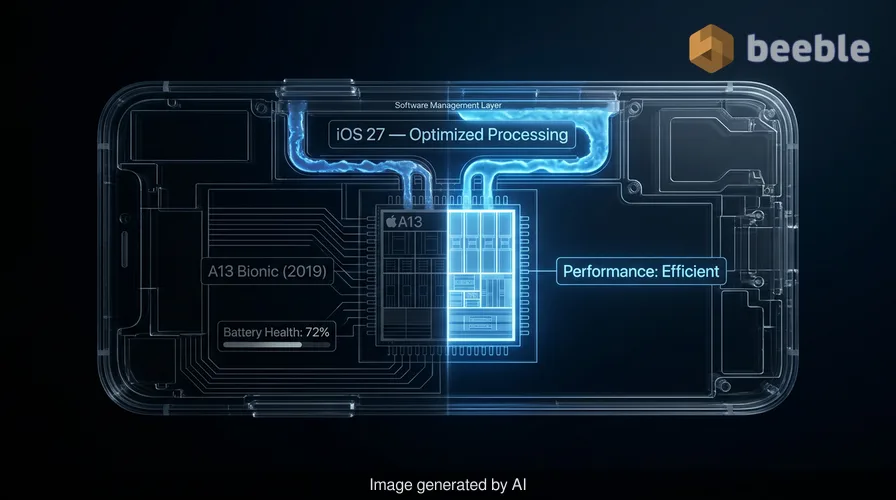
How long do you expect your smartphone to last? For most of us, the three-year mark is usually when the cracks begin to show—not necessarily in the glass, but in the performance. Apps take a heartbeat longer to open, the battery starts to drain with suspicious haste, and the overall experience feels less like a sleek tool and more like a stubborn appliance. However, Apple’s latest announcement regarding iOS 27 suggests that the age of the disposable flagship might finally be coming to an end, at least for those holding onto their devices from the turn of the decade.
At the recent developer showcase, Apple confirmed that its upcoming operating system, iOS 27, will support devices as far back as the iPhone 11. To put that in perspective, the iPhone 11 was released in 2019, an era that feels like ancient history in the fast-moving world of mobile technology. But the news isn’t just about a software update; it is about a fundamental shift in how Apple manages the digital crude oil—the processing power—inside these aging machines.
The Master Maître D’ Inside Your Phone
To understand why this update matters, we have to look under the hood at something called a CPU scheduler. In simple terms, think of your phone’s processor as a high-end restaurant kitchen. The apps you open are the orders coming in. Some orders are simple, like a side of toast (checking a text), while others are complex multi-course meals (editing a 4K video or gaming).
Behind the jargon, the CPU scheduler is the master maître d’ of that kitchen. It decides which chef works on which dish and, more importantly, when they should start. In older versions of iOS, this maître d’ was efficient but perhaps a bit rigid with older hardware. As apps grew more demanding, the older kitchens struggled to keep up, leading to lag and stuttering.
Apple is now porting its most advanced scheduler—a system previously reserved for the cutting-edge silicon in the newest models—back to the iPhone 11 and 12. What this means is that the phone becomes significantly smarter at prioritizing tasks. Instead of the processor trying to do everything at once and getting overwhelmed, the scheduler ensures that the work the user is currently seeing gets the most attention at precisely the right millisecond. This isn't just a minor tweak; it’s a systemic optimization that breathes new life into resilient hardware that many had already written off.
Breaking the Seven-Year Barrier
Looking at the big picture, this move represents an unprecedented shift in the industry's approach to device longevity. For years, the standard life cycle for a premium smartphone was roughly three years of major platform updates. If you owned a Google Pixel 4 or a Samsung Galaxy S10—both of which launched around the same time as the iPhone 11—your journey with official software updates ended years ago.
Historically, manufacturers argued that older hardware simply couldn't handle the weight of modern software. Apple is effectively challenging that narrative. By extending the life of the iPhone 11 to seven years of major updates, they are creating a more transparent and sustainable ownership model. From a consumer standpoint, this changes the math of a thousand-dollar purchase. If you know a device will remain snappy and secure for nearly a decade, the high entry price becomes much easier to justify as a foundational investment rather than a volatile luxury.
| Feature | iPhone 11 (iOS 27) | Pixel 4 / Galaxy S10 | Modern Mid-Range Android |
|---|---|---|---|
| Launch Year | 2019 | 2019 | 2025/2026 |
| Software Support | 7 Years (Ongoing) | 3 Years (Ended) | 4-5 Years (Average) |
| Advanced Scheduling | Included in iOS 27 | No | Varies by Chipset |
| AI Features | Limited | None | Basic to Moderate |
| Market Value | Resilient | Low/Obsolete | Depreciating |
The AI Wall: The Have-Nots vs. The Have-AI-Nats
While the performance boost is cause for celebration, we must apply a pragmatic filter to the excitement. There is a catch, and it’s a significant one: Apple Intelligence. In the current tech climate, AI is the shiny new toy that every company is chasing, and it requires a massive amount of specialized horsepower.
Essentially, there is a physical limit to what a phone from 2019 can do. While the new CPU scheduler can make your home screen feel fluid and your apps launch faster, it cannot conjure the hardware needed for local AI processing. To access the revamped Siri or the most robust generative features, users still need the iPhone 15 Pro or the newer iPhone 16 and 17 series.
Curiously, the most advanced "Apple Intelligence" features—the ones that promise to essentially act as a tireless intern for your digital life—will require the upcoming iPhone Air or iPhone 17 Pro. For the average user, this creates a two-tier ecosystem. You have the "Resilient Legacy" users who get a fast, secure, and streamlined experience, and the "AI Power" users who pay a premium for the latest automated bells and whistles. It is a shifting landscape where the definition of a "working phone" no longer means having every single feature, but rather having a reliable tool that doesn't feel like a relic.
The Wearable Paradox
Not all of Apple’s ecosystem is enjoying this newfound longevity. On the market side, social media is currently buzzing with frustration from Apple Watch owners. In a move that feels somewhat opaque compared to the iPhone strategy, watchOS 27 is reportedly dropping support for the Apple Watch Series 9—a device that was being sold as brand new as recently as late 2023.
This creates a jarring contrast. You could be holding an iPhone from 2019 that feels faster today than it did yesterday, while your high-end smartwatch from 2023 is already being phased out of the major update cycle. It suggests that while iPhone hardware has reached a plateau of "good enough" performance that can be sustained via software, wearable tech is still in a more volatile, cyclical phase of development where hardware requirements are changing too rapidly for long-term support.
Practical Implications for Your Wallet
So, what does this mean for you? If you are currently clutching an iPhone 11 or 12 and considering a trade-in, you might want to pause. Unless you are desperate for the AI-enabled Siri or the latest camera sensors, your current phone is about to become more intuitive and responsive than it has been in years.
Looking at the micro-personal experiences of daily use, this update is about removing friction. It’s for the parent trying to snap a quick photo of a fleeting moment, or the commuter trying to switch between a podcast and a navigation app without the screen freezing. These are tangible improvements that affect quality of life more than a headline-grabbing AI feature might.
Ultimately, Apple is incentivizing you to stay in their ecosystem by making it comfortable to stay on older hardware. It’s a brilliant, if slightly cynical, move. By making the old phones better, they reduce the urge to switch to a competitor's newer budget model. They are trading immediate hardware sales for long-term brand loyalty and services revenue.
Future Foresight
As we move toward the fall release of iOS 27, it’s worth shifting your perspective on what makes a piece of technology "old." We are entering an era where the software is finally catching up to the incredible potential of the silicon we’ve had in our pockets for years. The iPhone 11 getting a sophisticated CPU scheduler is a victory for the consumer who values utility over hype.
In everyday life, this serves as a reminder to look under the hood. Don't be swayed by the siren song of new features that you may not actually need for your daily routine. Instead, observe your digital habits. If your current phone does what you need, this update is a gift of time—perhaps another year or two of reliable service before you truly need to join the AI revolution. The invisible backbone of our digital lives is getting a much-needed reinforcement, and for once, you don't have to buy a new device to feel the benefit.
Sources:
- Apple Newsroom: iOS 27 Preview and OS Program Management Briefing
- Android Authority: Historical Update Cycles for Pixel and Galaxy Series
- Market Analysis: Global Smartphone Longevity Trends 2024-2026
- Technical Analysis: Evolution of the Darwin Kernel CPU Scheduler



See you on the other side.
Our end-to-end encrypted email and cloud storage solution provides the most powerful means of secure data exchange, ensuring the safety and privacy of your data.
/ Create a free account
