


Is Your GM Car One of the Four Million Getting a Google Brain Upgrade?

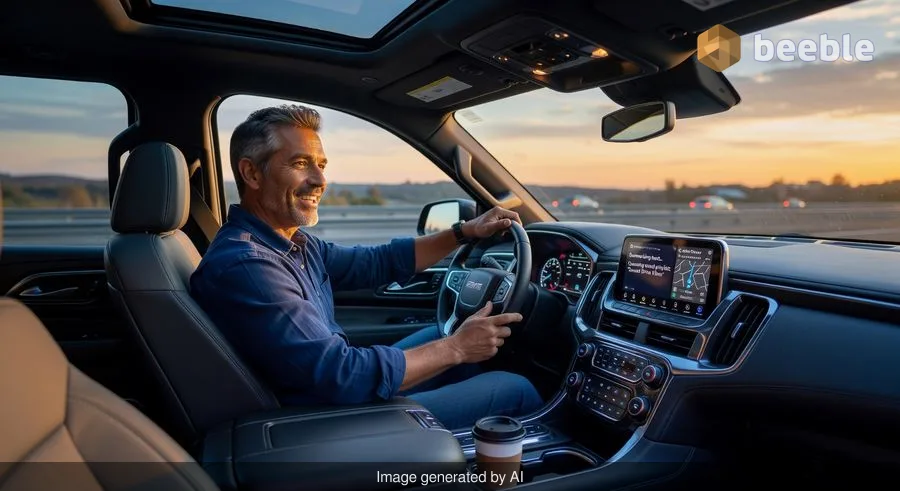
Have you ever felt like your car’s infotainment system was stuck in the early 2010s, despite having a late-model vehicle in your driveway? You are not alone. While our smartphones have become hyper-intelligent hubs that can summarize our emails and predict our needs, the dashboards of our vehicles often feel like glorified radios with a map attached. However, for millions of General Motors owners, that digital lag is about to disappear.
General Motors announced this week a massive rollout that will bring Google’s Gemini AI into more than four million vehicles across the GMC, Chevrolet, Buick, and Cadillac brands. If you have been enjoying Gemini on your phone or desktop but find the experience abruptly ends the moment you shift into drive, those days of digital fragmentation are coming to a close. For the average user, this isn't just another software update; it is a fundamental shift in how we interact with the several tons of steel and silicon we use to get to work every day.
The Mechanics: How 4 Million Cars Get an IQ Boost
To understand the scale of this move, we have to look behind the jargon of generative AI. Gemini is not just a voice-activated menu. Historically, car voice controls have been rigid and frustrating—you had to say specific phrases like "Navigate to..." or "Call..." and any slight deviation would leave the system confused. Gemini represents a foundational change because it utilizes Large Language Models (LLMs) to understand intent and context. This allows for a conversational experience that feels less like programmed commands and more like talking to a digital co-pilot sitting in the passenger seat.
This update targets model year 2022 vehicles and newer that are equipped with GM’s built-in Google infotainment system. Looking at the big picture, this is part of GM’s broader strategy to move away from third-party mirroring systems like Apple CarPlay in favor of a native, deeply integrated software environment. By embedding Gemini directly into the vehicle's nervous system, GM can offer features that a smartphone simply cannot reach, such as deeper integration with vehicle diagnostics and native navigation controls.
The Checklist: Is Your Vehicle Ready?
While the update is streamlined, it is not entirely automatic. There are specific hoops owners must jump through to ensure their car is capable of handling this new intelligence. From a consumer standpoint, the process is straightforward, but it requires an active relationship with GM’s subscription services.
| Requirement | Practical Detail | Why It Matters |
|---|---|---|
| Vehicle Age | Model year 2022 or newer | Older hardware lacks the processing power for modern interfaces |
| Brand Eligibility | GMC, Chevrolet, Buick, Cadillac | Covers the majority of the current GM lineup |
| Connectivity | Active OnStar Subscription | Gemini requires a robust cloud connection to process requests |
| Authentication | Google Play Store Sign-in | Syncs your personal preferences and history across devices |
| Language | US English | Initial rollout is limited by the primary training data of the LLM |
| Permission | Manual Opt-in | Privacy laws require explicit consent for AI data processing |
Essentially, your car needs to be part of the modern "connected" fleet. For those who have traditionally avoided subscribing to OnStar or signing into Google services in their car, this update might be the first tangible reason to reconsider.
Daily Life: From Navigation to Playlists
What this means is that your morning commute is about to get significantly more productive, or at least more personalized. Imagine you are halfway to the office and realize you need to pick up coffee for a meeting, but you also need to hear the summary of a long email chain that just hit your inbox. Traditionally, this would involve fumbling with a phone or navigating multiple menus.
With Gemini integrated, you can simply ask the car to find a coffee shop along your current route that has high ratings and a drive-thru. Simultaneously, Gemini can summarize your incoming text messages and help you dictate a nuanced response without your eyes ever leaving the road. This is the decentralized office in action—where the car becomes an extension of your workspace.
Furthermore, the system can act as a mood-based DJ. Instead of scrolling through thousands of songs, you can request a playlist that fits a "rainy Tuesday morning" or "upbeat Friday energy." The AI analyzes your listening habits and the current context to generate something on the fly. Curiously, this level of personalization helps transform the car from a stagnant tool into a resilient partner in your daily routine.
Behind the Jargon: The Safety Boundaries
One of the overarching concerns with bringing powerful AI into the driver's seat is the potential for distracted driving. GM has been careful to implement systemic guardrails. For instance, while you can ask Gemini to queue up a show on HBO Max or other streaming apps, the visual component will only function when the vehicle is in park.
On the market side, this is a calculated risk. AI as a tireless intern is helpful, but AI as a distraction is a liability. GM is betting that a conversational interface actually reduces distraction by removing the need for physical touchpoints. If you can talk your way through a navigation change or a playlist switch, you aren't looking at a screen. To put it another way, the goal is to make the technology transparent so that the driving experience remains the primary focus.
The Competitive Landscape: GM vs. The World
GM is not operating in a vacuum. This move is a response to a shifting industry where software is becoming the digital crude oil that fuels profit margins. Tesla has already integrated Grok for its premium subscribers, and Apple has slowly been weaving ChatGPT into the CarPlay ecosystem. However, GM's approach is more holistic. By baking Gemini into the hardware, they are creating a walled garden that they control.
Looking at the macro-level, we are seeing the end of the era where you buy a car and its features remain static until you sell it. We are now firmly in the age of the "Software-Defined Vehicle." This means the value of your car can actually increase or change over time as new capabilities are beamed down from the cloud. Conversely, this also means that consumers are becoming more reliant on the long-term support and software stability of the manufacturer.
Looking Ahead: The Custom Assistant
GM didn't stop at Gemini. They also teased a future where a custom-built AI assistant, fine-tuned with proprietary vehicle data, will be able to anticipate your needs. Practically speaking, this could mean your car noticing a slight change in tire pressure and proactively suggesting a stop at a nearby service station that is currently open and has a short wait time. It could mean the car learning your schedule and pre-conditioning the cabin temperature before you even step outside.
This level of integration highlights how interconnected our lives have become. Your car is no longer just a mechanical object; it is a data-generating node in a massive global network. While some may find this opaque or even invasive, the convenience factor for the modern consumer is undeniable.
The Bottom Line for Drivers
Ultimately, the arrival of Gemini in four million GM vehicles is a watershed moment for the democratization of AI. It marks the point where high-level machine learning moves from the tech enthusiast's desk to the family SUV.
As you wait for the update to hit your specific model, it is worth observing your own digital habits. How much of your attention is currently split between your phone and your dashboard? If this update works as intended, it should bridge that gap, creating a more streamlined and intuitive experience. However, the true test will be in the execution—whether Gemini can handle the chaotic, noisy environment of a moving vehicle as well as it handles a quiet office. For now, if your car is on the list, make sure your OnStar is active and your Google login is ready. Your car is about to have a lot more to say.
Sources:
- General Motors Official Pressroom: Software and Connectivity Updates (2026)
- Google Cloud Blog: Expanding Gemini to the Automotive Sector
- OnStar Member Services: AI Opt-in Requirements and Documentation
- Industry Report: The Shift to Software-Defined Vehicles in the North American Market



See you on the other side.
Our end-to-end encrypted email and cloud storage solution provides the most powerful means of secure data exchange, ensuring the safety and privacy of your data.
/ Create a free account
