


Is your smartphone about to become a second-class citizen?

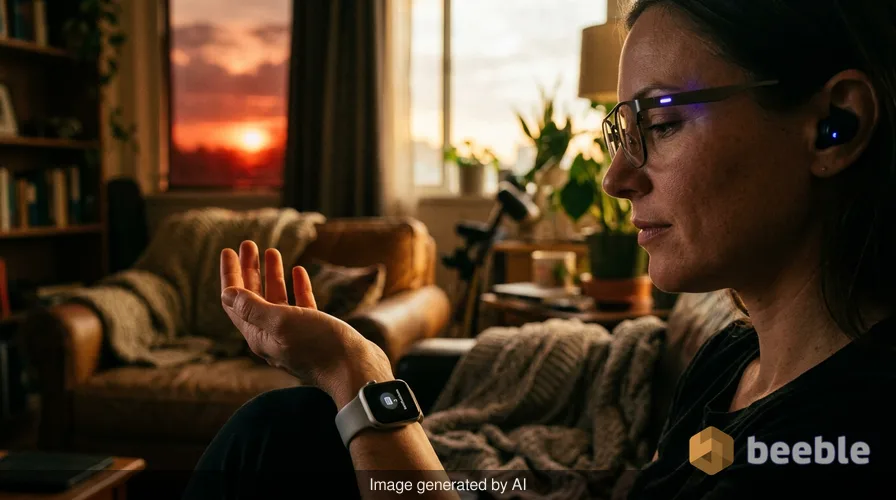
How many times a day do you reach for the glowing rectangle in your pocket? For most of us, the smartphone is the sun in our digital solar system. It is the camera, the map, and the bank. However, Qualcomm, the company that provides the silicon brains for most high-end Android devices, is betting that the sun is about to set. CEO Cristiano Amon recently shared that his company is helping develop over 40 different AI-powered wearable designs. These range from smart jewelry and watches to pins and camera-equipped earbuds. The goal is simple: move the computer from your hand to your face and body.
To make this shift happen, Qualcomm just announced two foundational products. The first is a high-performance platform called Snapdragon Reality Elite, designed for mixed-reality glasses. The second is the Scalable Turnkey AI-Ready Toolkit, or START, which is essentially a "computer-in-a-box" for fashion brands and hardware startups that want to build smart eyewear without hiring a thousand engineers. This move signals a change in how we will interact with the internet, moving away from tapping glass and toward talking to invisible assistants that see what we see.
Powering the eyes of the AI intern
For a pair of glasses to replace a phone, they have to be incredibly fast and power-efficient. Most people already find it annoying to charge a watch every night; charging a pair of glasses twice a day is a deal-breaker. This is where the Snapdragon Reality Elite chip comes in. It is the digital crude oil for this new generation of machines. Qualcomm says the new platform has a 160% increase in performance for its Neural Processing Unit, or NPU. This part of the chip handles AI tasks like recognizing faces or translating text in real-time.
In practical terms, this chip can run a 3-billion-parameter language model at a speed of 45 tokens per second. To visualize that, imagine an AI assistant that can read and process information faster than you can speak. This speed is necessary for responsive interactions. If you ask your glasses, "Who is that person waving at me?" and the answer takes five seconds to arrive, the person has already walked past. Qualcomm is aiming for near-instant responses. The chip also has a 60% boost in graphics performance and a 30% jump in general processing power compared to previous models. This helps the glasses track your hand movements and head position without the lag that often causes motion sickness.
A sharper view of the digital world
The visual experience in smart glasses has historically been a weak point. If the screen is blurry, your eyes strain, and you take the headset off after ten minutes. The Snapdragon Reality Elite supports a resolution of 4.4K per eye at 90 frames per second. This is a slight improvement over the previous XR2+ Gen 2 chip, but in the world of optics, every extra pixel counts. Higher resolution makes digital text look like real ink on paper rather than a shimmering mess of light.
Qualcomm designed this platform for two specific types of devices. The first is the stand-alone headset, like a slimmer version of the Apple Vision Pro, which uses cameras to show you a video feed of the real world with digital items layered on top. The second is the lightweight, tethered glass. These look more like traditional spectacles and use transparent lenses to project images directly into your line of sight. Companies like XREAL and Play for Dream are already using this tech for upcoming products. By improving the clarity and the refresh rate, Qualcomm is trying to make these devices comfortable enough to wear for a full workday.
Making the hardware barrier disappear
Building a smartphone from scratch is nearly impossible for a small company today because the supply chain is too complex. Qualcomm wants to avoid that same bottleneck in the wearables market through the START program. This toolkit provides a reference design, which is basically a blueprint that other companies can follow. It includes the chip, the software, and even the companion apps needed to make the glasses talk to your phone or the cloud.
Through the START white-label program, eyewear brands can pick a design and put their logo on it. They have three choices: a simple frame with audio and a camera (similar to the Meta Ray-Bans), a version with a screen for one eye, and a high-end version with screens for both eyes. Eyewear giants like Inspecs and O’Neill are some of the first partners. This is a clever move by Qualcomm. By making it easy for a sunglasses company to build a computer, they are flooding the market with different styles. They are betting that even if tech enthusiasts love the specs, the average user will only wear smart glasses if they look like normal, stylish frames.
The transition from apps to agents
Behind these hardware specs lies a larger shift in how tech companies think about data. In the smartphone era, we go to apps. If you want a ride, you open Uber. If you want to know the weather, you open a weather app. Cristiano Amon argues that the next era will be defined by AI agents. These agents do not wait for you to open an app. Because they live in your glasses or your earbuds, they have context. They see the rain clouds forming before you do and suggest taking an umbrella.
This contextual awareness is why Qualcomm is pushing so hard into wearables. A phone in your pocket is blind and deaf to your surroundings. A camera on your face is an always-on sensor that feeds data to an AI. This creates a massive opportunity for new hardware startups to emerge and challenge established players like Apple and Samsung. If a startup can build a pair of glasses that provides better AI assistance than an iPhone, the iPhone becomes a secondary device — a mere modem sitting in your bag to provide the glasses with a signal.
The bottom line for the everyday user
From a consumer standpoint, we are entering a volatile period of experimentation. You should expect to see a wave of "smart" products that feel like gadgets searching for a problem to solve. We will see AI-powered necklaces that record your meetings and rings that track your stress levels. Many of these will fail, but the foundational technology Qualcomm is building ensures that the ones that survive will be capable and fast.
What this means for you is a slow shift in your buying habits. Within the next two or three years, when you go to buy a new pair of glasses or a watch, you will likely be offered a version with an AI assistant inside. The prices will initially be high, but the START program is designed to bring those costs down through mass production. The trade-off, as always, is privacy. These devices are designed to see and hear everything around you to be helpful. While Qualcomm emphasizes on-device processing to keep data local, the transition to wearables will require a new level of trust in the companies that manufacture our clothing and accessories.
Looking at the big picture
Ultimately, Qualcomm is trying to insulate itself from the slowing smartphone market. People are keeping their phones longer, and the innovation in screen technology has reached a plateau. By positioning itself as the invisible backbone of the wearable industry, Qualcomm is ensuring its chips remain essential regardless of which form factor wins. Whether the world chooses smart glasses, pins, or something else entirely, the silicon inside is likely to come from the same place.
Practically speaking, you do not need to throw away your phone yet. The technology for all-day, lightweight AR glasses is still maturing. However, the announcement of the Reality Elite and START programs shows that the blueprints are ready. We are moving from a world where we look down at our tech to a world where we look through it. It is a subtle shift, but it will change how we experience our surroundings and how much of our lives we share with the AI agents that are currently being built to serve us.
Sources
- Qualcomm Press Release: Snapdragon Reality Elite Launch
- CNBC Interview with Cristiano Amon, June 2026
- Qualcomm Developer Documentation: START White-Label Program Overview
- Industry Analysis: XR2+ Gen 2 vs. Reality Elite Performance Benchmarks



See you on the other side.
Our end-to-end encrypted email and cloud storage solution provides the most powerful means of secure data exchange, ensuring the safety and privacy of your data.
/ Create a free account
