


Latvia’s New Digital Shield: Why Deepfakes and Non-Consensual Images Now Carry a Prison Sentence

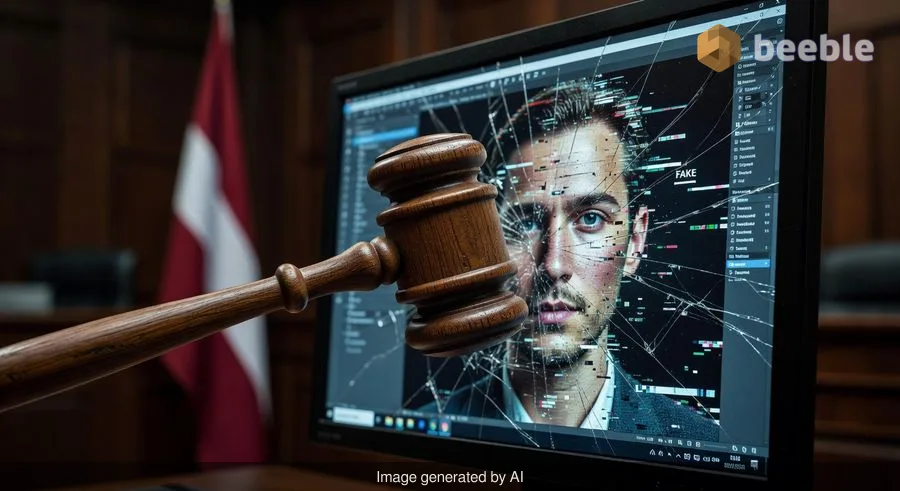
On March 19, 2026, the Latvian Parliament, the Saeima, took a definitive stand against a growing epidemic of digital violence. By adopting stringent amendments to the Criminal Law, Latvia has officially criminalized the non-consensual distribution of intimate images—including those generated or altered by artificial intelligence. This legislative shift moves beyond mere privacy-preserving rhetoric and into the realm of robust statutory consequences, signaling that the digital world is no longer a lawless frontier for those who weaponize personal data.
The Fact-Driven Shift: From Civil Nuisance to Criminal Offense
For years, victims of so-called 'revenge porn' or deepfake harassment found themselves in a precarious legal position. In many jurisdictions, these acts were treated as civil defamation or minor harassment. However, the Saeima’s recent vote changes the calculus entirely. Under this framework, the act of sharing another person’s intimate photos or videos without their explicit consent is now a criminal offense.
What makes this law particularly sophisticated is its foresight regarding technology. It doesn't just cover the 'leak' of a real photograph; it explicitly includes material that has been artificially created or altered using image-editing software or AI. Essentially, the law recognizes that a deepfake can cause the same systemic damage to a person’s reputation and mental health as a real image. In a regulatory context, this is a vital acknowledgement that digital harm is real harm, regardless of whether the pixels are 'authentic' or synthetically generated.
The AI Factor: Closing the Deepfake Loophole
As a digital detective, I have often seen how perpetrators hide behind the 'it’s not real' defense. They argue that because the image was generated by an algorithm, no actual privacy was invaded. Latvia’s new law effectively shuts that door. By including AI-generated content, the Saeima treats the intent and the impact as the primary metrics of the crime.
From a compliance standpoint, this is a significant move. It treats intimate data as a toxic asset—valuable to the malicious actor but highly dangerous to handle without authorization. If someone uses AI to superimpose a victim’s face onto explicit content, they are now facing a multifaceted set of penalties. These range from community service and fines to a temporary deprivation of liberty, and in the most severe cases, a full year of imprisonment.
When Harm Scales: The Three-Year Threshold
Not all digital violations are equal in the eyes of the law, and the Latvian amendments reflect this nuanced reality. While the baseline penalty is one year, the law introduces a higher tier of punishment for more egregious cases. If the distribution of these images causes 'significant harm'—a term that often encompasses severe psychological trauma, loss of employment, or systemic social ostracization—the maximum imprisonment penalty jumps to three years.
Curiously, the law also criminalizes the threat to distribute such images. This is a crucial addition. In my experience investigating digital extortion, the threat is often used as a tool of coercive control. By criminalizing the threat itself, the law provides a granular level of protection, allowing law enforcement to intervene before the 'oil spill' of a data leak actually occurs.
Protecting the Most Vulnerable
Beyond the realm of deepfakes, the March 19 reforms expanded protections for victims of human trafficking and child sexual offenses. This overarching approach suggests that the Saeima is viewing privacy and bodily autonomy as a single, interconnected fundamental human right.
In practice, this means that the legal system is becoming more trauma-informed. When I analyze breaches or legal shifts, I look for how the law treats the 'vulnerable'—those who cannot easily defend their digital footprint. By strengthening these penalties, Latvia is building a sturdier foundation for its digital society, ensuring that the most at-risk individuals have a statutory shield against exploitation.
The Digital Detective’s Perspective: Privacy as a Foundation
When I receive a report about a digital privacy violation, the first thing I look for is the trail of consent. Consent should be the key that unlocks any processing of personal data, especially data as sensitive as intimate imagery. Without it, the processing is non-compliant and, now in Latvia, criminal.
I often tell my readers that privacy is not just a compliance checkbox; it is the foundation of a house. If the foundation is cracked by the fear that one’s most private moments could be broadcast to the world, the entire structure of digital trust collapses. Latvia’s move to treat these violations with the seriousness of a criminal trial is a necessary step in repairing that trust. It moves us away from an opaque environment where victims suffer in silence and toward a transparent system of accountability.
Practical Steps for Digital Protection
While the law provides a path to justice, digital hygiene remains your first line of defense. Navigating the regulatory maze can be daunting, but there are actionable steps you can take today:
- Audit Your Cloud Permissions: Check which apps have access to your photo gallery. Use the principle of data minimization—if an app doesn't need your photos to function, revoke its access.
- Enable Encrypted Communication: When sharing sensitive information, use end-to-end encrypted channels. This ensures that even if a server is breached, your data remains pseudonymous and unreadable to outsiders.
- Document Everything: If you are a victim of non-consensual sharing or deepfake threats, do not delete the evidence. Take screenshots, save metadata if possible, and report it to the authorities immediately. Under the new Latvian law, the threat itself is a crime.
- Use Watermarking: For professional or semi-private images, subtle watermarking can sometimes act as a deterrent, though it is not a foolproof shield against sophisticated AI.
Ultimately, the Saeima’s decision is a compass for other nations to follow. It acknowledges that in our modern age, our digital selves deserve the same protection as our physical bodies.
Sources
- Criminal Law of the Republic of Latvia (Amendments adopted March 19, 2026).
- Saeima (Parliament of Latvia) Official Press Release on Criminal Law Amendments.
- EU Directive on Combating Violence Against Women and Domestic Violence (Alignment principles).
- GDPR Article 6 and 9 (Principles of Lawfulness and Special Category Data).
Disclaimer: This article is for informational and journalistic purposes only and does not constitute formal legal advice. If you are facing a legal issue regarding digital privacy or non-consensual image sharing, please consult with a qualified legal professional in your jurisdiction.



See you on the other side.
Our end-to-end encrypted email and cloud storage solution provides the most powerful means of secure data exchange, ensuring the safety and privacy of your data.
/ Create a free account
