


OpenAI is turning its code engine into a digital white-collar workforce

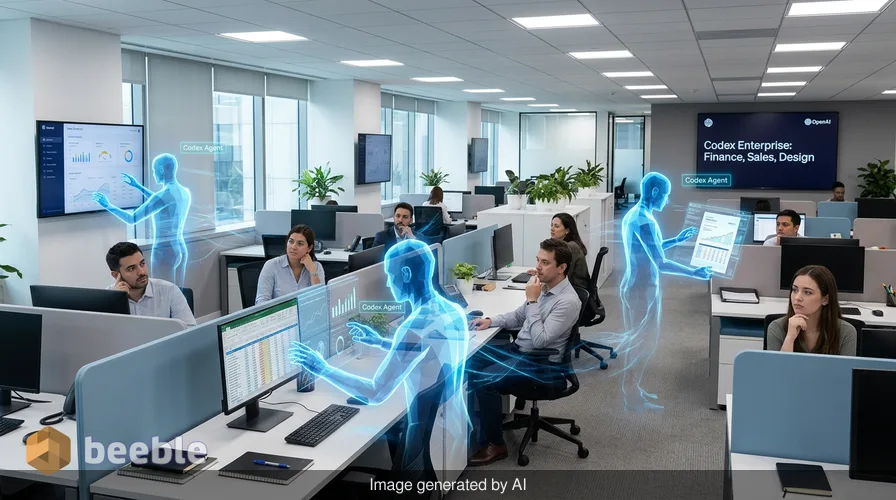
While the public fixates on chatbots that write poetry or generate surreal images, OpenAI is quietly rebuilding the plumbing of corporate departments. Most users view artificial intelligence as a clever conversationalist. The reality is far more pragmatic. The company is transforming Codex from a software developer's assistant into a suite of tools designed to take over the logic-heavy tasks that fill the average office worker's day.
On Tuesday, the AI lab announced a major expansion of its Codex platform, specifically targeting knowledge workers in finance, sales, and design. This is a deliberate shift in strategy. For years, OpenAI focused on general consumer products like ChatGPT. Now, the company is chasing the massive budgets of enterprise clients. This push follows a similar move by Anthropic, which launched its own enterprise agents earlier this year. The competition for the digital office space is accelerating, and the latest updates suggest OpenAI is ready to fight for every cubicle.
The logic behind the shift from code to commerce
Codex began its life as the engine behind tools that help programmers write software. It was a specialist tool for a specialist audience. However, the data shows that the audience is changing. According to an internal report released by OpenAI, the tool has reached 5 million weekly active users. This is a sixfold increase since the desktop app launched in early 2026. While programmers still make up the bulk of the user base, a new group is emerging. Knowledge workers now account for 20 percent of users, and this segment is growing three times faster than the developer group.
These workers are not using Codex to build the next social media app. They are using it to manage the daily grind of data entry, report generation, and market analysis. To capitalize on this, OpenAI released six specific plug-ins. These are pre-configured bundles of instructions and integrations that allow the AI to act as a specialized assistant for different roles. The list includes tools for data analytics, creative production, sales, product design, equity investing, and investment banking.
Think of these plug-ins as a digital multi-tool for the office. Instead of teaching a general AI how to read a balance sheet every morning, a user opens the investment banking plug-in. The system already has the context, the necessary math models, and the connection to the company’s internal databases. It is a tireless intern that arrives on day one already knowing the jargon and the software.
Moving from local files to live websites
One of the most disruptive features in this update is called Sites. Historically, when an AI finished a task, it handed the user a file or a block of text. If you asked for a data dashboard, it gave you the code to run one. Sites changes this by allowing Codex to output its work as a hosted, interactive website. This means a sales manager can ask the AI to summarize quarterly leads and receive a live link to a dashboard that the whole team can access.
To make this work, OpenAI is building a sprawling ecosystem of partners. Current collaborators include Wix, Figma, and Replit. This network allows the AI to move work between different specialized platforms without the user manually exporting or importing data. If a designer uses the product design plug-in, the AI generates the assets and then hosts them on a functional site for client review. This eliminates the friction of moving files between separate apps, which is where most office productivity dies.
Practically speaking, this turns the AI from a writer into a publisher. It reduces the need for middle-management roles that exist solely to coordinate between different departments. If the AI handles the data, creates the visuals, and hosts the presentation, the traditional workflow of an office project changes. The process is more streamlined and significantly more transparent for the people who actually need the results.
Precision control with new annotation features
A common complaint about AI tools is their lack of precision. Asking a bot to fix a hundred-page document often leads to unwanted changes in the sections that were already perfect. OpenAI addressed this with a new feature called Annotations. This allows a user to highlight a specific sentence, a cell in a spreadsheet, or a block of code within the Codex interface. By designating a specific target, the user gives the AI a narrower scope.
This is a foundational change in how humans interact with these systems. Instead of shouting broad instructions at a screen, users can now point and click at the exact problem. This level of granular control is necessary for high-stakes environments like investment banking or equity research. In these fields, a single misplaced decimal point has systemic consequences. The Annotations feature makes the AI more resilient against the kind of broad errors that typically plague large language models.
| Feature | Function | Target User |
|---|---|---|
| Role Plug-ins | Specialized instructions for 6 industries | Analysts, Sales, Bankers |
| Sites | Converts work product into live websites | Managers, Designers |
| Annotations | Precise targeting within large documents | Editors, Researchers |
| Deployment Co. | Deep corporate infrastructure integration | Fortune 500 Companies |
The four billion dollar bet on business integration
These technical updates are supported by a massive financial restructuring. Three weeks ago, the lab launched the OpenAI Deployment Company. This is a joint venture backed by more than $4 billion from global investment firms. The goal of this entity is to help large corporations weave AI into their existing, often messy, infrastructure.
Behind the jargon of enterprise integration lies a simple reality. Large companies are slow to change. They use legacy software and complex workflows that do not easily talk to modern AI. The new venture provides the capital and the expertise to bridge this gap. Denise Dresser, the chief revenue officer at OpenAI, noted that the challenge is no longer the capability of the AI. The challenge is the plumbing of the businesses themselves. This venture acts as the bridge that carries Codex into the heart of global commerce.
Looking at the big picture, this is a move away from the volatile world of consumer viral hits. OpenAI is seeking the predictable, recurring revenue of the corporate world. By building tools that become a permanent part of how a bank or a design firm operates, they make their product indispensable. This is a scalable model that moves AI from a curiosity to a utility.
What these tools mean for your career
For the average professional, the arrival of these tools brings both opportunity and pressure. These plug-ins will not replace entire jobs tomorrow, but they will certainly change what those jobs look like. When an AI can handle the heavy lifting of data analysis or creative production, the value of a human worker shifts toward judgment and strategy. The bottom line is that the ability to manage these digital agents is becoming a core workplace skill.
From a consumer standpoint, expect the products and services you use to evolve faster. If a creative team can use Codex to prototype and host new web designs in hours instead of weeks, the cycle of innovation accelerates. However, there is a risk of a slow leak in the job market for entry-level roles. The tasks usually assigned to junior employees—the research, the formatting, the basic data crunching—are exactly what these new Codex plug-ins do best.
Ultimately, the arrival of agentic tools in the office marks the end of the experimental phase of AI. It is no longer about seeing what the machine can say. It is about seeing what the machine can do. You should observe your own daily workflow and identify the repetitive, logic-based tasks that take up your time. Those are the areas where these tools will land first. Staying relevant in this shifting environment requires a shift in perspective. Instead of viewing yourself as a doer of tasks, you may need to start viewing yourself as a director of digital systems.
Sources:
OpenAI Corporate Blog, June 2026 Report on Knowledge Work.
Press Release, OpenAI Deployment Company Launch.
Market Analysis, Enterprise AI Competition Trends 2026.
Industry Briefing, Codex Sites and Partner Ecosystem Details.



See you on the other side.
Our end-to-end encrypted email and cloud storage solution provides the most powerful means of secure data exchange, ensuring the safety and privacy of your data.
/ Create a free account
