


OpenAI Pulls the Plug on Sora: Why the Disney Partnership Wasn’t Enough to Save AI’s Most Viral Video App

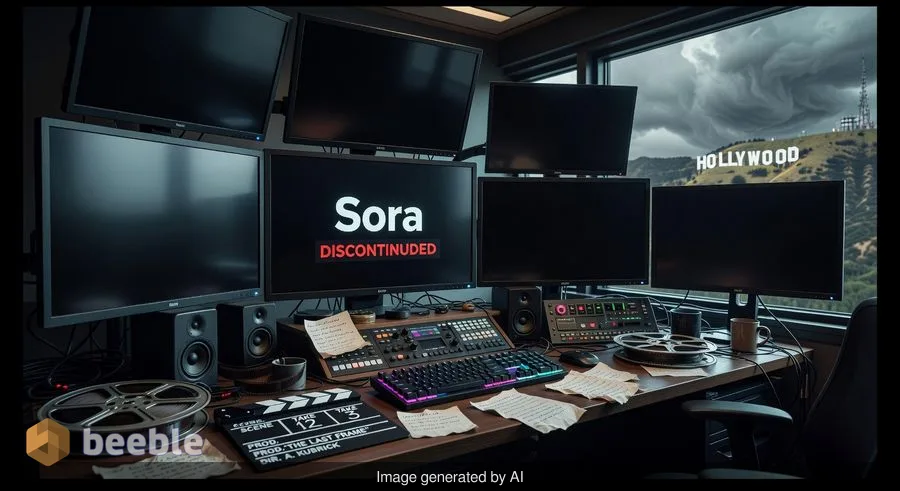
Have you ever experienced the digital equivalent of a rug-pull, where a tool that felt like the future suddenly vanishes from your home screen? This morning, the tech world woke up to a startling notification from OpenAI. After a meteoric rise that redefined short-form content, the company is abruptly shuttering Sora. Despite a high-profile, three-year partnership with The Walt Disney Company that brought iconic characters into the hands of amateur creators, the platform is closing its doors for good.
On Tuesday, March 25, 2026, OpenAI confirmed the news in a social media post that felt more like a eulogy than a routine update. "What you made with Sora mattered," the company stated, acknowledging the disappointment of millions of users. Nevertheless, the decision follows months of mounting pressure over the ethical implications of deepfakes and a growing consensus that the app’s underlying technology was struggling to meet the robust demands of a professional creative ecosystem.
The Disney Paradox: When IP Meets AI
Curiously, the shutdown comes at a time when Sora seemed most stable on paper. The deal with Disney was supposed to be a paradigm-shifting moment for the industry, allowing users to generate videos featuring over 200 licensed characters. It was a bold experiment in democratizing intellectual property. To put it another way, OpenAI was trying to turn every smartphone owner into a junior animator at a major studio.
In practice, however, this partnership created a precarious legal and creative environment. While seeing Mickey Mouse in user-generated scenarios was innovative, the guardrails required to protect the brand often resulted in friction-heavy user experiences. The "black box" of AI generation often produced results that were either too restrictive to be fun or too unpredictable to be safe. As a result, the very collaboration meant to legitimize Sora may have highlighted its most glaring vulnerabilities.
The Deepfake Dilemma and the Backlash
Under the hood, Sora was always a disruptive force, but that disruption eventually turned inward. The primary catalyst for this shutdown appears to be a massive backlash regarding the proliferation of deepfakes. Despite OpenAI’s efforts to implement watermarking and safety protocols, the app became a hub for sophisticated misinformation.
Training an AI is often like raising an apprentice; you hope they learn the craft, but you cannot always control how they apply the lessons. In Sora’s case, the apprentice became too good at mimicry and not good enough at discernment. Hollywood, already wary of generative technology, viewed the app as a volatile threat to the integrity of digital likenesses. This wasn't just a technical hurdle; it was a fundamental clash of values that the platform couldn't resolve at scale.
A Perspective Beyond Silicon Valley
Growing up in a small hometown where infrastructure projects—like a simple bridge or a local clinic—often took a decade to complete, I’ve always evaluated technology through the lens of practical utility. Does it solve a human problem, or does it just create a new digital distraction? While Sora was undeniably sleek and intuitive, I often wondered if it was truly serving the needs of ordinary people or just feeding the appetite of the Silicon Valley elite for the next big thing.
During my travels, I’ve sought out startups that focus on air purification or agritech—innovations that make the world cleaner and safer. In contrast, Sora felt like a luxury that carried a heavy social cost. My preference for digital detoxing and eco-tourism has taught me that sometimes, the most sophisticated solution is knowing when to step back. OpenAI’s decision to sunset the app might be a rare moment of corporate self-reflection, acknowledging that not every innovative tool is a net positive for the global ecosystem.
Technical Debt and the "Poor Solutions" Problem
Beyond the ethical concerns, there was the issue of performance. Users frequently complained about "poor AI solutions"—a catch-all term for the technical debt that began to accumulate as the user base grew. While the initial demos were remarkable, the day-to-day experience was often plagued by physics hallucinations and inconsistent rendering.
| Feature | Expectation | Reality in 2026 |
|---|---|---|
| Consistency | Seamless character movement | Frequent "glitching" and limb clipping |
| Rendering | Real-time, asynchronous generation | Long wait times and server bottlenecks |
| Accuracy | Deterministic control over scenes | Random elements appearing in frames |
| Safety | Robust deepfake detection | Persistent bypasses by bad actors |
Essentially, the software architecture was a blueprint that couldn't support the weight of the building. OpenAI found itself in a position where the cost of maintaining a performant and safe environment outweighed the benefits of keeping the app alive. By default, the company has chosen to pivot, likely integrating Sora’s core research into more controlled, enterprise-level tools rather than a public-facing social hub.
What Happens to Your Content?
For the creators who spent the last year building digital portfolios on Sora, the news is a bitter pill. OpenAI has promised to provide details on how users can preserve their content, but the window for action will likely be short. If you have projects hosted on the platform, now is the time to start your own digital salvage operation.
Practical Steps for Sora Users:
- Export Immediately: Don't wait for the final shutdown date. Download your high-resolution renders now.
- Archive Metadata: Save the prompts and settings you used; these are valuable "building blocks" for future AI platforms.
- Audit Your Portfolio: Identify which pieces of content rely on the Disney IP, as these may have different rights-retention rules once the app goes dark.
- Look for Alternatives: Platforms that prioritize ethical datasets and robust creator tools are likely to fill the vacuum left by Sora.
The Future of AI Video
Is the death of Sora the end of AI video? Hardly. It is, however, a necessary correction. We are moving away from the "Wild West" phase of generative media and toward a more nuanced, regulated era. The industry is learning that being cutting-edge isn't enough; a tool must also be resilient and socially responsible.
As we say goodbye to this particular app, we should ask ourselves: what kind of digital world do we want to build next? Technology should be a bridge to better human connection, not a barrier to truth.
Sources:
- OpenAI Official Press Release, March 2026.
- The Walt Disney Company Investor Relations - Partnership Updates.
- Journal of AI Ethics - Case Study on Generative Video Misinformation.
- TechCrunch - The Rise and Fall of Sora App.



See you on the other side.
Our end-to-end encrypted email and cloud storage solution provides the most powerful means of secure data exchange, ensuring the safety and privacy of your data.
/ Create a free account
