


OpenAI’s Most Powerful Model is Finally Here—But You’re Not Allowed to Use It Yet

While the tech industry has spent the last five years operating under the assumption that the next great software breakthrough is always just a download away, the reality of 2026 has taken a sharp, bureaucratic turn. Silicon Valley’s long-held mantra of moving fast and breaking things has finally collided with a government that is increasingly treating artificial intelligence less like a consumer gadget and more like a controlled substance. On Friday, OpenAI announced its most sophisticated lineup of models to date—the GPT-5.6 family—but with a massive asterisk: most of us aren't invited to the party.
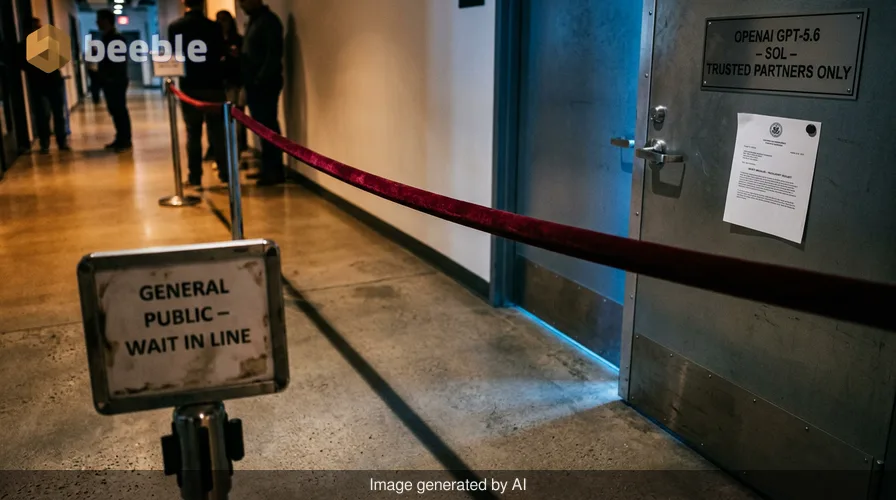
The release of the new models, headlined by the flagship Sol, was supposed to be a landmark moment for the company. Instead, it has become a flashpoint for a brewing conflict between the Trump administration and the AI sector. At the request of federal regulators, OpenAI is restricting access to a tiny circle of "trusted partners," effectively putting one of the most transformative tools of the decade behind a velvet rope. While OpenAI claims this is a temporary safety measure, the move signals a shifting landscape where the government acts as a digital gatekeeper, deciding who gets to use the cutting edge and who has to wait in line.
The New Hierarchy: Sol, Terra, and Luna
To understand why the government is so hesitant, we have to look under the hood at what OpenAI has actually built. The GPT-5.6 lineup isn't just a slight iteration of the models we’ve used for years; it represents a move toward what researchers call "agentic AI."
At the top of the pyramid sits Sol, the flagship. Unlike previous versions that essentially acted as high-end predictive text engines, Sol is designed to operate as a coordinated system. It features an "ultra" mode that deploys subagents—imagine a tireless intern who doesn't just write your email, but also hires three other interns to research the recipient, check your calendar, and verify the technical data before the draft even hits your screen. It is built to excel in highly sensitive fields like biology and cybersecurity, which is precisely why the administration is nervous.
Below Sol are two more accessible models:
- Terra: The balanced middle child, designed for everyday business logic and reasoning.
- Luna: The lightweight, high-speed option built for cost-efficiency and quick responses.
On the market side, this tiered approach is a scalable strategy to capture both the high-end enterprise market and the budget-conscious developer. However, by restricting all three models—not just the powerful Sol—the administration is making a systemic statement: in the current geopolitical climate, even the "basic" tools of the next generation are considered too volatile for wide-scale release without oversight.
The Rise of the De Facto License
Looking at the big picture, this isn't an isolated incident. The current friction is the direct result of a recent executive order requiring AI firms to voluntarily submit their models for a 30-day government review. While the word "voluntary" is used in the text, the reality is far more robust. For the average user, this looks less like a safety check and more like a licensing regime.
Dean Ball, a former White House AI adviser, argues that this process has become an involuntary bottleneck. By the time a model like Sol passes through the various layers of government scrutiny, the competitive advantage it provides might already be fading. There is a palpable fear within the industry that these hurdles will create a stagnant environment, effectively handing a lead to international rivals like China, who are not exactly known for slowing down their industrial buildouts for the sake of domestic debate.
Essentially, the government is treating AI as the digital crude oil of the 21st century—a resource so powerful that its flow must be regulated to prevent it from falling into the wrong hands. But unlike oil, software is infinitely replicable, and many analysts argue that trying to bottle it up is a fool's errand that only hurts domestic innovation.
Hardening the Digital Immune System
One of the most curious aspects of OpenAI’s Friday announcement was the heavy focus on "defensive" cybersecurity. OpenAI is trying to get ahead of the regulators by claiming that Sol is intentionally hardened against being used for harm. In simple terms, the model has been trained to be a better shield than a sword. It is designed to help a user defend a network against a hack, but it will reportedly refuse to provide the steps for an offensive exploit.
This is a direct response to the "Anthropic Incident" earlier this month. When Anthropic released Fable 5, the government forced the company to cut off access for all foreign nationals. Anthropic, unable to find a practical way to police every user's passport in real-time, simply pulled the model entirely. OpenAI is attempting to avoid this fate by building guardrails directly into the core behavior of the model, rather than slapping a filter on top of it.
Historically, AI filters have been easy to bypass with clever phrasing—a practice known as jailbreaking. OpenAI claims Sol’s safety measures are foundational, making it more resilient to these attacks. For the consumer, this means the AI might feel a bit more "opinionated" or resistant to certain topics, but OpenAI hopes this trade-off is what keeps the regulators from pulling the plug entirely.
Breaking Down the Costs
When these models finally do reach the public, they won't be cheap. OpenAI has introduced a tiered pricing structure that reflects the massive amount of computing power required to run these "subagent" systems.
| Model | Input Cost (per 1M tokens) | Output Cost (per 1M tokens) | Primary Use Case |
|---|---|---|---|
| GPT-5.6 Sol | $5.00 | $30.00 | Complex reasoning, R&D, Cybersecurity |
| GPT-5.6 Terra | $2.50 | $15.00 | Business logic, Data analysis |
| GPT-5.6 Luna | $1.00 | $6.00 | High-speed chatbots, Simple automation |
From a consumer standpoint, the high cost of "output tokens" on the Sol model is a warning. Because Sol uses coordinated subagents to solve problems, it generates a lot of internal text that you may never even see, but you will certainly pay for. It is the digital equivalent of hiring a consulting firm: you’re paying for the work they do behind the scenes, not just the final report they hand you.
Why This Matters for Your Daily Life
You might wonder why a dispute between a billionaire-backed tech firm and the federal government matters to you if you just want an AI to help you organize your recipes or write a cover letter. The answer lies in the "trickle-down" effect of tech democratization.
When the most advanced models are restricted, the entire ecosystem of apps you use every day—from your email provider’s smart-reply feature to your accounting software’s automated audits—stays stuck in the previous generation. We are entering a period of artificial scarcity. While the hardware to run these models exists and the code is written, the "red tape" is preventing the next leap in productivity from reaching your phone or laptop.
OpenAI’s frustration is clear. They’ve stated they don’t want this to be the "long-term default." They argue that keeping these tools out of the hands of "cyber defenders" actually makes the world less safe, as it prevents the good guys from using the same advanced tech that the bad guys are likely developing in private.
The Bottom Line
Ultimately, the rollout of GPT-5.6 is a case study in the growing pains of a mature industry. We are moving past the "wild west" phase of AI and into a period of heavy oversight. For the average user, the takeaway is clear: the pace of AI integration into your daily life is no longer just a question of what the technology can do, but what the government will allow it to do.
In the coming weeks, OpenAI hopes to expand access beyond its "trusted partners." But until a permanent framework is established between Silicon Valley and Washington, expect the release of new features to feel more like a slow leak than a flood. As a consumer, it’s time to start looking at your digital tools with a bit more scrutiny—recognizing that the "brain" behind your favorite app may be intentionally held back by invisible hands.
Sources:
- OpenAI Official Newsroom: "GPT-5.6 and the Path to Broader Availability"
- Department of Commerce: "Executive Order on Frontier AI Safety Standards"
- Anthropic Public Statement on Fable 5 Removal
- Strategic AI Review: Market Impact of Agentic Reasoning Models



See you on the other side.
Our end-to-end encrypted email and cloud storage solution provides the most powerful means of secure data exchange, ensuring the safety and privacy of your data.
/ Create a free account
