


Poland’s New Cybersecurity Era: Is Your Organization Ready for the NIS2 Shift?

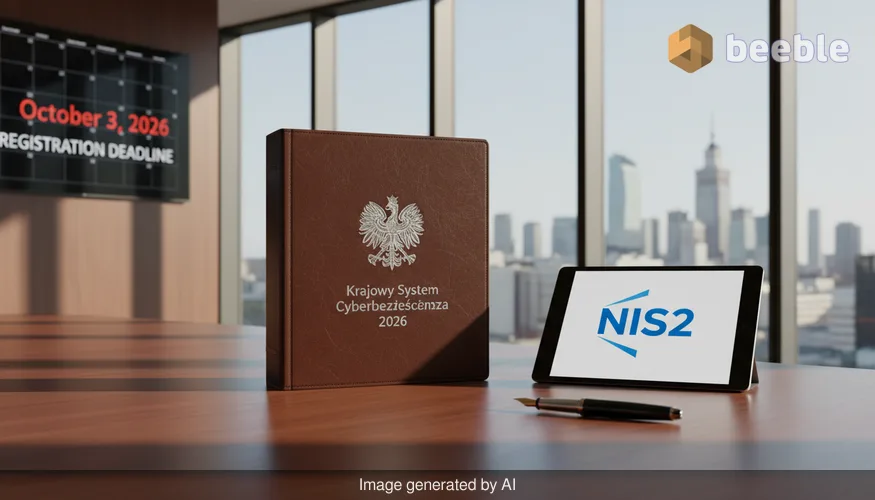
Have you ever wondered how a single weak link in a digital supply chain can bring a national infrastructure to its knees? It is a question that has kept IT directors and legal counsels awake at night for years, but as of April 3, 2026, the answer in Poland is no longer theoretical. The amended Act on the National Cybersecurity System (KSC) has officially entered into force, transposing the European Union’s NIS2 Directive into local law.
This isn't just another layer of red tape. In a regulatory context, this update represents a fundamental shift in how the state views digital resilience. For years, cybersecurity was often treated as a peripheral IT concern—a cost center rather than a core business strategy. Today, that perspective is obsolete. Under this framework, cybersecurity is now a systemic obligation, as vital to a company’s health as its financial auditing or physical security.
The Digital Compass: Navigating the New Categories
When I first began analyzing the draft of this amendment, I looked for the granular details that differentiate a 'key' entity from an 'important' one. In principle, the law now casts a much wider net than its predecessor. It moves away from a narrow focus on 'operators of essential services' and instead embraces a multifaceted approach that includes sectors like waste management, food production, and even postal services.
To put it another way, if your business provides a service that society cannot easily live without for 48 hours, you are likely now under the microscope. Key entities—think energy, transport, and health—face the most stringent requirements. Important entities, while subject to slightly less frequent audits, must still maintain a robust security posture. Identifying which bucket your organization falls into is the first step in using this new law as a compass rather than seeing it as a labyrinth.
The Countdown: Deadlines You Cannot Ignore
One of the most common pitfalls I see in tech-legal compliance is the 'procrastination trap.' Because the final enforcement of administrative fines doesn't kick in until April 3, 2028, some boards might feel a false sense of security. However, the timeline is much tighter than it appears.
By October 3, 2026, all affected entities must register in the S46 system. This is not a mere formality; it is a declaration to the Ministry of Digital Affairs that you acknowledge your role in the national ecosystem. Following this, the milestones for implementing full cybersecurity measures and technical standards arrive in waves on April 3, 2027, and April 3, 2028.
In my experience as a digital detective, I’ve noticed that companies often underestimate the time required to map their data flows. Consequently, waiting until 2027 to begin your internal audits is a precarious strategy. The transition from a legacy system to a NIS2-compliant one is less like flipping a switch and more like the foundation of a house—it requires careful curing and structural integrity before you can trust it to hold weight.
The 24-Hour Sprint: Reporting Incidents
Perhaps the most transformative aspect of the amended Act is the reporting timeline. If a serious cybersecurity incident occurs, the clock starts immediately. You have exactly 24 hours to submit an early warning to the authorities. This is followed by a full incident notification within 72 hours, including a detailed analysis of the threat.
Think of a data breach as an oil spill. In the physical world, the longer you wait to report a leak, the further the damage spreads and the harder it is to clean up. The 24-hour rule is designed to prevent the digital equivalent of an environmental disaster. It forces organizations to have a sophisticated incident response plan already on the shelf, rather than trying to write one while their servers are encrypted by ransomware.
During my investigation into a major financial sector breach last year, the difference between a controlled recovery and a total reputation collapse was exactly this: the speed of transparent communication. The new Polish law codifies this transparency, making it a statutory requirement rather than a PR choice.
Accountability at the Top
Curiously, the Act places a significant emphasis on management responsibility. This is no longer a set of tasks that can be entirely delegated to the basement-dwelling IT team and forgotten. Under the new rules, the management bodies of key and important entities are personally responsible for approving cybersecurity risk-management measures and overseeing their implementation.
This means CEOs and Board Members must now undergo regular cybersecurity training. In a regulatory context, this ensures that those holding the purse strings actually understand the threats they are funding defenses against. It bridges the gap between the server room and the boardroom, ensuring that security is treated as a non-negotiable human right for the users whose data is being processed.
Practical Steps for Compliance
If you are feeling overwhelmed by the overarching scope of these changes, start with the basics of digital hygiene. The Ministry of Digital Affairs has promised a suite of support measures, including Q&A sessions and standardization mappings, to help businesses find their footing.
- Audit Your Status: Determine if you are a 'Key' or 'Important' entity based on the new sector lists.
- The S46 Registration: Mark October 3, 2026, in your calendar. This is your first hard deadline.
- Review Supply Chains: NIS2 and the Polish Act place heavy emphasis on the security of providers. Your compliance is only as strong as your weakest vendor.
- Update Incident Protocols: Ensure your team can realistically detect, categorize, and report a breach within the 24-hour window.
Final Thoughts
Ultimately, the amended Cybersecurity Act is a recognition that our national security is now inextricably linked to our digital infrastructure. While the threat of fines—which can reach millions of Euros or a percentage of global turnover—is a powerful motivator, the real goal is resilience.
As a journalist who has seen the aftermath of opaque security practices, I view this law as a necessary evolution. It moves us away from a patchwork quilt of voluntary standards toward a comprehensive, binding framework. By treating compliance as a foundation rather than a burden, Polish companies can protect not just their data, but their long-term reputation in an increasingly vulnerable digital world.
Sources:
- Act on the National Cybersecurity System (Krajowy System Cyberbezpieczeństwa - KSC), as amended 2026.
- EU Directive 2022/2555 (NIS2 Directive) on measures for a high common level of cybersecurity across the Union.
- Official Announcements of the Polish Ministry of Digital Affairs (Ministerstwo Cyfryzacji) regarding the S46 system.
- GDPR Article 32 (Security of Processing) regarding technical and organizational measures.
Disclaimer: This article is provided for informational and journalistic purposes only. It tracks the implementation of cybersecurity laws but does not constitute formal legal advice. Organizations should consult with qualified legal counsel to determine specific compliance obligations under the amended Act.



See you on the other side.
Our end-to-end encrypted email and cloud storage solution provides the most powerful means of secure data exchange, ensuring the safety and privacy of your data.
/ Create a free account
