


Reclaiming Reality: A Strategic Tech Guide to Quitting Social Media

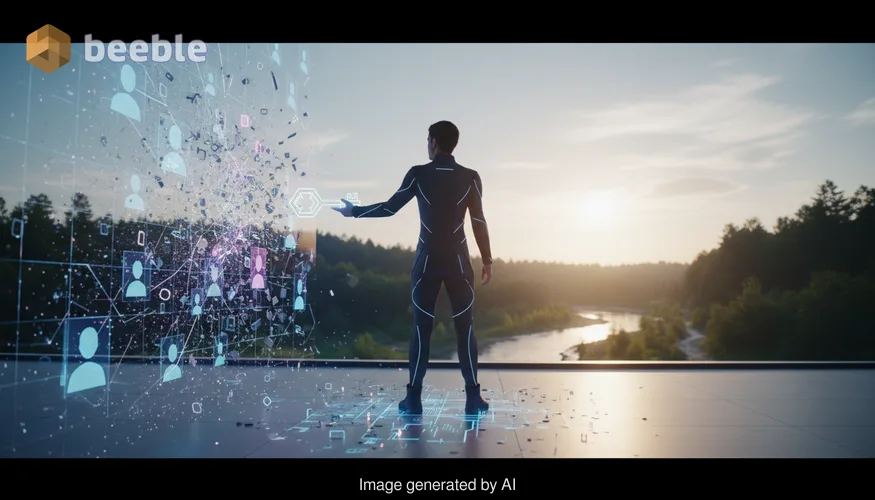
Social media was marketed as the ultimate tool for global connection, a digital bridge spanning continents and cultures. Yet, by 2026, the data suggests a different reality. We find ourselves in an era of 'connected loneliness,' where the depth of human interaction has been sacrificed for the breadth of a follower count. The algorithms governing our feeds have become increasingly sophisticated, evolving from simple chronological lists into hyper-personalized dopamine delivery systems designed to maximize 'time spent' at the cost of mental well-being.
Quitting social media is no longer just a trend; for many, it has become a necessary act of cognitive preservation. This guide explores the technical and psychological blueprints for reclaiming your attention and rediscovering life beyond the glass.
The Architecture of the Digital Trap
To leave social media, one must first understand why it is so difficult to stay away. Platforms are built on 'variable reward schedules,' the same psychological mechanism that makes slot machines addictive. You don't know if the next scroll will reveal a meaningful update from a friend or a frustrating political argument, and that uncertainty keeps the brain engaged.
In recent years, the integration of generative AI has only intensified this. Feeds are now populated with synthetic content tailored specifically to your biases and aesthetic preferences. This creates a 'filter bubble' so seamless that reality outside the app can feel dull or unstimulating by comparison. Recognizing that your 'urge to check' is a programmed response—not a personal failing—is the first step toward decoupling.
Choosing Your Exit Strategy: Deactivation vs. Deletion
Before you take the plunge, you must decide on the scale of your departure. In 2026, data privacy laws like the GDPR and various regional equivalents have made it easier to export your data, but the distinction between 'going dark' and 'going gone' remains critical.
| Feature | Deactivation | Permanent Deletion |
|---|---|---|
| Data Retention | Platform keeps your photos, messages, and profile. | Data is purged from active servers after a grace period. |
| Visibility | Your profile is hidden from other users. | Your profile and handle cease to exist. |
| Reversibility | Can be undone by simply logging back in. | Usually irreversible after 30 days. |
| Psychological Impact | Provides a safety net, but keeps the 'door' ajar. | High commitment; forces a clean break. |
For most users, a permanent deletion is the most effective way to break the habit. However, ensure you use the platform’s 'Download Your Information' tool first. This allows you to keep years of photos and memories without needing the platform to host them.
The Tech Toolkit for a Minimalist Transition
Quitting cold turkey is effective for some, but many require a transitional phase. Modern technology offers several 'bridge' solutions to help you downgrade your digital footprint without losing essential utility.
- Minimalist Launchers: If you use Android, apps like 'Before Launcher' or 'Olauncher' strip away colorful icons and notifications, turning your phone into a text-based tool rather than a toy.
- The Grayscale Shift: A simple yet powerful trick is to turn your phone’s display to grayscale. By removing the vibrant reds and blues of notification badges and UI elements, you make the device significantly less rewarding to look at.
- Hardware Alternatives: The 'Dumbphone' movement has matured. Devices like the Light Phone III or the BoringPhone offer essential utilities—Maps, Music, and Podcasts—without a browser or social media apps. These devices are designed to be used as little as possible.
- Focus Modes: Utilize the advanced 'Focus' settings on iOS and Android to whitelist only essential communication apps (like Signal or WhatsApp) while blocking all algorithmic feeds during specific hours.
Navigating the Withdrawal Phase
The first 72 hours are often the hardest. You will likely experience 'phantom vibrations'—the sensation that your phone is buzzing in your pocket—and a persistent sense of FOMO (Fear Of Missing Out). This is a literal neurological recalibration. Your brain is looking for the high-frequency hits of dopamine it has grown accustomed to.
To counter this, you must replace the digital habit with a physical one. If you usually scroll while drinking coffee, keep a physical book or a notebook nearby. The goal is to bridge the 'micro-moments' of boredom that social media used to fill. Boredom is actually a vital state; it is the space where creativity and self-reflection occur.
Rebuilding the Analog Social Network
The greatest fear people have when quitting social media is losing touch with their community. However, social media often provides the illusion of contact without the substance of connection. To reclaim reality, you must shift back to intentional communication.
- The Contact Audit: Go through your following list. Identify the 10–20 people you actually care about. Reach out to them via text or call and explain you are moving off-platform.
- Shared Calendars: Use shared digital calendars or simple group chats for event planning. This bypasses the need for Facebook Events or Instagram DMs.
- Physical Presence: Prioritize face-to-face meetings. The nuance of a conversation in person—tone, body language, and shared environment—cannot be replicated by an emoji or a 'like.'
Practical Takeaways: Your 7-Day Action Plan
- Day 1: Audit your accounts. Export and download your data (photos, contacts, archives).
- Day 2: Delete the apps from your phone but keep the accounts active for now. Move all communication to SMS or encrypted messaging apps.
- Day 3: Enable grayscale on your smartphone and set strict 'App Limits' for any remaining browser-based usage.
- Day 4: Identify your 'trigger' times (e.g., right after waking up) and plan a non-digital activity for those windows.
- Day 5: Inform your close circle of your departure and provide them with an alternative way to reach you.
- Day 6: Initiate the permanent deletion process for your primary social accounts.
- Day 7: Leave your phone at home for a one-hour walk. Observe the world without the urge to document it.
Quitting social media is not about becoming a hermit; it is about becoming present. By removing the digital middleman, you allow your experiences to belong to you again, rather than to an algorithm. Reality, when viewed through your own eyes rather than a filtered lens, is surprisingly vivid.
Sources
- Center for Humane Technology: Ledger of Harms and Digital Well-being Research.
- American Psychological Association (APA): Impact of Social Media on Adolescent and Adult Mental Health.
- The Verge: The Evolution of Minimalist Hardware and the 'Dumbphone' Market (2025-2026 Trends).
- GDPR.eu: Official Guidelines on the Right to Erasure and Data Portability.



See you on the other side.
Our end-to-end encrypted email and cloud storage solution provides the most powerful means of secure data exchange, ensuring the safety and privacy of your data.
/ Create a free account
